
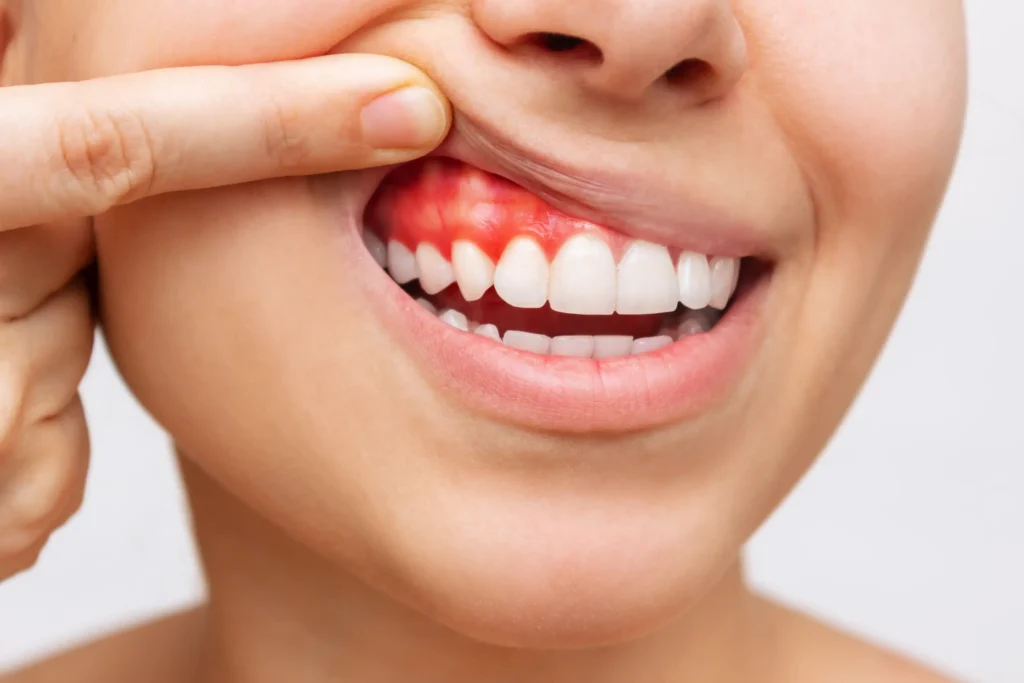
Imagine this: You brush your teeth and notice blood on the bristles. Your gums feel sore, your breath isn’t as fresh, and food seems to taste a little different. If the above scenario sounds familiar, you might be dealing with more than just a mild case of gum sensitivity; you could have pyorrhoea.
Let’s break it down.
What Exactly Is Pyorrhoea?
Also known as periodontitis, pyorrhoea is a serious gum infection that damages the soft tissue and can destroy the bone supporting your teeth. It’s one of the most common causes of tooth loss in adults, but there’s some good news. It’s largely preventable and treatable if caught early.
Early Signs of Pyorrhoea You Shouldn’t Ignore
Pyorrhoea doesn’t always start with pain, which is why many people overlook it. Here are some of the early symptoms:
- Bleeding gums during brushing or flossing
- Swollen, tender, or receding gums
- Persistent bad breath (halitosis)
- Pus around the teeth or gums
- Loose or shifting teeth
- A bad taste in the mouth
If you’re experiencing any of these, it’s time to book a dental visit. Ignoring them may lead to long-term damage.
Also Read | How to brush and floss correctly for healthy teeth and gums
What Causes Pyorrhoea?
At the root of pyorrhoea is plaque—a sticky film of bacteria that forms on your teeth. When plaque isn’t removed with proper brushing and flossing, it hardens into tartar, which irritates and inflames the gums.
Several other factors, like smoking or tobacco consumption, diabetes, stress, vitamin deficiencies, and hormonal changes, can also increase the risk.
How Pyorrhoea Affects More Than Just Your Mouth
What many don’t realise is that gum disease can have a ripple effect throughout your body. Research has linked chronic periodontitis with health conditions like heart disease, stroke, respiratory issues, diabetes, and pregnancy-related complications. It’s important to remember that our mouth isn’t isolated—it’s a window into our overall health.
Pyorrhoea Prevention Is Simpler Than You Think
Keeping pyorrhoea at bay starts with daily habits:
- Brush twice a day with fluoride toothpaste
- Floss daily to remove hidden plaque
- Rinse with an antibacterial mouthwash
- Avoid tobacco
- Get professional dental cleanings every 6 months
And remember, even if your teeth look fine, gum disease can silently develop below the surface.
Also Read | Smoking damage can be spotted in teeth long after you quit: Study
What If You Already Have Pyorrhoea?
Treatment depends on the severity. Early stages (called gingivitis) can often be reversed with improved hygiene and cleanings. More advanced cases may need:
- Scaling and root planing (deep cleaning)
- Antibiotic therapy
- Surgical procedures like flap surgery or bone grafting are used in severe cases
Pyorrhoea is more than just a gum issue—it’s a red flag for deeper health problems if left untreated. So if your gums bleed, your breath is unpleasant, or your teeth feel loose, don’t brush it off. Literally.
Your smile is worth protecting—not just for looks, but for your life.
Disclaimer: This article is for informational purposes only and is not a substitute for professional medical or dental advice. Always consult your dentist for diagnosis and treatment tailored to your condition.