
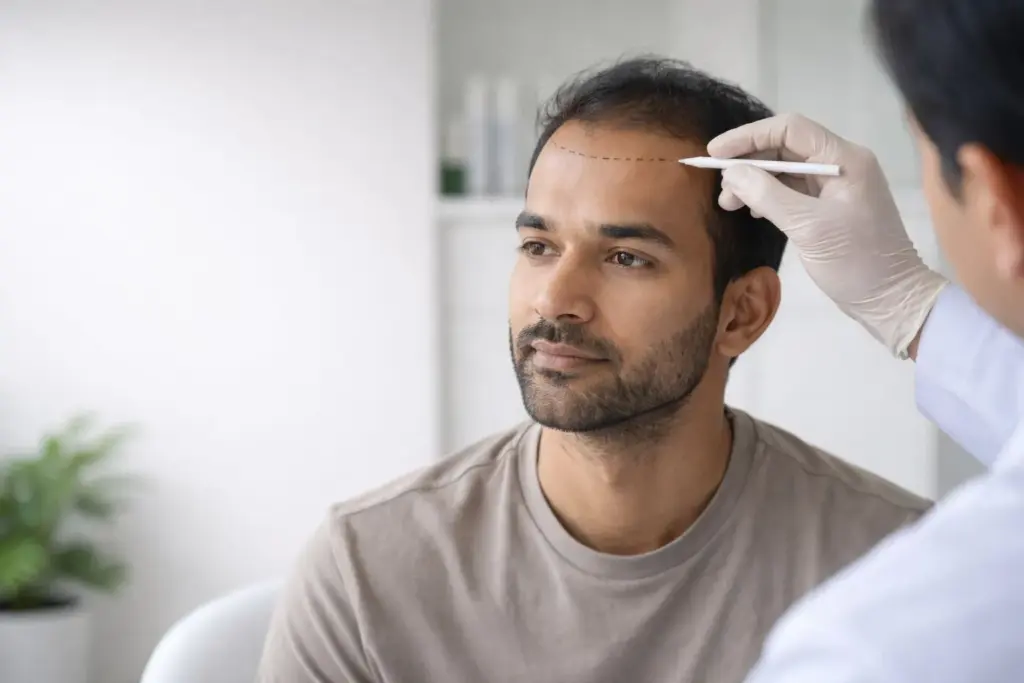
Hair transplant: Hair transplant sounds simple today.
You lose hair → you get a transplant → problem solved.
Social media makes it look even easier. Dramatic before–and–after photos, reels showing “Day 1 to Day 90 transformation”, and friends casually saying, “Just do transplant.”
But here’s the truth most people don’t hear:
- A hair transplant is not right for everyone.
- And a good doctor doesn’t say yes to every patient.
Let’s talk, in plain, honest language, about how doctors actually decide whether a hair transplant will help you or not.
Also Read | Our Expert Article: Dr Kratika Joshi on Anal Fissures’ Causes & Symptoms
First things first: what does a hair transplant really do?
A hair transplant does not create new hair.
It simply:
- Takes hair from the back and sides of your head
- Moves it to bald or thinning areas like the front or crown
Why the back and sides?
Because that hair is genetically strong and usually doesn’t fall for life.
Now here’s the catch! That strong hair is limited. Once it’s used, it’s gone forever. So doctors can’t just “fill everything” without thinking long term.
1. Is your hair loss the right kind for transplant?
This is the most important question. Hair transplant works best for pattern baldness. This is the common type of hair loss seen in men and women.
In men:
- Receding hairline
- Bald patch on the crown
- Family history of baldness (very often from the mother’s side)
In women (selected cases):
- Thinning on the top
- Wider central parting
- Hairline usually remains intact
These people often benefit the most; especially when surgery is combined with medicines.
Hair loss that needs caution
Not all hair loss needs surgery.
If your hair loss is due to:
- Sudden illness, COVID, stress, crash dieting
- Thyroid problems or vitamin deficiencies
- Patchy hair loss (alopecia areata)
- Certain scalp diseases
Then, treating the cause comes first. A transplant won’t fix the root problem.
That’s why a good doctor may ask for blood tests, or even say, “Let’s wait.”
2. Is your hair loss stable or still running fast?
Hair loss usually doesn’t stop on its own. Doctors look at:
- Your age
- How fast is hair loss progressing
- Old photos of your hairline
- If you’re very young and hair loss is aggressive, rushing into surgery can cause problems later.
Why?
- A low hairline at 25 may look odd at 45
- You may run out of donor hair too early
That’s why doctors often say:
“Let’s first slow the hair loss with medicines, then plan surgery.”
3. How strong is your donor hair? (Your ‘hair savings account’)
Think of donor hair like money in a bank. You can withdraw only a limited amount in your lifetime.
Doctors carefully check:
- How dense the donor area is
- Whether the hair is thick or thin
- Whether even donor hair is slowly thinning
- If the donor area is weak, transplant results won’t look good, no matter how skilled the surgeon is.
Saying no in such cases is honesty, not rejection.
4. How much hair is already gone?
For advanced baldness, full coverage is often not realistic. So doctors plan smartly:
- Strong, natural-looking front
- Decent mid-scalp coverage
- Softer or partial crown work
The goal is:
To make you look younger and fuller; not to give teenage hair again. Once patients understand this, satisfaction increases massively.
5. Your overall health matters more than you think
Hair transplant is safe, but still a medical procedure. Doctors will ask about:
- Diabetes, BP, heart issues
- Smoking or heavy drinking
- Blood thinners
Sometimes surgery is postponed until health is optimised. Safety always comes before appearance.
6. Let’s talk expectations (this is where most problems start)
This is crucial. A doctor will usually ask:
- What kind of hairline are you imagining?
- How much density will make you happy?
Some important truths:
- Transplanted hair is never 100% as dense as teenage hair
- One surgery doesn’t guarantee lifetime perfection
- Results take time
Real growth timeline after transplant
- 1–2 months: Shedding (yes, hair falls first)
- 3–4 months: Tiny new hairs start appearing
- 4–6 months: Visible improvement
- 9–12 months: Final, mature result
If someone expects instant results or zero scalp visibility under bright light, disappointment is almost guaranteed.
7. Mindset matters more than you think
Hair loss affects confidence. That’s real. But doctors also look for warning signs:
- Obsessing over tiny flaws
- Believing a transplant will fix all life problems
- Making decisions during emotional stress
- Sometimes, slowing down and thinking clearly gives better results than rushing into surgery.
8. Are you ready for aftercare and patience?
A transplant needs commitment. You’ll need to:
- Follow washing and sleeping instructions
- Take medicines properly
- Be patient during the shedding phase
- Continue maintenance if advised
Even the best surgery can disappoint if aftercare is poor.
When a doctor says “No” or “Not now”
This can happen if:
- Hair loss is too active
- Medical problems aren’t controlled
- Donor hair is weak
- Expectations are unrealistic
This is a sign of ethics, not lack of skill.
Also Read | Our Expert Article: Dr Pallav Parikh On Alcoholic & Metabolic Fatty Liver
So… are you a good candidate for a hair transplant?
You probably are if:
- Your hair loss is mainly pattern baldness
- It’s reasonably stable
- Your donor area is strong
- Your health is fine
- You understand what’s realistically possible
The smartest step: Consult a qualified doctor, not a salesperson.
A hair transplant can be life-changing when done for the right person, at the right time, for the right reasons.
Medical Disclaimer: This article is for general awareness only and does not replace a medical consultation. For personalised advice, diagnosis, or treatment options, please consult a qualified dermatologist or hair transplant surgeon.