
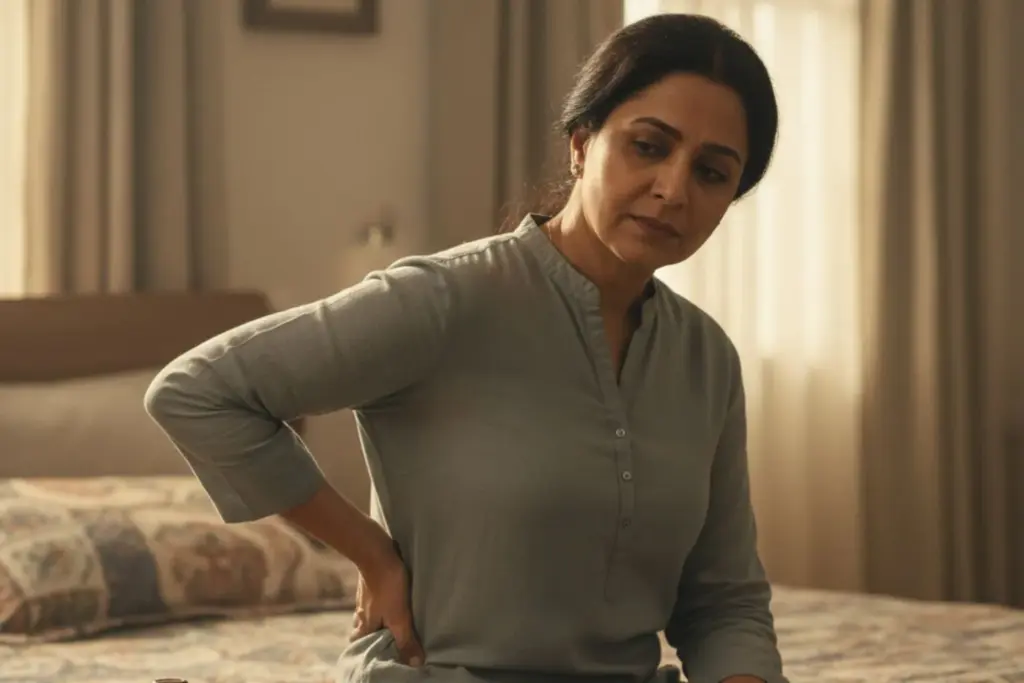
Menopause and bone loss: Many women in India reach their 40s feeling perfectly “okay”, and then, slowly, the body starts sending small signals. A little more backache than usual. A little more stiffness in the morning. A sense that recovery takes longer. Often, these changes are brushed off as “age” or “work stress.” But one important shift is happening quietly in the background: bone density starts falling faster as you move toward menopause.
The reassuring truth is this: you can protect your bones. You don’t need extreme workouts or expensive plans. You need the right basics, done consistently.
Also Read | Our Expert Article: Dr Tejas Vaghani On When Appendicitis Becomes an Emergency
What changes after 40?
Your bones are not solid, dead structures. They are living tissue. Every day, your body removes old bone and builds new bone, a natural repair process.
- In your teens and 20s, bone-building is strong.
- In your 30s, it stays stable for most people.
- After 40, the balance slowly shifts. Bone breakdown starts to become a little faster than bone formation.
This becomes much more noticeable around menopause.
Why menopause accelerates bone loss
The key hormone here is estrogen. Estrogen plays a protective role in bones. It keeps the “bone breakdown process” under control.
During perimenopause (often in the 40s), estrogen fluctuates. After menopause, estrogen drops more steadily. As a result:
- Bone is broken down faster
- Bone becomes more porous and fragile
- Fracture risk rises, especially at the spine, hip, and wrist
This is why, as an orthopaedic surgeon, I often say: the most important bone-health window for many women begins after 40.
The tricky part: osteoporosis can be silent
Most women with bone loss have no obvious symptoms until something happens.
You should not wait for a fracture to “confirm” weak bones.
However, a few warning signs can suggest you should check early:
- You are losing height over time
- Your upper back is starting to round more
- You have persistent back pain after a minor twist or lifting
- You fractured a bone after a small fall (a “low-impact” fracture)
- Strong family history of osteoporosis or hip fracture
- Menopause happened early (before 45), or the ovaries were removed
Who is at higher risk in India?
Bone loss is common everywhere, but certain factors make it more likely:
Hormonal factors:
- Early menopause
- Irregular periods for long periods (not due to pregnancy)
- Surgical removal of ovaries
Lifestyle factors:
- Low protein intake (very common in women who eat “light” meals)
- Low calcium intake (less dairy, less calcium-rich foods)
- Little sunlight exposure (staying indoors, sunscreen, covered clothing)
- No strength training or resistance work
- Smoking or frequent alcohol intake
- Very low body weight or repeated crash dieting
Medical and medication factors:
- Long-term steroid use (for asthma, arthritis, autoimmune conditions)
- Thyroid issues (especially over-treatment)
- Diabetes, chronic kidney disease, gut absorption problems
- Low vitamin D and B12 (common in Indian adults)
How do we check bones properly?
The most useful test is a bone density test (DEXA scan). It measures bone density at the hip and spine and helps estimate fracture risk.
In my practice, I consider a DEXA scan earlier if:
- You are in your 40s or 50s with strong risk factors
- You’ve had a fracture after a minor fall
- You had early menopause
- You’ve used steroids long-term
- You have persistent back pain with height loss
- You have strong family history of hip fractures
A DEXA scan is not “only for old age.” It’s a tool to catch bone loss early, when prevention works best.
How to protect your bones after 40 (simple, practical steps):
The exercise rule: bones need “load”
Bones become stronger when you safely load them. If you don’t challenge them, they thin out faster.
Weight-bearing activity (most days)
This means you are on your feet.
- Brisk walking
- Stair climbing
- Dancing
- Light jogging (if knees and back allow)
- Hiking
Target: 30 minutes, 5 days a week
Even 10 minutes × 3 per day counts.
Strength training (2–3 days/week)
This is the biggest game-changer after 40, and the most ignored. You don’t need heavy weights. You need consistency and correct form. Start with:
- Chair squats
- Step-ups (stairs)
- Glute bridges
- Wall push-ups
- Resistance band rows
- Light dumbbell exercises
- Strong muscles protect bones and reduce falls, and falls are what cause most fractures.
Balance training (daily 3–5 minutes)
Balance prevents falls. Falls prevent fractures. Simple balance work:
- Standing on one leg near a wall
- Heel-to-toe walk
- Slow marching in place
- Standing up from a chair without using hands
If you already have osteoporosis or frequent back pain, get guided exercises from a physiotherapist. Some yoga movements (deep forward bends with rounding, aggressive twists) may not be ideal for fragile spines.
Calcium: food first, supplements only if needed
Most women do better when calcium comes mainly from food.
Indian calcium-rich options:
- Milk, curd, chaas, paneer
- Ragi (nachni)
- Sesame seeds (til), til chikki (in moderation)
- Almonds
- Calcium-set tofu
- Fortified foods (if used regularly)
If your diet is consistently low, your doctor may advise supplements — but avoid self-prescribing high-dose calcium without checking your total intake.
Vitamin D: the “missing link” for many Indians
Vitamin D helps your gut absorb calcium. Without it, your bones don’t benefit fully, even if you eat well. Many Indian adults are low in vitamin D due to:
- Indoor lifestyle
- Limited midday sun exposure
- Covered clothing
- Darker skin requires longer exposure for the same vitamin D production
A simple step: check your vitamin D level if you have bone pain, repeated fatigue, weak muscles, or low bone density. Your doctor can guide safe supplementation based on your level.
Protein: not just for gyms, it’s for bones and fall prevention
Many women eat too little protein, especially if meals are mostly roti/rice with small portions of dal. Protein supports:
- Muscle strength
- Balance
- Bone structure (bones have a protein framework)
Easy Indian protein options:
- Dal, rajma, chana, sprouts
- Paneer, curd, milk
- Eggs
- Fish/chicken (if you eat non-veg)
- Soy/tofu
Aim to include a protein source in every meal, even if the portion is modest.
Reduce the “bone drainers”
These changes matter more than people realise:
- Stop smoking
- Limit alcohol
- Avoid crash diets and extreme fasting that reduces protein/calcium
- Don’t ignore thyroid over-treatment
- If you’re on steroids long term, discuss bone protection early
When lifestyle alone may not be enough
If your bone density is low (osteoporosis range) or your fracture risk is high, you may need medicines along with lifestyle steps. These treatments are designed to reduce fracture risk and protect the spine and hip, but they must be chosen based on your age, risk, and medical history.
Do not start or stop bone medicines without guidance. The plan needs regular review and follow-up.
Red flags: see a doctor promptly if you have
- A fracture after a minor fall
- Persistent back pain with or without height loss
- Sudden severe back pain after a small movement
- Repeated falls or balance issues
- Long-term steroid use
- Early menopause plus family history of fractures
A simple routine you can start this week
If you want a no-confusion plan:
Daily
- 20–30 minutes brisk walk
- 3–5 minutes balance practice
3 days a week
- 20 minutes strength training (home-based is fine)
- Nutrition
- Calcium-rich food daily
- Protein in each meal
- Vitamin D plan based on your levels
The fractures I worry about most are the ones that happen after a “small fall.” That’s not bad luck; it’s often silent bone loss that went unchecked.
Also Read | Our Expert Article: Dr Chirag Master On Early Knee Pain Red Flags
Menopause is a natural phase, but bone loss doesn’t have to be your new normal. Start early, stay steady, and treat your bones like the foundation they are. Your future mobility, independence, and quality of life depend on it.