
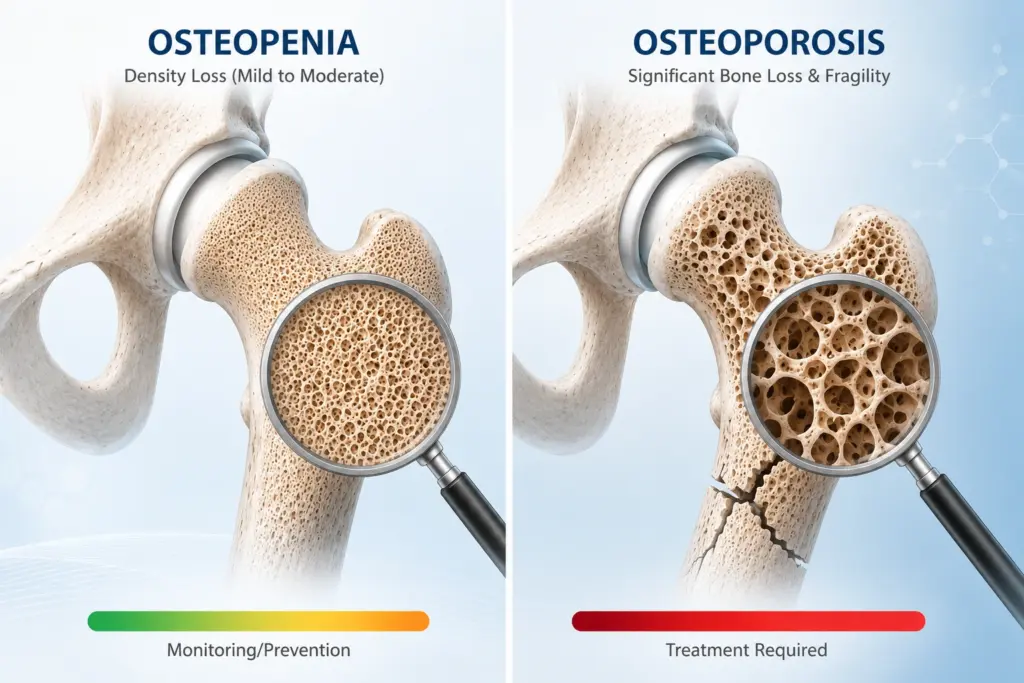
Osteopenia vs. Osteoporosis: Bone health is a crucial aspect of aging, yet terms like “osteopenia” and “osteoporosis” are often misunderstood or used interchangeably. While both conditions involve a loss of bone density, they represent different stages of bone weakening and carry distinct health risks. Understanding their differences is key to prevention, early detection, and effective management.
What Is Osteopenia?
Osteopenia is the medical term for reduced bone density that is lower than normal but not low enough to be classified as osteoporosis. Think of it as an early warning sign: your bones have started to lose minerals like calcium and phosphorus, making them weaker and more prone to fractures than healthy bones, but not as fragile as in osteoporosis.
Osteopenia itself doesn’t usually cause symptoms, so most people are unaware they have it until they undergo a bone mineral density (BMD) test, often recommended after age 50 or post-menopause.
What Is Osteoporosis?
Osteoporosis is a more advanced stage of bone loss. In this condition, bone density and bone mass have decreased significantly, and the internal structure of the bone has become more porous and fragile. This makes bones much more likely to break, even with minor falls or everyday activities.
Osteoporosis is often called a “silent disease” because it develops gradually, and symptoms like fractures, height loss, or stooped posture may be the first noticeable signs.
Also Read | Early signs of arthritis: When joint pain is more than ageing
How Are They Diagnosed?
Both osteopenia and osteoporosis are diagnosed with a bone mineral density test, typically a dual-energy X-ray absorptiometry (DEXA) scan. The results are given as T-scores:
- Normal bone density: T-score of -1.0 or higher
- Osteopenia: T-score between -1.0 and -2.5
- Osteoporosis: T-score of -2.5 or lower
The lower the T-score, the weaker the bones and the higher the risk of fractures.
Key Differences
| Feature | Osteopenia | Osteoporosis |
|---|---|---|
| Bone Density Loss | Mild to moderate | Severe |
| T-score Range | -1.0 to -2.5 | -2.5 or lower |
| Fracture Risk | Increased, but less than osteoporosis | Significantly increased |
| Symptoms | Usually none | May include fractures, height loss, stooped posture |
| Progression | Can progress to osteoporosis | Advanced stage of bone loss |
Why Does It Matter?
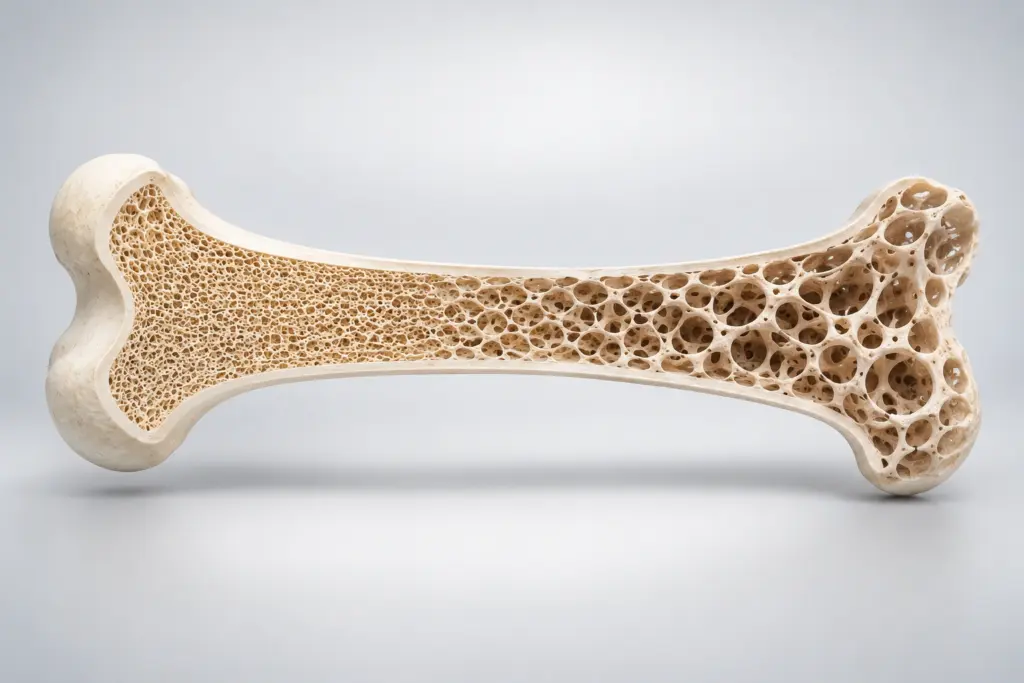
Osteopenia is a signal to take action. Without intervention, it can progress to osteoporosis, which dramatically raises the risk of fractures and related complications. Both conditions are more common with age, but other risk factors include genetics, hormonal changes, inadequate calcium or vitamin D, sedentary lifestyle, smoking, and certain medications.
Also Read | What is the difference between arthritis and osteoarthritis?
Prevention and Management
- Lifestyle: Engage in regular weight-bearing exercise, avoid smoking and excessive alcohol, and ensure adequate intake of calcium and vitamin D.
- Monitoring: Regular BMD testing helps track changes and guide treatment.
- Medication: In some cases, medications may be prescribed to slow bone loss or preserve bones.
Recognizing the difference between osteopenia and osteoporosis empowers you to take proactive steps for stronger, healthier bones as you age.
FQAs
Is osteopenia the same as osteoporosis?
No. Osteopenia is mild bone loss, while osteoporosis is more advanced and carries a higher fracture risk.
Can osteopenia turn into osteoporosis?
Yes. Without proper prevention and monitoring, osteopenia can progress to osteoporosis.
How are osteopenia and osteoporosis diagnosed?
Both are commonly diagnosed using a DEXA scan that measures bone mineral density.
Can osteoporosis be prevented?
Regular exercise, adequate calcium and vitamin D, avoiding smoking, and routine screening can help reduce risk.
At what age should bone density be checked?
Screening is often advised for older adults, especially post-menopausal women or people with additional risk factors.