
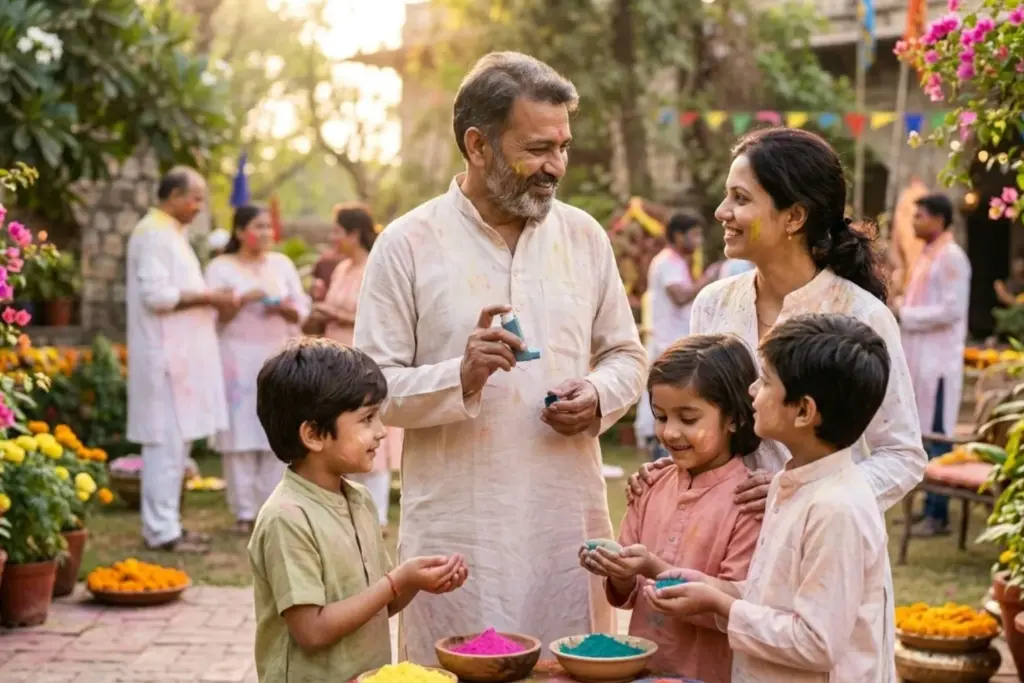
Holi and asthma: Holi is one of those festivals that instantly lifts the mood. There is colour everywhere, people out on the streets, music playing, sweets being shared, and that feeling of celebration in the air. But for someone living with asthma, that same air can sometimes become the problem.
Dry colours, smoke, dust, perfumes, and crowded outdoor spaces can all make breathing harder. That does not mean you have to sit Holi out. It simply means you need to be a little more thoughtful about how you take part. With the right precautions, it is absolutely possible to enjoy the festival and still protect your lungs.
Also Read | Can asthma be cured? What science says about long-term control
Why Holi can be difficult for people with asthma
During Holi, the air is often filled with much more than colour. Tiny powder particles float around, bonfire smoke lingers, and strong fragrances or sprays can add to the irritation. For sensitive airways, that combination can be enough to trigger coughing, wheezing, chest tightness, or shortness of breath.
Even if your asthma is usually under control, festivals like Holi can increase exposure to things that irritate the lungs. That is why preparation matters.
Choose colours carefully:
One of the biggest concerns during Holi is synthetic colour powder. Many of the cheaper, mass-produced colours may contain artificial dyes, fine dust, chemical additives, and, in some cases, heavier substances that are not gentle on the skin or lungs.
If you have asthma, it is better to choose herbal or natural colours wherever possible. Wet colours may also be easier to handle than clouds of dry powder, which are much more likely to be inhaled. Strongly perfumed colours are best avoided, too, as fragrance itself can irritate some people.
Try to avoid peak exposure:
The busiest part of Holi is often the hardest for someone with asthma. As the day gets louder and more crowded, the amount of powder and dust in the air tends to rise as well. If you know your breathing is easily triggered, it may be better to celebrate earlier in the day or keep your time outside shorter.
You do not need to spend hours in the thick of it to enjoy the festival. Sometimes, a smaller celebration with close friends or family is the safer and more comfortable choice.
Keep your inhaler with you:
This is one step that should never be overlooked. If you have asthma, your rescue inhaler should be with you at all times during Holi. Do not assume you will not need it just because you feel fine at the start of the day.
It is also important to continue your regular asthma medicines exactly as prescribed. Festival excitement is not a reason to skip preventive treatment. In fact, being consistent with your medicines can help reduce the chance of symptoms flaring up.
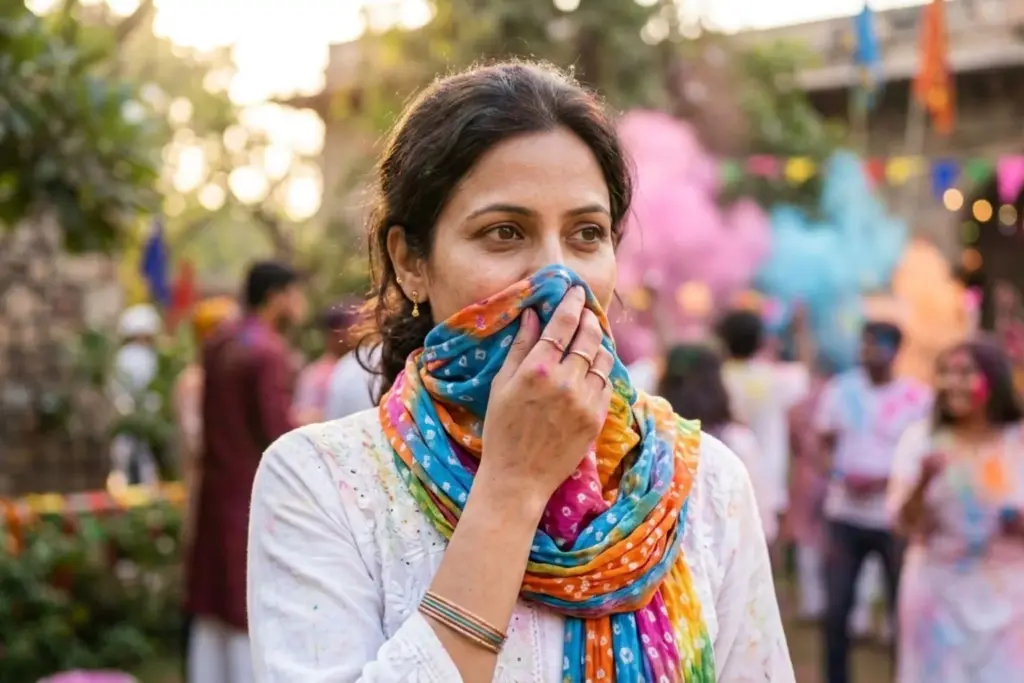
Be careful around smoke and bonfires:
Holika Dahan is an important part of the festival, but smoke can be especially harsh for people with asthma. Bonfire smoke contains fine particles and gases that can quickly irritate the airways.
If you attend, keep a safe distance, avoid standing where the smoke is blowing, and do not stay too long near the fire. It is possible to be part of the ritual without exposing yourself to more smoke than your lungs can handle.
Know the early warning signs:
One of the most important things during Holi is to pay attention to your body. If symptoms begin, do not ignore them or assume they will pass on their own.
Watch out for:
- repeated coughing
- wheezing
- tightness in the chest
- feeling short of breath
- unusual tiredness while breathing
These signs matter, especially if they start after exposure to colours, dust, or smoke.
Extra care for children with asthma:
If a child with asthma is taking part in Holi celebrations, adults need to stay one step ahead. Make sure inhalers are easy to reach, and let relatives, teachers, or caregivers know about the child’s condition if they are involved in the celebrations.
Also Read | How to make your home asthma-friendly?
Having asthma does not mean giving up festivals. It simply means being smarter about how you join in. Choosing safer colours, limiting smoke exposure, carrying your inhaler, and recognising early symptoms can make a huge difference.
FAQ: Holi and Asthma
Can people with asthma celebrate Holi safely?
Yes, many people with asthma can enjoy Holi safely if they take the right precautions, such as avoiding heavy powder exposure, staying away from smoke, and keeping their inhaler nearby.
Why can Holi trigger asthma symptoms?
Holi can trigger asthma because the festival often involves dry colour powders, dust, smoke, fragrances, and outdoor exposure, all of which may irritate the airways.
Are dry Holi colours worse for asthma than wet colours?
Dry colours can be more troublesome because they become airborne easily and may be inhaled. Wet colours are usually less likely to spread through the air.
What kind of Holi colours are safer for someone with asthma?
Natural, herbal, and less dusty colours are generally a better choice. Heavily perfumed or chemical-based powders are best avoided.
Is bonfire smoke harmful for people with asthma?
Yes, bonfire smoke can irritate sensitive airways and may trigger coughing, wheezing, chest tightness, or breathlessness.