
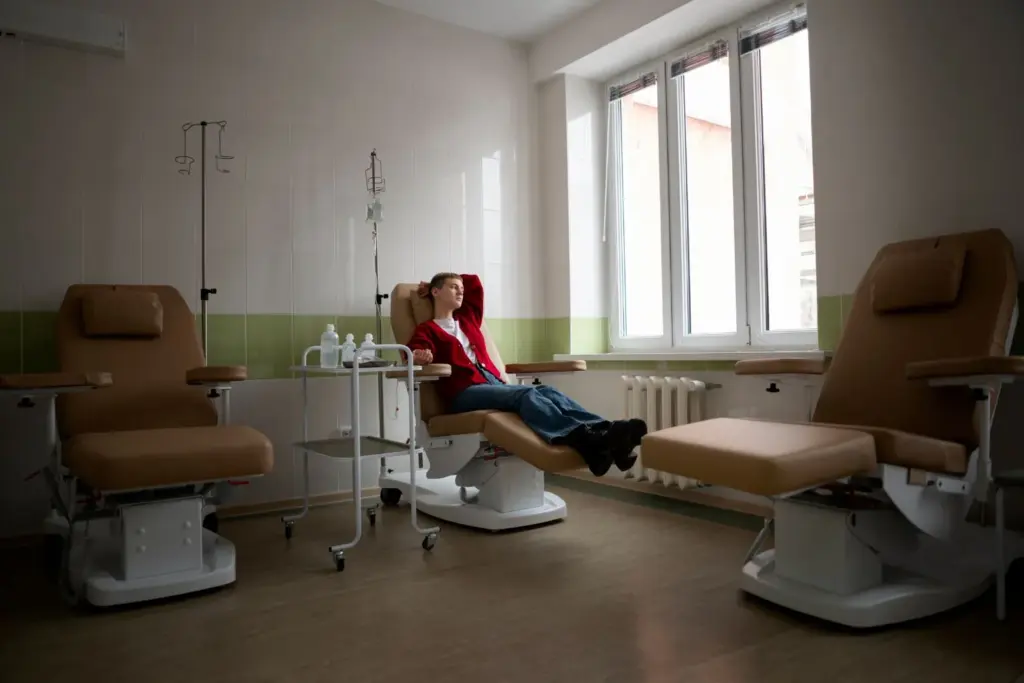
Male breast cancer: Breast cancer is still widely thought of as a women-only disease. That belief is exactly why male breast cancer gets missed. Men don’t expect it. Families don’t talk about it. Even a visible change near the nipple can be brushed off as muscle strain, a harmless lump, or “nothing serious.”
The truth is simple: men can get breast cancer. It’s uncommon, but it is real, and when it’s diagnosed late, treatment becomes harder than it needs to be.
What is male breast cancer?
Male breast cancer happens when cells in the breast tissue begin to grow abnormally and form a lump (tumour). Men do have breast tissue, it’s just much smaller than in women, and cancer can develop there, most often behind or near the nipple.
Also Read | Why women experience high blood pressure differently than men
It accounts for a very small share of all breast cancer cases, but rarity should never be mistaken for impossibility. When awareness is low, delays are common, and delays can change outcomes.
Who is at higher risk?
In many cases, there isn’t one single “cause.” Instead, doctors look at risk factors that increase the chances of developing male breast cancer.
You may be at higher risk if you have:
- Age over 60 (risk rises with age)
- Family history of breast cancer (especially close relatives)
- Inherited gene changes in some families (your doctor may advise genetic testing if the history is strong)
- Past radiation exposure to the chest (including treatment for another cancer)
- Higher oestrogen levels (Can be linked to obesity or liver disease)
- Certain testicular conditions or hormone-related disorders (in some cases)
Having a risk factor does not mean you will get cancer; it simply means symptoms should be taken more seriously and checked sooner.
Warning signs men should not ignore
Male breast cancer often begins quietly. Many early lumps are painless, which is why they are easy to dismiss.
Common red flags include:
- A lump or thickening in the chest, often close to the nipple
- Swelling on one side of the chest
- Skin changes: redness, scaling, puckering, dimpling, or ulceration
- Nipple turning inward (new inversion)
- Nipple discharge, especially bloody
- Pain or tenderness in the area (not always present)
A lump doesn’t automatically mean cancer, but any new change that doesn’t settle should be assessed properly.

How is male breast cancer diagnosed?
If a man notices a lump or change, the first step is a clinical examination. From there, the doctor may recommend:
Imaging tests
- mammogram (yes, men can have mammograms)
- ultrasound
- sometimes MRI in selected cases
Biopsy
the most important test
- A small sample is taken and checked for cancer cells
- Tests to check the spread (staging) if cancer is confirmed
- scans may be advised depending on the situation (for example, if symptoms suggest spread)
Diagnosis is not based on guessing; it is based on tissue testing and proper evaluation.
Treatment options
Treatment depends on the cancer type, stage, and whether it has spread. Many men receive a combination approach. Common treatments include:
Surgery:
- Often a mastectomy (removal of the breast tissue) is performed, because male breast tissue is small and tumours are often close to the nipple
Radiotherapy:
- used to destroy remaining cancer cells in the chest area after surgery in some cases
Chemotherapy:
- used when there is a higher risk of spread or when cancer has already spread
Hormone therapy:
- some male breast cancers are hormone-sensitive
- medicines can block the hormones that help cancer grow
Targeted therapy:
- used in selected tumour types based on lab results
The key point: treatment is effective, especially when the cancer is caught early.
Also Read | HPV beyond cervical cancer: Throat, anal, penile & vulvar risks
Male breast cancer is rare, but silence makes it dangerous. The goal isn’t to create fear. It’s to create attention.
If you are a man, notice what’s normal for your body. If something changes, get it checked.
If you have men in your family, mention it once. That one conversation can lead to earlier action, and earlier action can save a life.
FAQs: Male Breast Cancer Symptoms
Can men really get breast cancer?
Yes. Men have breast tissue too, and cancer can develop there, most often behind or near the nipple.
How common is male breast cancer?
It’s rare and makes up a very small percentage of all breast cancer cases, but it still occurs and should not be ignored.
What is the most common first symptom in men?
A new lump or thickening in the chest area, usually close to the nipple. It may be painless.
What nipple changes should men take seriously?
New inward turning of the nipple, bloody discharge, persistent crusting/scaling, or skin pulling/dimpling around the nipple area.
At what age does male breast cancer usually occur?
It is more commonly diagnosed in older men, often after the age of 60, but it can also occur earlier.