
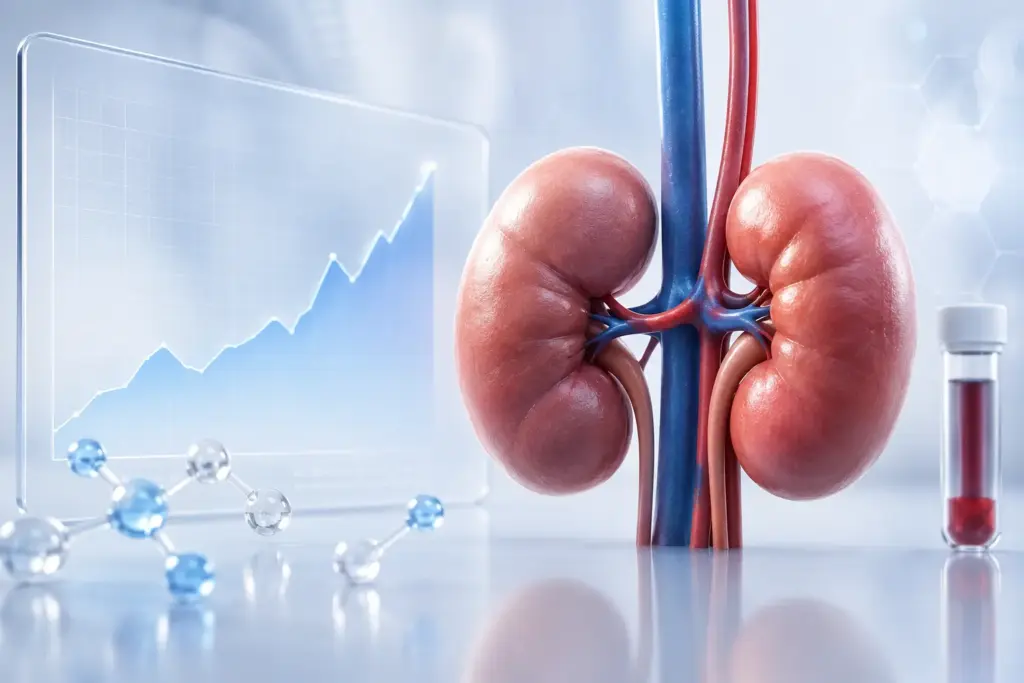
High creatinine: So you got your blood work back, and there it is: creatinine flagged in bold, maybe a little higher than the “normal” range. Suddenly, you’re Googling at 1 a.m., bouncing between panic and confusion. Does this mean your kidneys are failing? Or is it just another meaningless number in the sea of lab results?
Let’s slow down.
First, what’s creatinine anyway?
Creatinine isn’t some villain; it’s basically a waste product your muscles produce all the time. Every time your muscles do their thing, lifting groceries, climbing stairs, or even just twitching while you sleep, they release creatinine. Your kidneys filter it out, and most of it leaves your body through urine. That’s why doctors pay attention to the number: it’s like a snapshot of how well your kidneys are “taking out the trash.”
Also Read | LFT/KFT explained: What your liver and kidney tests tell you
A high number doesn’t always mean trouble
Here’s the tricky part. A slightly high creatinine level doesn’t automatically scream kidney disease. Context matters. If you’re a bodybuilder, for example, you’ll likely have higher creatinine because you’ve got more muscle mass. Same thing if you recently went through an intense workout before the blood draw. Even dehydration can temporarily bump the number up.
I’ve heard people panic over a reading of 1.3 mg/dL when the “normal” range tops out around 1.2. In reality, that tiny difference can mean very little. One test result by itself rarely tells the full story.
When it’s worth paying attention
Now, if your creatinine keeps climbing, that’s another conversation. Chronically high levels can be a sign your kidneys aren’t filtering as efficiently as they should. Doctors usually pair creatinine with another number called eGFR (estimated glomerular filtration rate). That gives a clearer picture of kidney function over time. Think of creatinine as the smoke and eGFR as checking if there’s actually a fire.
Other clues matter too
It’s not just about the number on a page. Symptoms like persistent swelling in your ankles, foamy urine, fatigue, or unexplained nausea are worth flagging. Those can point toward kidney issues that need attention. And if you’ve got conditions like diabetes or high blood pressure, your doctor will take creatinine changes more seriously.
Also Read | What are the treatment options for kidney failure?
Don’t self-diagnose from Google.
The internet loves to scare us. Search “high creatinine” and you’ll tumble into forums full of worst-case scenarios. But remember, lab results aren’t one-size-fits-all. Your age, body size, hydration, and meds—all of it plays a role. For example, antibiotics or blood pressure medications can nudge your creatinine higher. That doesn’t mean your kidneys are doomed.
The bottom line
A high creatinine level isn’t a verdict; it’s a clue. Sometimes it’s harmless, sometimes it’s a red flag, but it’s always worth a real conversation with your doctor instead of endless speculation online.
So if you see that little “H” next to creatinine on your lab slip, take a breath. Ask questions. Look at trends, not just one-off numbers. And most of all, don’t let a single lab value rob you of sleep; your body deserves better than late-night doomscrolling.
FAQS
What does high creatinine mean?
It can indicate that the kidneys aren’t filtering waste as efficiently as usual, but one high result doesn’t always mean kidney disease.
What is a normal creatinine level?
It varies by age, sex, muscle mass, and lab. Your lab’s reference range is the best guide.
Can dehydration raise creatinine?
Yes. Dehydration, intense exercise, and some medications can temporarily increase creatinine.
Is high creatinine always dangerous?
Not necessarily. Doctors usually look at creatinine alongside eGFR, urine tests, symptoms, and previous results.
What should I do if my creatinine is high?
Don’t panic. Follow up with a healthcare professional, especially if the level is significantly elevated or rising