
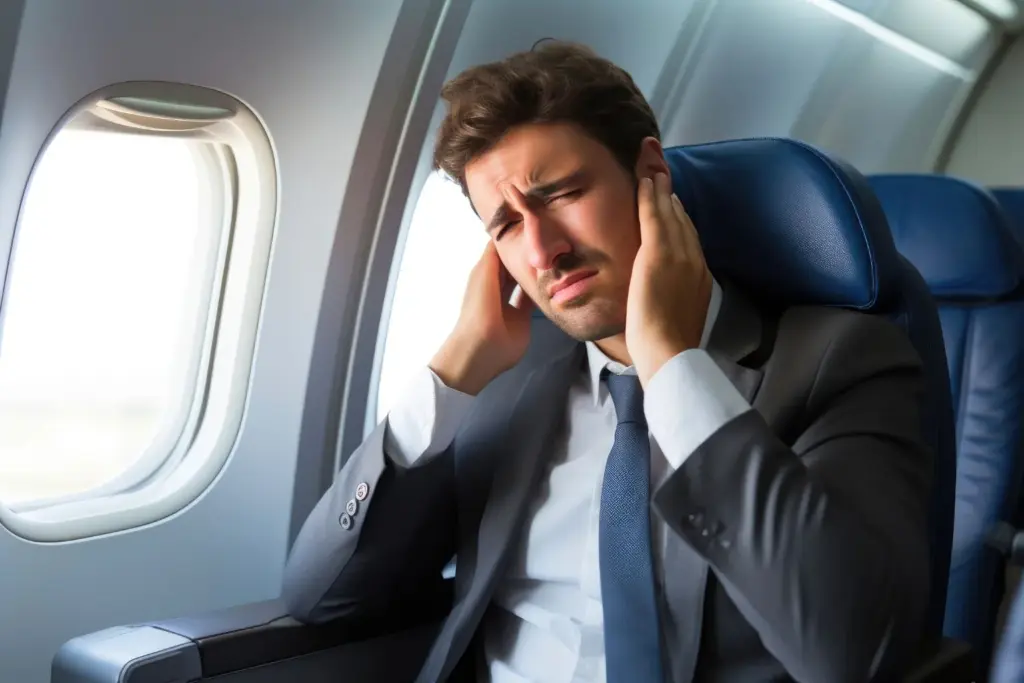
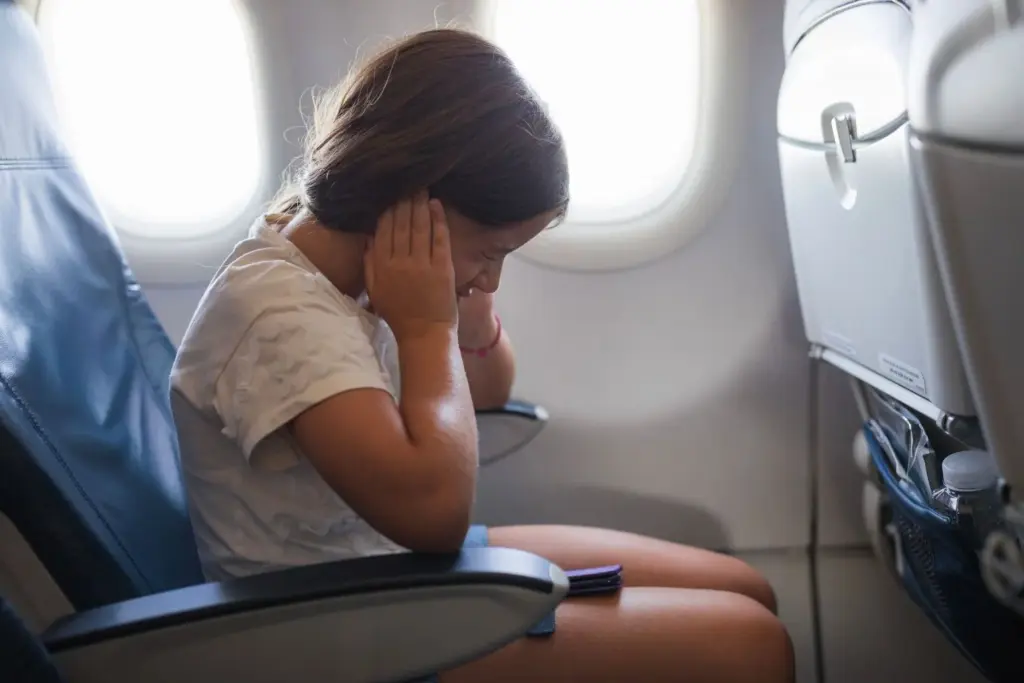
Ear pain while flying: Many people love flying, but there’s one part of air travel almost everyone dreads: that ear pressure during take-off and landing. For some, it’s just a mild “clogged” feeling. For others, it can feel like a sudden sharp jab, heavy pressure, or even a short period where sounds seem distant and muffled. Children often struggle the most, which is why you’ll see little ones crying, grabbing their ears, and looking uncomfortable during descent.
Why do ears hurt on an aeroplane?
Inside your ear is a small pressure-balancing passage called the Eustachian tube. Its main job is to keep the air pressure in your middle ear equal to the air pressure around you.
On a flight, pressure changes happen quickly:
- During take-off, the outside air pressure drops as the plane climbs
- During landing, the outside air pressure rises as the plane descends
Also Read | Can trapped moisture after bathing lead to painful swimmer’s ear?
If the Eustachian tube doesn’t open fast enough to “equalise” that shift, pressure builds up behind the eardrum. That’s what creates the uncomfortable sensations people describe as ear block.
Common effects of ear blockage:
- Ear pain or sharp pressure
- A blocked or stuffed-ear feeling
- Muffled hearing
- Popping or clicking sounds
- Temporary trouble hearing clearly
Who is more likely to feel ear blockage?
Anyone can experience it, but it tends to be worse in:
- Children (their Eustachian tubes are smaller and still developing)
- People with a cold, cough, or sinus congestion
- Those with allergies or nasal blockage
- People with an ear infection
- Anyone with narrow or sensitive ear passages
Typical symptoms during a flight:
Symptoms usually show up during:
- Take-off
- Landing
- Any sudden altitude change
You might notice:
- Sharp ear pain
- Pressure or tightness in the ear
- A “full” feeling
- Ringing in the ear
- Muffled hearing
- Dizziness in some cases
- Difficulty swallowing
- Short-term hearing reduction
How to prevent ear blockage during a flight:
Keep your jaw moving during take-off and landing:
Chewing, swallowing, and yawning help the Eustachian tube open and balance pressure in the ear. The key is to start before your ears feel blocked, especially during descent.
Try this during landing:
- Chew gum
- Suck on a lozenge or hard candy
- Sip water every few minutes
- Yawn intentionally
- Swallow repeatedly
Do a gentle pressure-equalising move (only if needed):
If you feel your ears “closing up,” a simple technique can help open the tube. You may feel a small pop, which usually means pressure is equalising.
How to do it:
- Close your mouth
- Pinch your nose shut
- Blow out gently (don’t force it)
If it hurts, stop and try swallowing or yawning instead.
Avoid flying when you’re congested, if possible:
Ear pain is much more likely if your nose and sinuses are blocked. Try to postpone travel if you have:
- A cold
- Sinus infection
- Ear infection
- Badly blocked nose
- Severe allergy flare-up
Clear your nose and sinuses before boarding:
If you’re slightly congested but still need to travel, clearing your nasal passages can help.
Steam can be useful because it may:
- Reduce nasal blockage
- Loosen mucus
- Improve airflow
Make pressure changes easier to handle:
A warm shower or steam inhalation before leaving for the airport can help some people feel less “blocked” during descent.
Use warmth for comfort in-flight:
If your ears feel tight or painful, gentle warmth can feel soothing. Ask the crew for a warm towel (if available) and hold it lightly over the ear for a few minutes. It won’t “fix” pressure instantly, but it can reduce discomfort and help you relax.
How to unblock ears after landing:
If your ears still feel stuffed once you’re on the ground, try:
- Chewing gum or swallowing repeatedly
- Drinking warm water
- Gentle pressure-equalising (as above)
- A warm shower
- Yawning a few times
- Saline nasal spray (if congestion is present)
Also Read | Do you need a hearing aid or just an amplifier?
Ear pressure during flights is common, and in most cases, it settles on its own. A few small habits, such as staying awake during landing, sipping water, and keeping your jaw moving, can make the experience much easier and help you land comfortably.