
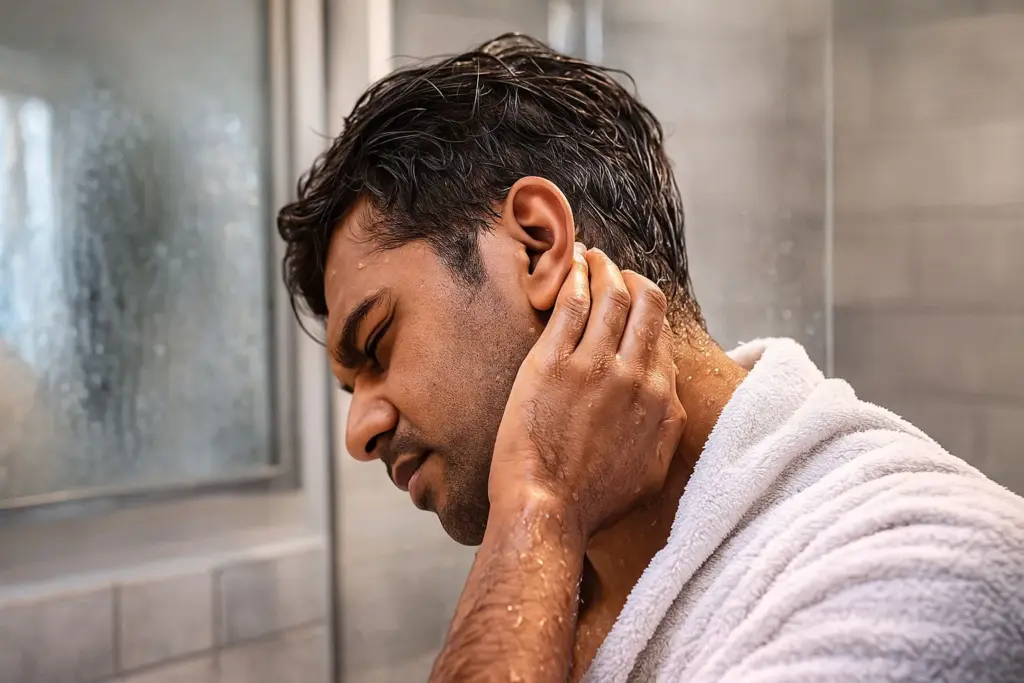
Swimmer’s ear: You don’t need to be doing laps in a pool to get swimmer’s ear. In fact, many people notice it more in the colder months, not after a day at the beach, but right after a hot shower or hair wash in winter. If your ears suddenly feel itchy, blocked, or sore after bathing, it might be more than just a bit of water. It could be the early stage of swimmer’s ear.
What is swimmer’s ear?
Swimmer’s ear is an infection or inflammation of the outer ear canal, the narrow passage that runs from the opening of your ear to the eardrum. It usually happens when water or moisture gets trapped inside that canal, creating a warm, damp environment where bacteria or fungus can easily grow.
Also Read | Swimmer’s ear vs. middle ear infection: Know the difference
Why does winter make swimmer’s ear worse?
- Very hot showers: In winter, we tend to use hotter water. This can soften the delicate skin lining your ear canal, making it more vulnerable.
- Cold, dry air afterwards: Stepping out into chilly air quickly dries the softened skin. Tiny cracks can form, giving germs an easy entry point.
- Covered ears trap moisture: Earmuffs, woollen caps, hoodies and scarves keep you warm, but they also trap moisture and reduce airflow around your ears, so any leftover dampness sticks around longer.
Early signs you might have swimmer’s ear:
- Itching or irritation deep inside the ear canal
- A feeling of fullness, heaviness or mild blockage in the ear
- Pain when you touch or gently pull your earlobe or the outer ear
- Clear or yellow fluid leaking from the ear
- Redness or swelling near the ear opening
- Muffled or reduced hearing, often because of fluid or swelling inside
How does moisture turn into a problem?
Your ears naturally produce earwax to protect the delicate skin inside the canal. This wax helps:
- Repel water
- Block dust and dirt
- Slow down the growth of bacteria and fungi
But frequent ear cleaning, especially with cotton buds, can strip away this protective layer and even cause tiny scratches. Once that happens:
- Water from showers or hair washes stays trapped inside
- The skin of the ear canal becomes dry, fragile and easier to damage
- Bacteria or fungi can enter and multiply quickly in the warm, moist space
That’s when simple moisture can turn into swimmer’s ear.

What to do if you feel pain or fullness?
- Keep the ear completely dry; no water inside.
- Hold a warm compress (such as a wrung-out cloth) against the outside of the ear to ease discomfort.
- Do not insert earbuds, cotton buds, hairpins or fingers into the ear.
- Over-the-counter ear drops may help if you’re not allergic and you don’t have a damaged eardrum
When to see a doctor?
Book an appointment if:
- The pain is severe or getting worse
- You notice discharge, swelling or redness
- You feel feverish, unwell or dizzy
- These can be signs that the infection is spreading or needs prescription treatment.
How to prevent swimmer’s ear?
- After bathing or washing your hair, tilt your head to each side to help any water drain out naturally.
- Gently pat around the ear with a towel; don’t poke the towel into the ear canal.
- Avoid cotton buds/Q-tips as they push wax deeper and can scratch delicate skin, increasing the risk of infections.
Also Read | Why you should never clean your ears with cotton buds
Swimmer’s ear is one of those infections that’s easy to ignore until it suddenly becomes painful enough to disturb your sleep. However, it’s also one of the easiest to prevent. A bit of care after every shower can save you from days of throbbing earache later.