
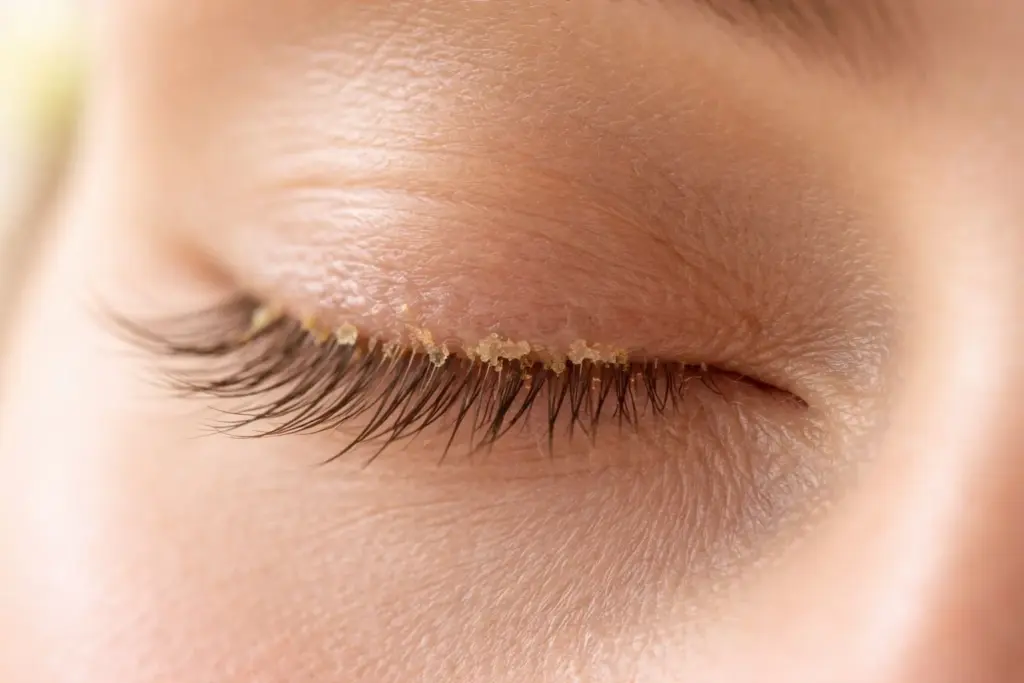
Crusty eyes: Waking up with crusty eyes can be uncomfortable and irritating. You try to blink it away, rub your lids, and clear that sticky film that makes your eyes feel “sealed shut”. So what’s going on?
What are ‘crusty eyes’?
That crust you notice on your lashes or along the eyelid margin is usually dried eye discharge. During the night, your eyes still produce tears to keep the surface healthy. Those tears mix with tiny amounts of mucus, natural oils, dead skin cells, and dust. Because you’re asleep and blinking far less, this mixture can collect at the lashes and dry out, leaving crust in the morning.
Also Read | How to avoid highly contagious winter eye infections
Why does it happen?
Your eyelids contain oil glands that help stop tears from evaporating too quickly. Your tear film also has three key components, water, oil, and mucus, which work together to protect and lubricate the eye. Overnight, with less blinking, the normal mucus and oils can build up a little and dry on the lashes. In many cases, that’s simply part of the eye’s natural “housekeeping”.
When are crusty eyes normal?
A small amount of crust on waking is usually normal, especially if it:
- clears after blinking, washing your face, or using a clean damp cotton pad
- isn’t accompanied by redness, pain, or ongoing discharge
Common harmless triggers include dry eyes (which can increase mucus) and allergies (which can make eyes watery and sticky).
When are crusty eyes not normal?
If the crust is heavy, keeps returning throughout the day, or comes with other symptoms, it can signal an underlying issue:
Conjunctivitis (pink eye):
This is inflammation or infection of the conjunctiva (the thin layer over the white of the eye and inside the lids). It can be viral or bacterial. You may notice redness, irritation, burning, itching, and discharge. If it’s infectious, it can spread easily, so hand hygiene is important.
Blepharitis:
Blepharitis is inflammation of the eyelid edges, often where the lashes grow. The glands along the lid can become blocked and irritated, leading to flaking, crusting, and sticky lids, especially on waking.

Dry eye syndrome:
If your eyes don’t make enough tears, or the tears aren’t of the right quality, the surface can become irritated. Some people then produce extra mucus, which can dry and form a crust. Burning, gritty sensation and intermittent blurred vision are common.
Also Read | How to reduce eye strain: Blink, breaks, and blue-light basics
When to see a doctor:
Seek medical advice promptly if you have:
- severe pain or marked light sensitivity
- blurred vision or any drop in vision
- thick yellow or green discharge, especially if it keeps coming back
- swollen eyelids, a lump, or increasing tenderness
- symptoms that last more than a week without improvement
Crusty eyes in the morning are often harmless and simply part of normal tear and oil build-up overnight. But if the discharge is heavy, persistent, or paired with redness, pain, or vision changes, it’s worth getting checked.
FAQs: Crusty Eyes in the Morning
Is it normal to wake up with crusty eyes?
Yes. A small amount of “sleep” or crust is common and usually clears after blinking or washing.
Why are crusty eyes worse in the morning?
You blink much less during sleep, so normal mucus and oils can build up and dry on the lashes.
Can dry eyes cause crusty eyes?
Yes. Dry eyes can trigger extra mucus production and leave a sticky, gritty feeling on waking.
Can crusty eyes be contagious?
If caused by viral or bacterial conjunctivitis, yes. Good hand hygiene and not sharing towels/eye products help reduce the spread.
When should I see a doctor urgently?
Seek help if you have severe pain, light sensitivity, worsening redness, vision changes, significant swelling, a lump on the lid, or symptoms lasting more than a week.