
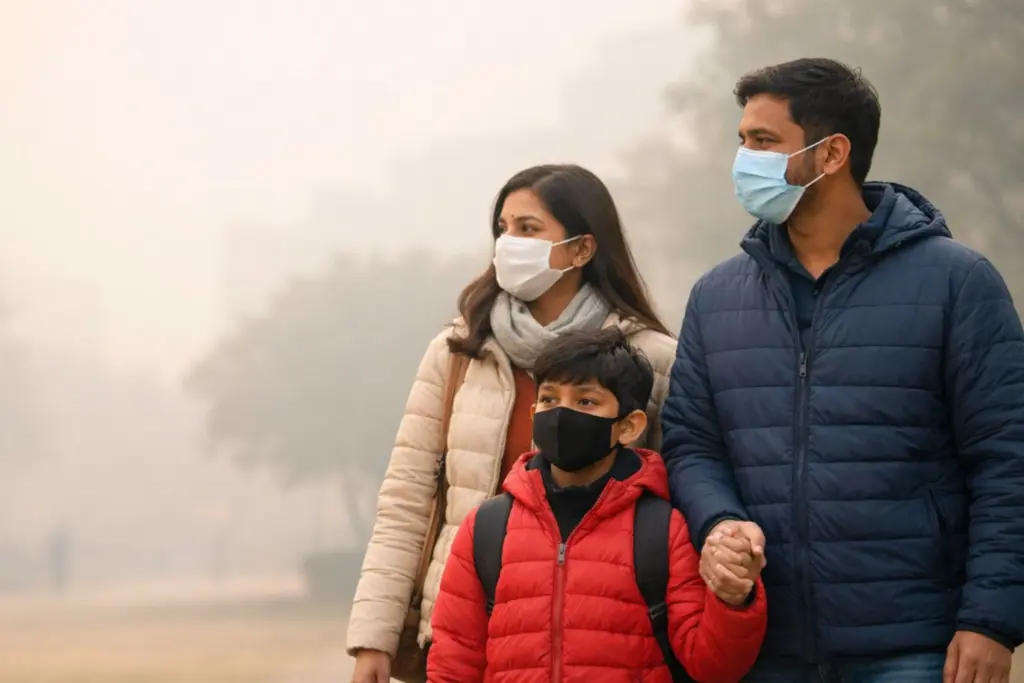
What is AQI: When winter sets in, the air in many cities starts to look hazy; a mixture of fog, smoke, and dust that won’t lift. That’s when terms like AQI, PM2.5, and PM10 pop up everywhere: news tickers, weather apps, school WhatsApp groups. But beyond the buzzwords, these numbers matter because they tell you how safe the air is for your lungs, especially for kids, older adults, and anyone with asthma or allergies.
So, what exactly is AQI?
AQI stands for Air Quality Index. It’s a single score that sums up how polluted the air is on a given day and what that pollution could mean for your health. Think of it as a quick “air safety rating.” Authorities track multiple pollutants, like smoke particles, dust, and gases, and whichever pollutant is at the worst level usually decides the AQI number you see.
Also Read | Early COPD symptoms you shouldn’t ignore
AQI levels and what they mean for your health
| AQI Range | Air Quality | What it can mean for health |
| 0-50 | Good Air | It is generally safe for everyone |
| 51-100 | Satisfactory | Usually okay; very sensitive people may feel mild irritation. |
| 101–200 | Moderate | Some may notice mild throat discomfort, breathing irritation. |
| 201–300 | Poor | Kids, elderly, and people with asthma/allergies may feel symptoms sooner. |
| 301–400 | Very poor | Higher risk for everyone; outdoor activity should be limited. |
| 401–500 | Severe | Hazardous air; even healthy people can feel unwell. Avoid the outdoors. |
What are PM2.5 and PM10?
You’ll often see PM2.5 and PM10 listed alongside AQI. PM stands for particulate matter; tiny solid and liquid particles floating in the air. The number tells you the particle size in micrometres (µm).
PM10 = larger particles (up to 10 µm)
These are the dustier, heavier particles, about one-seventh the width of a human hair. They usually get trapped in the nose, throat, and upper airways.
Common sources:
- Road dust
- Construction and demolition work
- Burning leaves/wood
- Vehicle emissions
What it can do to the body:
- Throat irritation, coughing
- Triggered asthma symptoms
- Shortness of breath, especially during exertion
PM2.5 = ultra-fine particles (2.5 µm or smaller)
These are much smaller, roughly 30 times thinner than a human hair. Because they’re so fine, they can travel deep into the lungs and may even enter the bloodstream, which is why they’re considered more harmful.
Common sources:
- Diesel and vehicle exhaust
- Factory and industrial emissions
- Crop-residue burning
- Fireworks and cigarette smoke
What it can do to the body:
- Burning eyes, irritated throat
- Cough, phlegm, breathing trouble
- Higher long-term risk for heart and lung disease
- More infections and weaker immunity in children
How AQI and PM levels affect your day:
| AQI Category | What you may notice | What to do |
| Good (0–50) | Clear air, easy breathing | Outdoor walks and play are fine. |
| Moderate (51–100) | Mild haze | Sensitive people should limit dusty exposure. |
| Poor (101–200) | Visible smog, mild irritation | Reduce outdoor time for kids/elderly. |
| Very Poor (201–300) | Eye burn, strong smell | Use masks outdoors; consider purifier indoors. |
| Severe (300+) | Thick smog, breathlessness | Stay indoors as much as possible. |
How to check AQI in your area
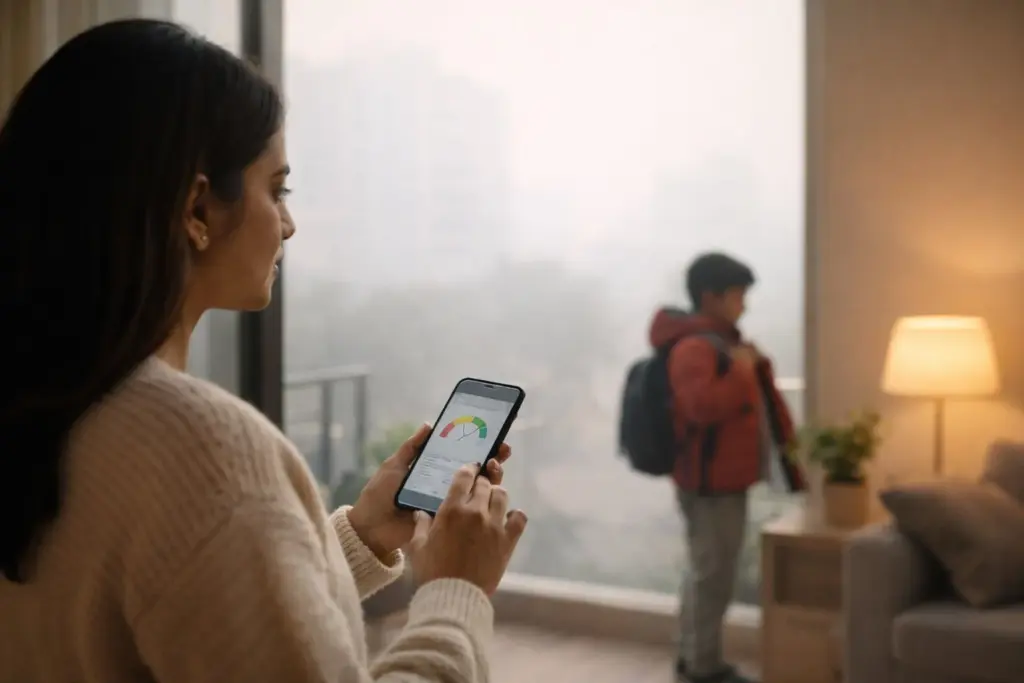
It’s quick: check your phone’s weather app, local air-quality apps, or official sources like the Central Pollution Control Board (CPCB). Pollution often peaks in early mornings and evenings, so those are good times to double-check before stepping out.
How to protect yourself from bad AQI?
- If AQI is above 200, cut outdoor time and avoid outdoor workouts
- Keep windows shut during peak pollution hours
- Use an air purifier if possible, especially for PM2.5-heavy days
- Indoor plants can improve the feel of indoor air, but they won’t replace ventilation or purification
Also Read | Why air pollution worsens asthma, and what you can control
Air pollution isn’t just a “science topic”; it shows up in your throat, your eyes, and your breathing. So, along with temperature and rain, make AQI part of your daily weather check.