
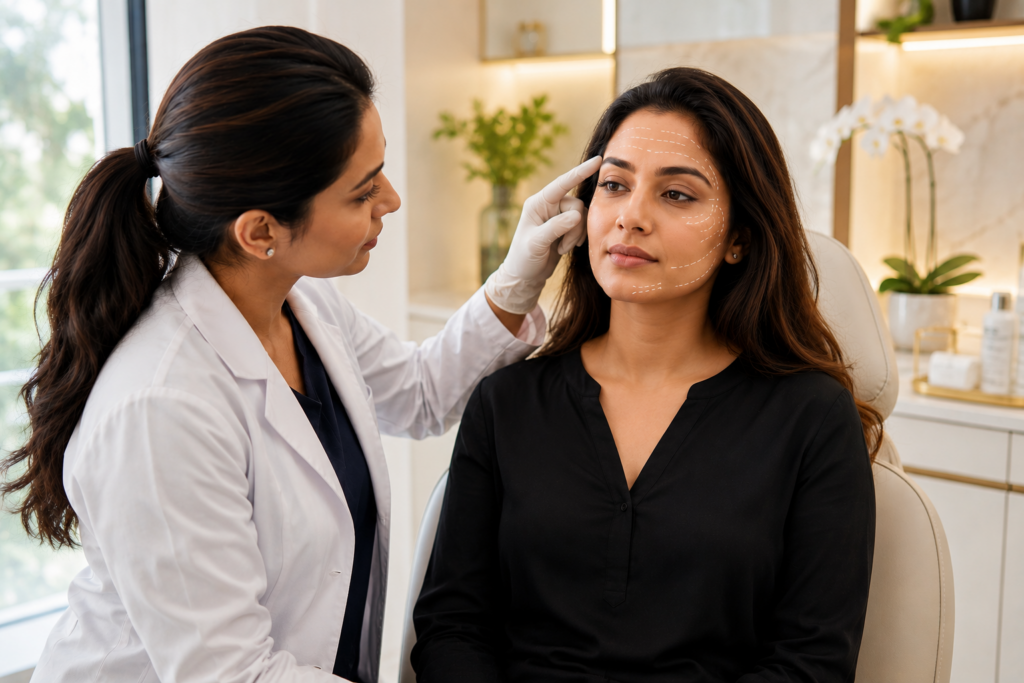
Non-surgical cosmetic procedures: You don’t need to go under the knife to change how you look anymore. These days, it’s all about small tweaks with needles, lasers, and clever tech. No long recovery, no dramatic results—just subtle changes that make you look less tired, more refreshed, and maybe a little younger.
We’re talking Botox, fillers, skin boosters, and a bunch of new treatments that didn’t exist a decade ago.
Why is non-surgical trending?
Let’s be honest, nobody has the time (or nerves) for full-on surgery unless it’s necessary. Non-surgical cosmetic procedures exploded in popularity because:
- They’re quick (many done in under an hour)
- No general anesthesia
- Minimal downtime
- Results are often reversible or temporary
And the biggest shift? People don’t want to look “done” anymore. They want to look like themselves, just a little smoother, sharper, and fresher.
Also Read | Can homoeopathy treat skin problems? Where it may help and where it is not enough
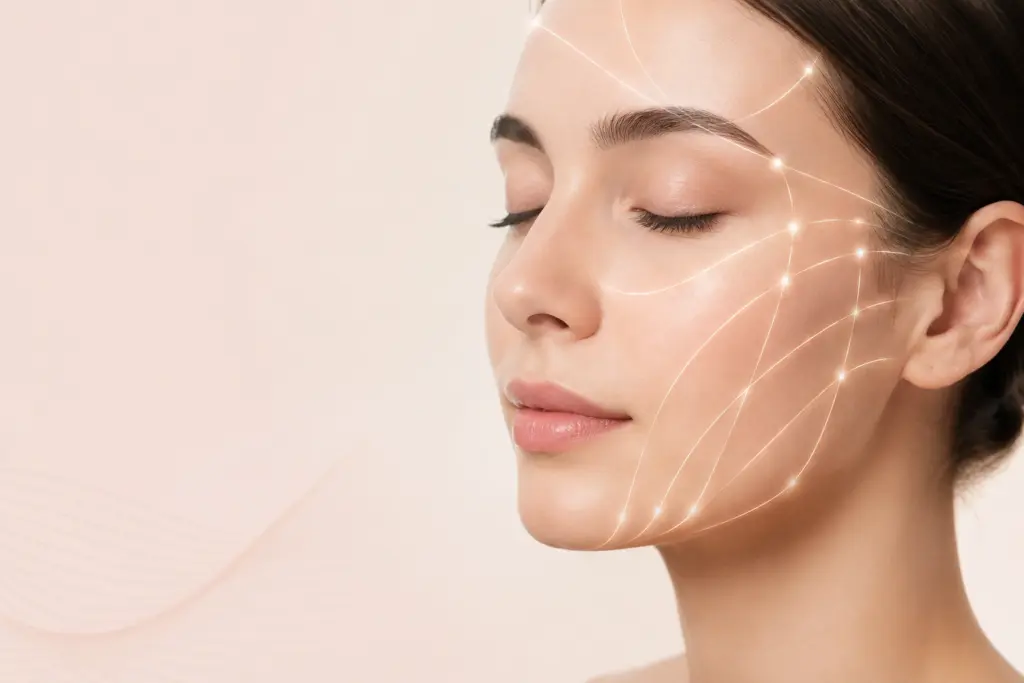
Botox: Freeze the lines, not your face
Botox isn’t new, but people are using it differently now. It’s a purified protein that temporarily blocks the nerve signals that cause muscles to contract. When injected into the right spots (like the forehead, between the eyebrows, or around the eyes), it softens wrinkles caused by movement—those frown lines, crow’s feet, and forehead creases.
Old stereotype: frozen, expressionless faces.
New reality: micro-doses, precise placement, subtle effect.
It kicks in within 3–5 days, lasts around 3–4 months, and is insanely popular for a reason—it works.
Fillers: Add volume where it fades
Dermal fillers do the opposite of Botox. Instead of freezing muscles, they restore volume. Most are made of hyaluronic acid (HA), a substance your body already makes. As you age, you lose fat and collagen under your skin. That’s why cheeks flatten, lips thin out, and nasolabial folds (the lines from your nose to mouth) deepen.
Fillers can:
- Plump up lips
- Sharpen jawlines
- Lift cheekbones
- Smooth out deep lines
Results are immediate and typically last 6–18 months depending on the product and area.
Beyond Botox and Fillers
The menu of non-surgical treatments is growing fast:
- Skin boosters: Microinjections of HA to deeply hydrate and improve glow
- Thread lifts: Temporary sutures used to “lift” sagging skin without surgery
- Laser resurfacing: Improves skin texture, pigmentation, and scars
- Chemical peels: Controlled exfoliation to fade dark spots and dullness
There’s even “baby Botox,” “liquid rhinoplasty,” and “jawline contouring” now. It’s not just about anti-aging anymore—it’s about balance, proportion, and texture.
Also Read | Summer skincare diet tips for naturally glowing skin
The science part: safe when done right
These treatments sound simple, but they need skill. It’s not just about injecting stuff. It’s about understanding facial anatomy, using the right product in the right amount, and knowing how to avoid nerves and blood vessels. That’s why it matters who’s doing it. Always go to a trained dermatologist or aesthetic physician. And never fall for deep discounts on injectables. If it’s cheap, something’s probably off.
Final word
Non-surgical doesn’t mean risk-free, but it’s definitely changed how people think about beauty. It’s no longer about changing your face. It’s about fine-tuning what you already have. If you’re curious, ask questions. See real before/afters. Start small. No pressure, no rush.
FAQS
Botox vs. Fillers: What’s the difference?
Botox relaxes facial muscles to soften expression lines; fillers add volume to plump and contour sunken areas
How long do results last?
Botox lasts 3–4 months; fillers last 6–18 months.
What else is included “beyond” injections?
Chemical peels, laser resurfacing, microneedling, and RF skin-tightening treatments.
Why are they so popular?
They offer fast results, zero surgery, minimal downtime, and lower costs.
Are the results reversible?
Botox fades naturally over time, and most fillers can be instantly dissolved with an enzyme.