
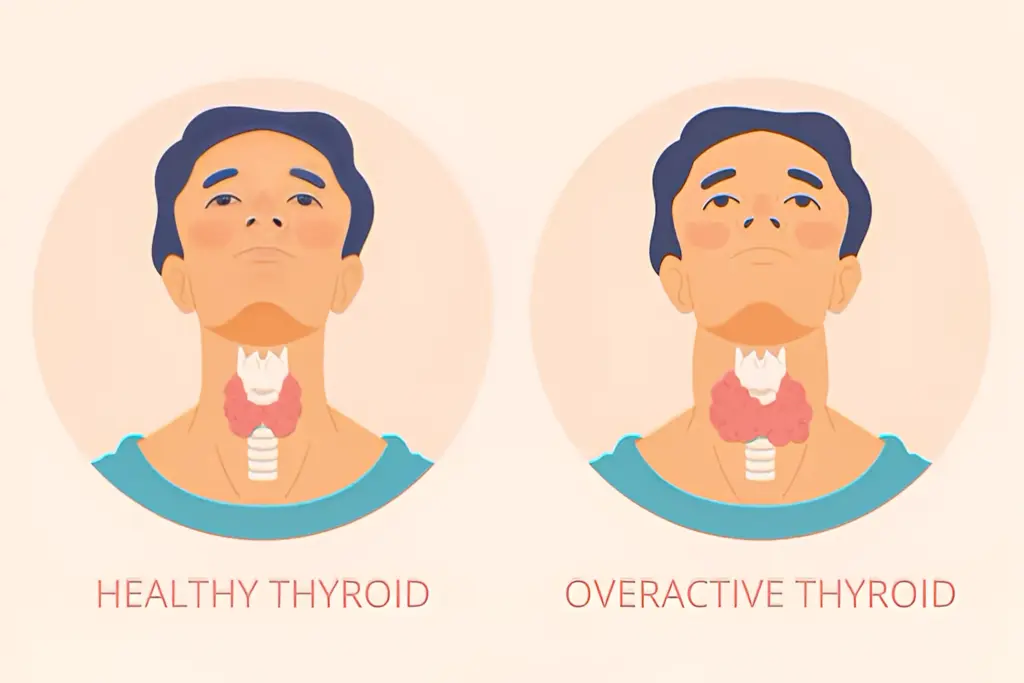
Hyperthyroidism vs. Hypothyroidism: Your thyroid, that small butterfly-shaped gland at the base of your neck, controls numerous bodily functions through the hormones it produces.
When this gland malfunctions, it creates ripple effects throughout your entire body. Understanding the difference between hyperthyroidism and hypothyroidism helps you detect symptoms early and seek appropriate treatment.
Also Read | What does the thyroid gland do, and why is it vital?
Hyperthyroidism is when your body accelerates:
Hyperthyroidism occurs when your thyroid produces excessive hormones, essentially setting your body’s systems into overdrive. This condition affects approximately 1% of women and a smaller percentage of men.
Key Symptoms of Hyperthyroidism:
Your body reveals hyperthyroidism through several distinctive signs:
- You lose weight despite maintaining or increasing food intake
- Your heart races even during rest (tachycardia)
- You feel anxious and irritable or experience mood swings
- Your hands develop a fine tremor
- You sweat excessively and feel heat-intolerant
- Your eyes may bulge or appear more prominent (Graves’ ophthalmopathy)
- Your skin becomes thin, and your hair brittle
- You experience irregular menstrual cycles (women)
- Graves’ disease causes most hyperthyroidism cases, but toxic nodules, thyroiditis, and excessive iodine intake contribute as well.
Hypothyroidism is when your body slows down
Hypothyroidism creates the opposite effect; your thyroid produces insufficient hormones, causing bodily functions to slow. This more common condition affects nearly 5% of the population, with higher prevalence in women and older adults.
Key Symptoms of Hypothyroidism
Your body signals hypothyroidism through these warning signs:
- You gain weight despite unchanged eating habits
- You feel constantly fatigued and require more sleep
- Your skin becomes dry, and your hair thins.
- You experience increased cold sensitivity
- Your thinking becomes foggy, and your memory lapses
- You develop constipation
- Your muscles ache and feel weak
- Your voice deepens, and your speech slows
- Your menstrual periods become heavier (women)
- Hashimoto’s thyroiditis, an autoimmune condition, causes most hypothyroidism cases. Thyroid surgery, radiation treatment, and certain medications also contribute.
How to diagnose thyroid?
Blood tests measuring TSH (thyroid-stimulating hormone) and thyroid hormone levels determine your diagnosis. High TSH with low thyroid hormones indicates hypothyroidism, while low TSH with high hormone levels points to hyperthyroidism. Don’t self-diagnose based solely on symptoms. Many thyroid symptoms mimic other conditions, and proper testing provides definitive answers.
Also Read | Best and worst foods for thyroid health: What to eat and avoid
How to treat thyroid?
Hyperthyroidism treatment focuses on reducing hormone production through:
- Anti-thyroid medications (methimazole, propylthiouracil)
- Radioactive iodine therapy
- Thyroid surgery in severe cases
- Beta-blockers for symptom relief
- Hypothyroidism treatment involves replacing missing hormones with:
- Levothyroxine (synthetic thyroid hormone)
- Regular monitoring and dosage adjustments
Both conditions require lifelong management but allow normal, healthy lives with proper treatment.
Recognise these symptoms and consult your physician promptly if you suspect thyroid dysfunction. Early diagnosis leads to effective treatment and prevents complications that affect your quality of life.