
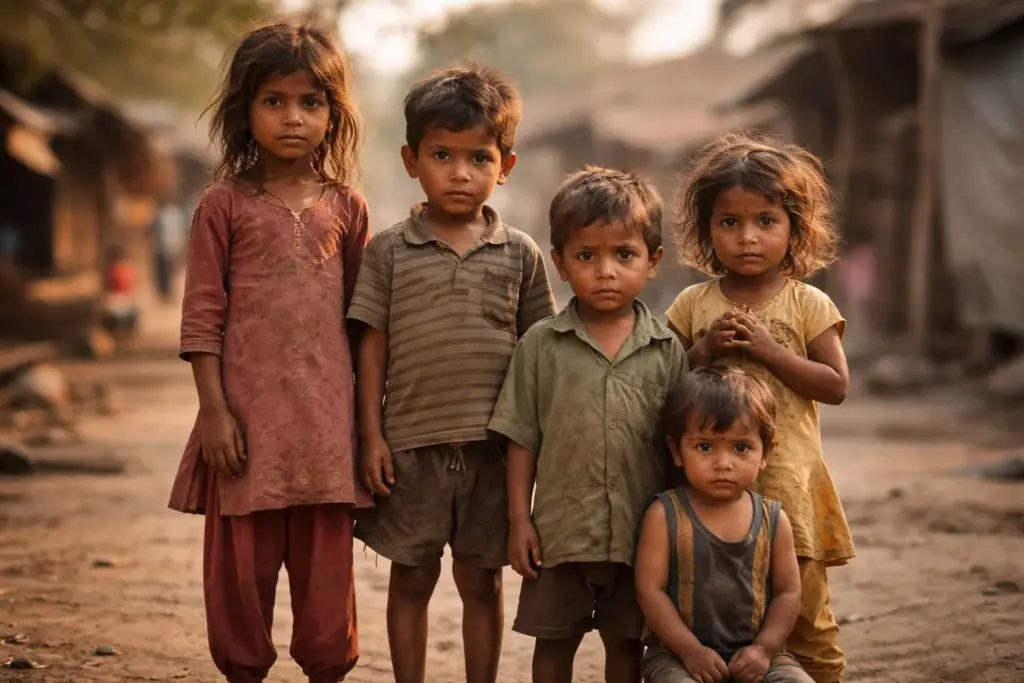
Climate-driven heat: Extreme heat combined with high humidity may cause more than three million additional cases of stunted growth among South Asian children over the next 25 years, according to new research.
Scientists at the University of California Santa Barbara examined how pregnant women’s exposure to hot, humid weather affects their children’s development across the region.
Also Read | Children in climate-vulnerable Indian districts 25% more likely to be underweight: Study
The team analysed height-for-age measurements, a standard gauge of chronic health problems in children under five, comparing actual height against typical measurements for each age group.
Expectant mothers are particularly vulnerable to heat stress. Extra weight and hormonal shifts during pregnancy make it harder for their bodies to regulate temperature.
Published in the journal Science, the findings reveal that humidity amplifies the damaging effects of heat, largely by blocking the body’s cooling mechanisms in pregnant women.
The timing matters significantly. Lead researcher Katie McMahon, a doctoral student, explained that early pregnancy poses the greatest risk to the developing fetus, while late pregnancy increases danger for the mother.
Third-trimester exposure proved especially troubling. Professor Kathy Baylis, who teaches geography at UC Santa Barbara, said health problems from combined heat and humidity were roughly four times worse than from heat by itself.
The researchers used wet-bulb globe temperature, which factors in humidity, radiant heat and air movement alongside standard temperature readings.
Their data showed that each additional day with wet-bulb temperatures topping 29 degrees Celsius correlated with fewer live births six to 12 months afterwards. Conversely, days exceeding 35 degrees Celsius are linked to higher birth rates within three months of exposure.
These patterns align with earlier studies connecting heat exposure to premature delivery. The research suggests hotter conditions push births earlier, while hot-humid environments may lower conception rates, increase early pregnancy losses, or both.
“Exposure to hot, humid conditions in-utero is dangerous for child health, and more dangerous than just hot temperatures alone,” McMahon said.
South Asia faces particularly severe consequences. Climate projections show the region, home to some of Earth’s most crowded places, will experience sharp increases in hot, humid conditions as global warming continues.
The researchers warn that focusing solely on temperature measurements leads doctors, scientists and public health officials to underestimate extreme weather’s true toll.
Their analysis drew child health information from the Demographic and Health Surveys, an extensive household study covering public health and population data. Weather records came from the Climate Hazards Center at UC Santa Barbara.
The study underscores an often-overlooked dimension of climate change: humidity’s role in worsening heat’s health impacts, especially for vulnerable populations like pregnant women and their developing children.