
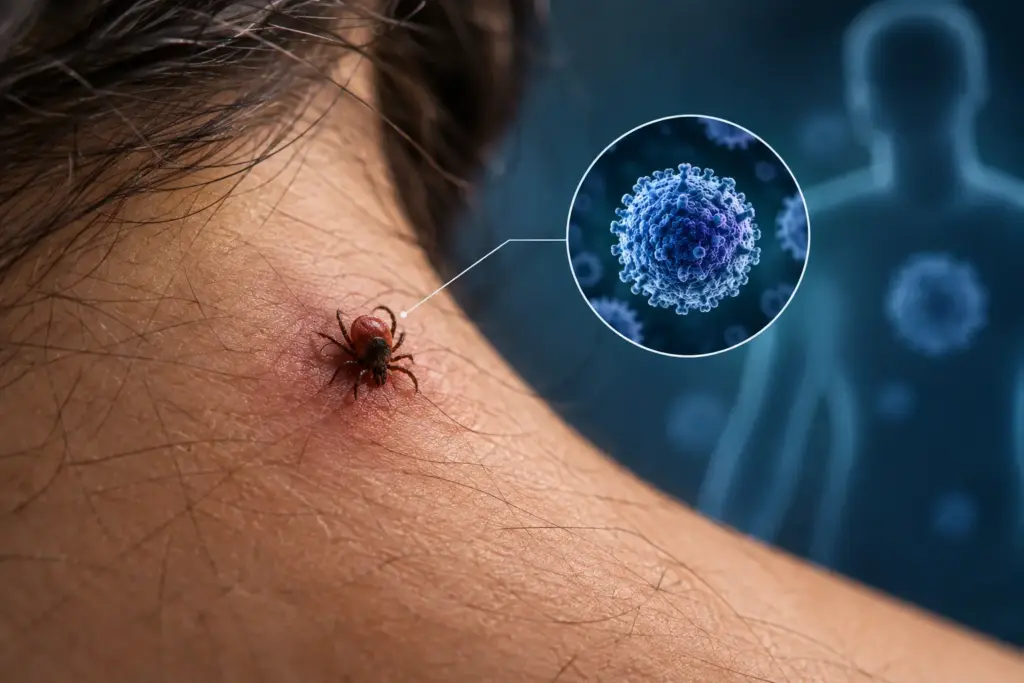
China virus: Scientists in China have discovered a new tick-borne virus after studying thousands of people who fell ill after being bitten by ticks. Called Asian longhorned tick nairovirus (ALTNV), it was detected in 10.4% of 3,163 patients tested. The virus can cause fever, fatigue, gastrointestinal symptoms, low platelet counts, and signs of liver injury. But there’s still a lot scientists don’t know, including how widely it may be circulating.
It Was Not Supposed to Be a New Virus
For years, scientists have been following people who got sick for no obvious reason after being bitten by ticks. Many of these cases were associated with Dabie bandavirus (DBV), a known tick-borne virus that can cause severe fever and dangerously low platelet counts. But some patients didn’t quite fit the mold. But when the researchers examined their blood samples and the virus’s genetic material more closely, they made an unexpected discovery—a new virus, now called ALTNV.
Also Read | Scientists keep ‘mini-brains’ alive for five years, discover built-in biological clock
It Showed Up in 1 in 10 Patients
The discovery became even more interesting when researchers looked at a much larger group. ALTNV was detected in 10.4% of 3,163 people who had been bitten by ticks. Patients experienced symptoms that could easily be mistaken for the flu—fever, muscle aches, and fatigue—with some also developing gastrointestinal or respiratory problems. Researchers also found low platelet counts and signs of liver injury in infected patients.
The Bigger Red Flag? Two Viruses at Once
Some patients weren’t infected with ALTNV alone. They had both ALTNV and DBV, and this group was more likely to develop complications involving the lungs and kidneys. Seven patients in this coinfected group died during the study. But there’s an important distinction: researchers did not conclude that ALTNV alone caused these deaths. The severe outcomes were accompanied by DBV, which is already known to cause serious disease.
Also Read | AI just designed new viruses, and biology may never be the same
A Discovery That Raises More Questions
There is currently no specific antiviral treatment or vaccine for ALTNV, meaning treatment mainly focuses on supportive care. The bigger challenge is diagnosis, because its early symptoms can look like flu and other tick-borne infections. And this virus may not be limited to what scientists have found so far. ALTNV has currently been identified in China, but researchers still need to determine how widely it circulates and whether it exists beyond the country. For now, avoiding tick bites remains the simplest line of defense.