
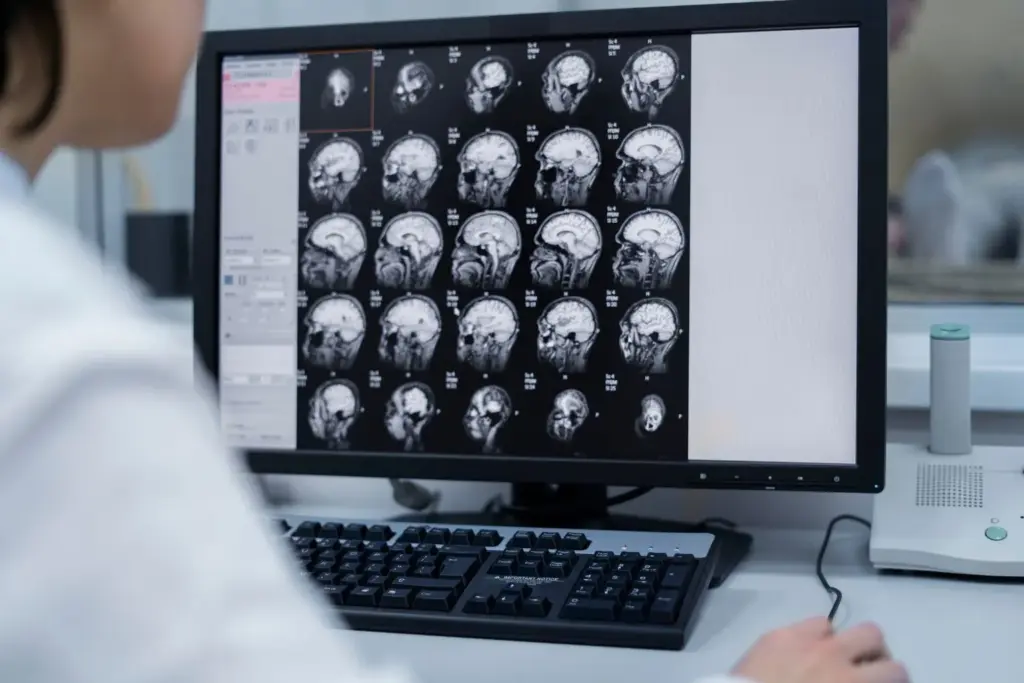
Alzheimer’s reversed: Scientists at University Hospitals and Case Western Reserve University say they have reversed advanced Alzheimer’s disease in laboratory mice, challenging the century-old assumption that the condition cannot be undone.
The team focused on NAD+, a molecule essential for cellular energy production that naturally declines with age. Their research, published in Cell Reports Medicine, found that restoring NAD+ levels in mice with severe Alzheimer’s pathology led to both brain repair and full cognitive recovery.
“The key takeaway is a message of hope, the effects of Alzheimer’s disease may not be inevitably permanent,” said Dr Andrew Pieper, the study’s senior author and director of the Brain Health Medicines Center at University Hospitals. “The damaged brain can, under some conditions, repair itself and regain function.”
Also Read | Experimental drug shows promise against early Alzheimer’s in mice
The researchers discovered that NAD+ levels drop far more dramatically in Alzheimer’s brains than in normal ageing. Without adequate NAD+, cells lose the ability to carry out functions needed for survival.
The team tested two different mouse models engineered with genetic mutations that cause Alzheimer’s in humans. One group carried mutations affecting amyloid processing, while the other had a mutation in the tau protein. Both amyloid and tau abnormalities are hallmarks of early Alzheimer’s.
These mice developed brain damage resembling human Alzheimer’s, including deterioration of the blood-brain barrier, nerve fibre degeneration, inflammation, impaired formation of new neurons, reduced communication between brain cells, and widespread oxidative damage. The animals also showed severe cognitive problems similar to those seen in Alzheimer’s patients.
The researchers first prevented NAD+ loss before disease onset, then tested whether restoring NAD+ after significant disease progression could reverse the condition. They used a drug called P7C3-A20, developed in Pieper’s laboratory, to restore NAD+ balance.
Maintaining NAD+ levels protected mice from developing Alzheimer’s. More surprisingly, delayed treatment in mice with advanced disease allowed their brains to repair the major damage caused by the genetic mutations. Both groups of mice fully regained cognitive function.
Blood tests showed normalised levels of phosphorylated tau 217, a recently approved clinical marker for Alzheimer’s in humans. This provided additional confirmation of disease reversal.
“We were very excited and encouraged by our results,” Pieper said. “Seeing this effect in two very different animal models, each driven by different genetic causes, strengthens the idea that restoring the brain’s NAD+ balance might help patients recover from Alzheimer’s.”
The findings build on earlier work by the same team showing that restoring NAD+ balance achieved recovery after severe traumatic brain injury.
Lead researcher Dr Kalyani Chaubey said the study demonstrated one drug-based method to accomplish this reversal in animal models and identified candidate proteins in human Alzheimer’s brains that may relate to the ability to reverse the disease.
No clinical trial has ever tested a drug for Alzheimer’s, intending to reverse the disease rather than prevent or slow it. This study represents a shift in thinking about what might be possible for treatment.