
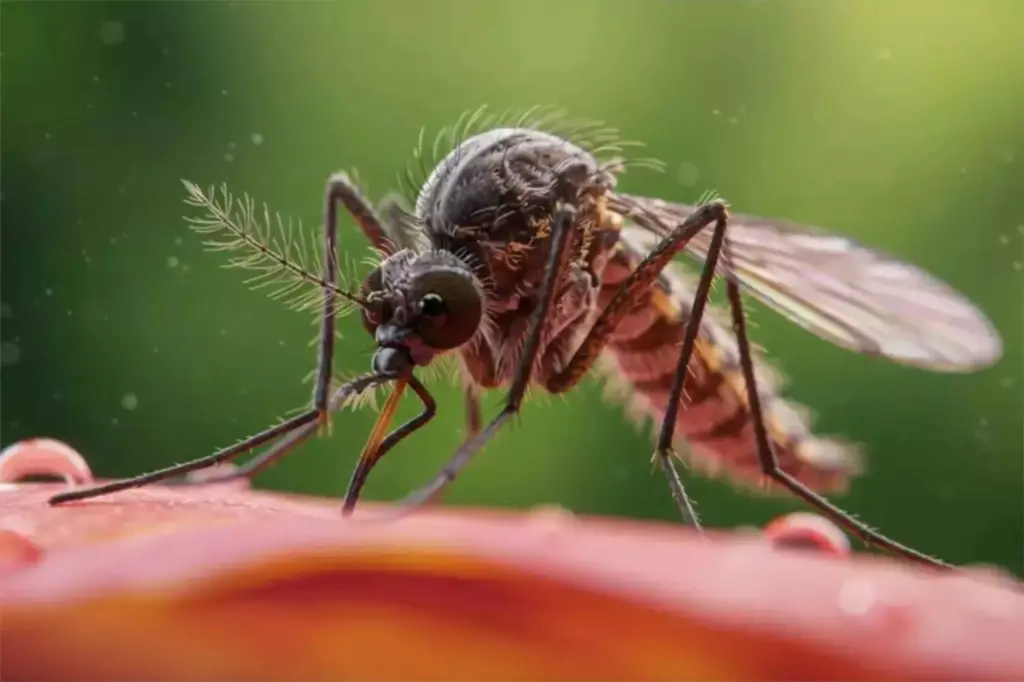
Iceland mosquitoes: Iceland has recorded mosquitoes for the first time, a milestone scientists long warned could arrive as a warming climate makes the North Atlantic nation friendlier to insects. Until now, Iceland and Antarctica were among the only places on Earth without resident mosquito populations.
The breakthrough came after a citizen scientist, Björn Hjaltason, spotted an unusual fly on a red wine–soaked ribbon he uses to attract insects near Kiðafell in Kjós at dusk on October 16. He captured the specimen, then two more, and sent them to the Natural Science Institute of Iceland. Entomologist Matthías Alfreðsson confirmed all three were Culiseta annulata, two females and one male, a cold-tolerant species capable of overwintering in basements and barns.
Also Read | New York confirms first locally acquired chikungunya case since 2019
Researchers have long suspected mosquitoes could establish themselves in Iceland because of abundant breeding sites such as marshes and ponds, even though many species would still be unable to endure the harsh climate. That calculus is shifting as the Arctic warms about four times faster than the global average. Iceland has endured record heat this year, accelerating glacier loss and even drawing warmer-water fish such as mackerel into its seas.
The Iceland find fits a broader pattern: as temperatures rise, mosquitoes are expanding their range worldwide. In the UK this year, eggs of the Egyptian mosquito (Aedes aegypti) were detected, and the Asian tiger mosquito (Aedes albopictus) was found in Kent, both invasive species known to transmit tropical diseases including dengue, chikungunya and Zika. While the newly identified Icelandic species is not the same, its arrival underscores how climate change is reshaping ecosystems at the planet’s northern fringe.