
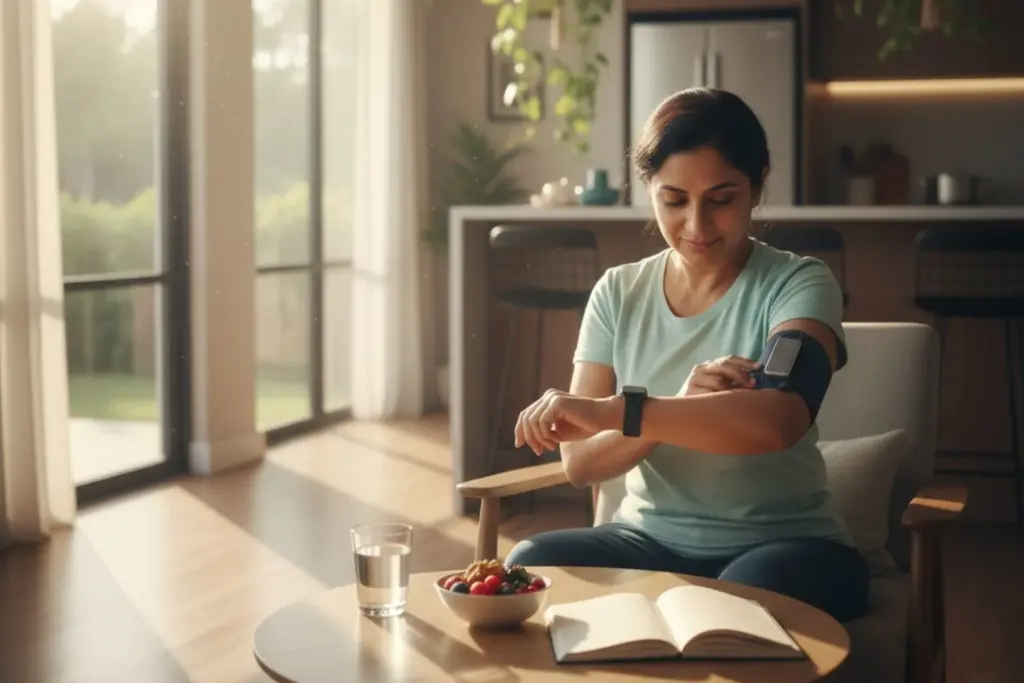
Natural light and diabetes: Sitting near a window during daytime hours could help people with type 2 diabetes manage their blood sugar levels, a small study suggests.
Researchers at Maastricht University in the Netherlands tested whether natural light exposure indoors affects glucose control in diabetic patients.
The team recruited 13 people with type 2 diabetes, averaging 70 years old, for a controlled experiment. Participants spent four and a half days in rooms with large windows, exposed only to natural light between 8 a.m. and 5 p.m.
Also Read | Study finds early gestational diabetes affects 1 in 5 pregnant women
During daylight hours, volunteers mostly sat at desks using phones and computers with screens dimmed. After 5 p.m., they experienced dim artificial lighting until 11 p.m., then slept in total darkness until 7 a.m. All participants continued their regular diabetes medications, ate identical meals and followed the same exercise schedule.
The researchers repeated the experiment with the same individuals in windowless rooms lit entirely by artificial sources, either a month before or after the natural light trial.
Continuous glucose monitors tracked blood sugar levels in 10 participants who had working devices during both experiments. Results showed participants maintained blood sugar within healthy ranges 50 per cent of the time when exposed to natural light. Under artificial lighting, they achieved healthy levels only 43 per cent of the time.
The study defined healthy blood sugar as 4.4 to 7.2 millimoles per litre, consistent with guidelines from Britain’s National Health Service and the U.S. Centers for Disease Control and Prevention.
While the percentage difference appears modest, spending extended periods outside healthy ranges can increase risks of diabetes complications, including cardiovascular problems, said researcher Joris Hoeks.
The effect likely stems from light-sensitive eye cells that regulate the body’s circadian rhythms, 24-hour cycles controlling metabolic processes like blood sugar regulation. These cells respond more strongly to shorter wavelengths abundant in natural light, Hoeks explained.
Previous research has shown artificial light at night disrupts circadian rhythms and raises blood sugar, while outdoor sunlight appears to improve insulin response. However, no earlier studies examined natural light filtering through windows indoors, where most people spend their days.
The research offers a simple potential tool for the millions managing type 2 diabetes, positioning themselves near windows during daytime hours.