
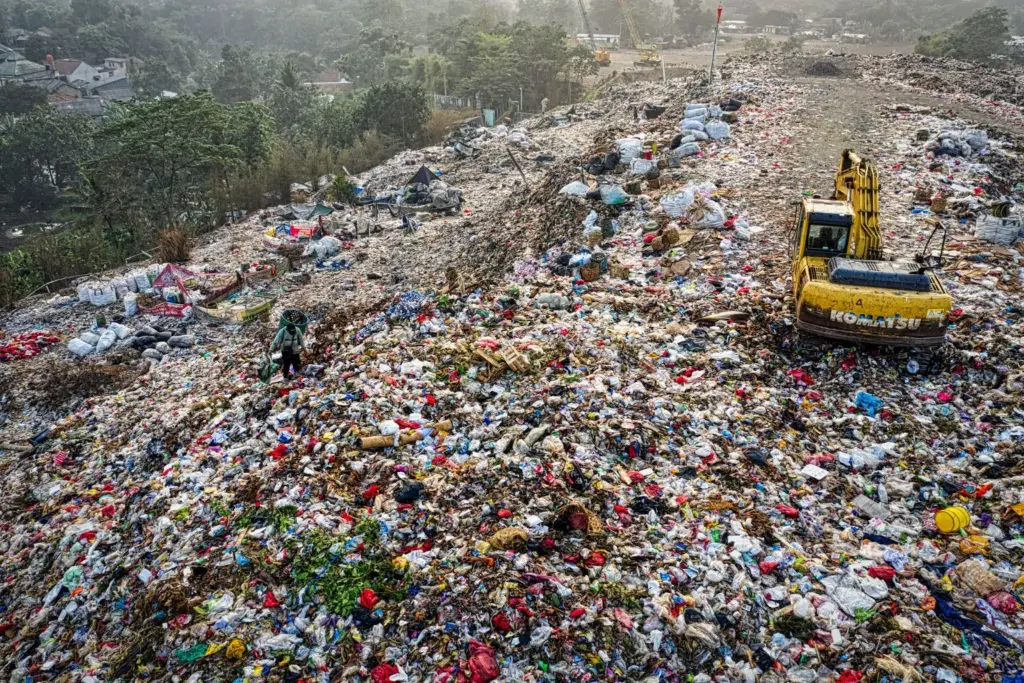
Plastics emissions: Health harms linked to the world’s plastics system could climb sharply over the next two decades, with researchers warning that the combined impact of greenhouse gas emissions, air pollution and toxic chemical releases from plastic production and disposal may more than double by 2040 if today’s growth trends continue.
The findings come from a study published in The Lancet Planetary Health, which argues that the global plastics boom is still far from slowing. The authors say plastic production may not peak until after 2100 under current trajectories, extending environmental pressures and adding to health burdens in communities already facing heavy pollution exposure.
Also Read | Research suggests microplastics shift the gut in patterns seen in cancer
The research team, led by scientists from the London School of Hygiene and Tropical Medicine along with partner institutes in France, said plastic pollution is increasingly being linked to health risks, but the overall scale of those risks has remained difficult to pin down. They said clearer estimates can help shape policy and guide efforts to reduce pollution while supporting healthier and more sustainable economic activity.
One major barrier, the authors noted, is the limited transparency around what plastics contain. They said non-disclosure of plastic chemical composition is “severely limiting” efforts to assess the full lifecycle impacts of products and to design effective regulation.
The study is described as the first global-scale plastics lifecycle assessment that estimates health impacts in terms of disability-adjusted life years (DALYs), tying those health burdens to emissions and exposures associated with climate-warming gases, air-polluting particles and chemicals released across plastics’ entire lifecycle.
Researchers modelled impacts from multiple stages, including raw material extraction, polymer production, and what happens after use: waste collection, recycling processes, dumpsites, open burning, and leakage into the environment.
Their modelling framework, they said, is designed to be updated as new data becomes available, improving the precision of health estimates linked not only to plastics but also to alternatives and substitutes as policies evolve.
The results point to primary (virgin) plastic production and open burning as major drivers of harm. The authors said emissions across plastics’ lifecycles contribute to health burdens associated with global warming, air pollution, cancer risks linked to toxic exposures, and other non-communicable diseases. Under a business-as-usual projection for 2016 to 2040, they found overall health impacts would more than double.
The researchers urged governments to focus on upstream solutions, including tighter controls and significant cuts in the production of new plastics for non-essential uses. They argued that reducing virgin plastic output is central to lowering emissions and exposure risks and that policies must address plastics from production through disposal, rather than concentrating only on waste management.
More than 175 countries have agreed to work toward a Global Plastics Treaty, which remains under negotiation. The authors said a coordinated global approach that covers the full plastics lifecycle will be critical if countries want to meaningfully protect human health.