
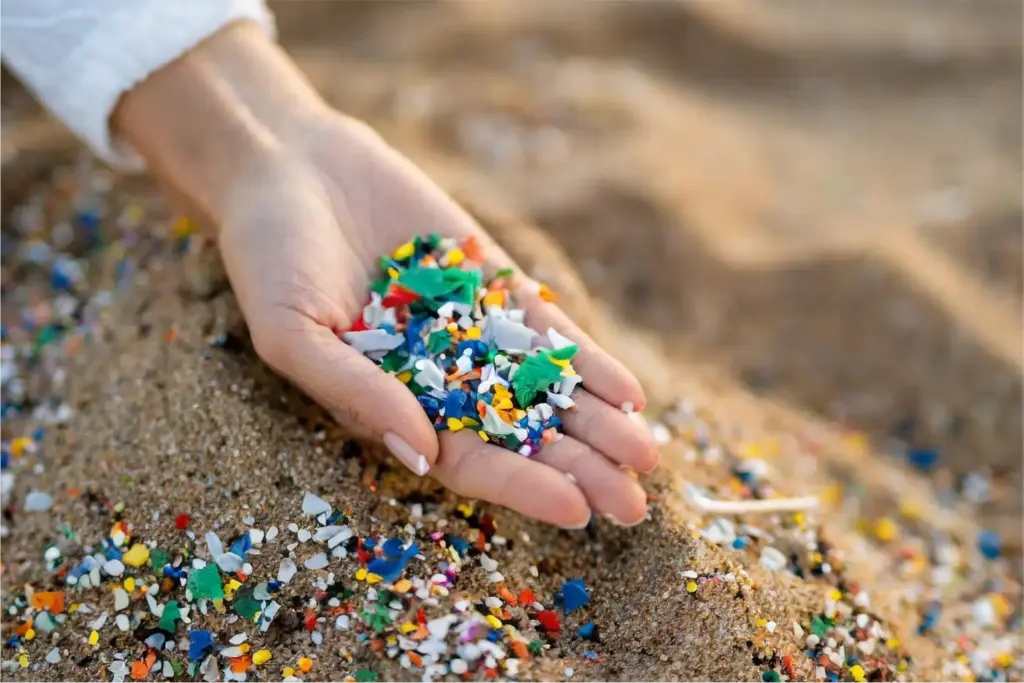
Microplastics and cancer: Tiny plastic particles are altering the balance and behaviour of gut bacteria in ways that resemble microbiome patterns reported in depression and colorectal cancer, researchers reported at UEG Week 2025.
The work, part of microONE, a COMET Module led by Austria’s CBmed with international partners, is among the first to directly test how common microplastics (=5 mm) interact with the human gut microbiome.
Using stool from five healthy adults, scientists grew microbial communities outside the body and exposed them to five widely encountered plastics, including polystyrene and polyethylene, at doses comparable to everyday exposure and at higher, stress-level concentrations.
Also Read | Study detects microplastics in reproductive fluids, raising fertility questions
Overall bacterial counts remained stable, but the microplastic-exposed cultures became more acidic, pointing to shifts in bacterial metabolism. Researchers also detected changes in key microbial by-products, including valeric acid, lysine and lactic acid, some of which mirror metabolite profiles previously associated with mental-health disorders and colorectal cancer.
Lead author Christian Pacher-Deutsch said several mechanisms may be at play: microplastics can foster biofilms that create new niches favouring certain microbes, and plastic-associated chemicals may interfere with metabolism, driving acid production and pH changes that cascade through the ecosystem. He cautioned that, while the findings highlight measurable microbiome effects, it is too early to infer clinical outcomes, and reducing exposure where feasible is prudent.
The study adds to mounting evidence that microplastics, found in bottled water, household dust and food, can enter the body and interact with biological systems. Separate research from the University of Plymouth has detected nanoplastics inside radishes, showing that particles small enough can pass through roots, despite the protective Casparian strip, and spread through edible plant tissues.
The authors called for larger, in-vivo studies to confirm health impacts, clarify dose–response relationships and identify which plastic types or additives pose the greatest risk to the gut microbiome.