
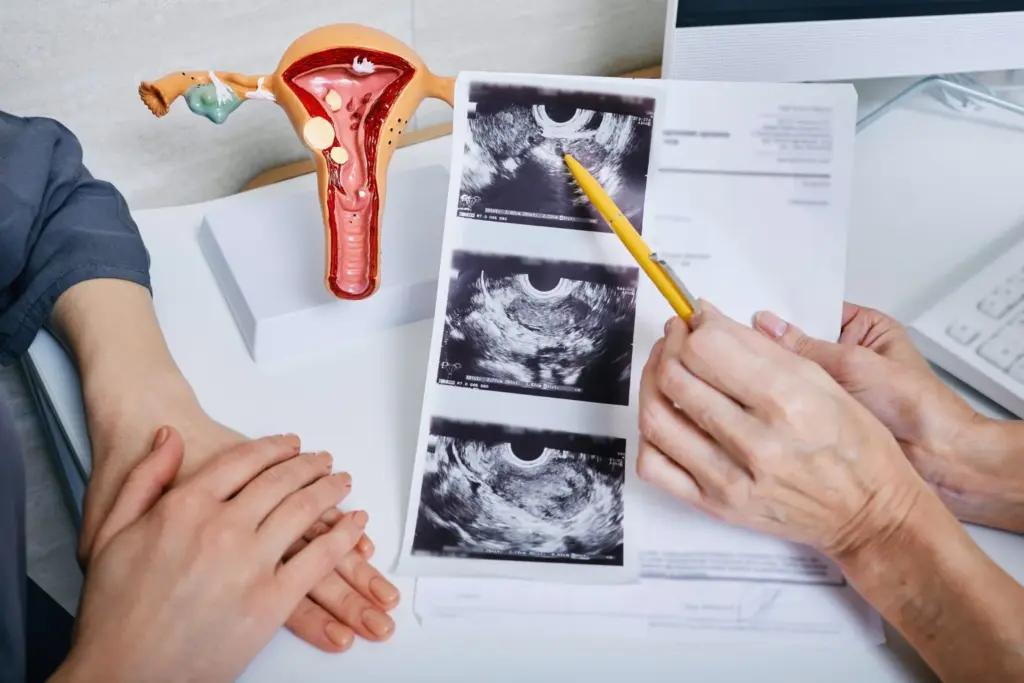
Artificial womb lining: Researchers have built a synthetic uterus lining that lets human embryos attach and grow, offering new ways to understand the first days after conception and why so many pregnancies fail.
The lab-grown tissue allowed donated IVF embryos to implant and release hormones, including the compound picked up by home pregnancy tests. For the first time, scientists could watch the molecular exchange between embryo and womb as pregnancy begins.
“Previously we’ve only had snapshots of this critical stage of pregnancy,” said Dr Peter Rugg-Gunn, who led the research at the Babraham Institute in Cambridge. “This opens up a lot of new directions for us.”
Also Read | Scientists capture first 3D footage of human embryo implanting into uterus
Implantation happens roughly a week after an egg is fertilised, when the embryo burrows into the uterus wall. The phase is essential but poorly documented. Most current knowledge comes from hysterectomies done decades ago on women in early pregnancy.
Rugg-Gunn’s team took uterus tissue samples from healthy donors and separated two cell types. Stromal cells, which support the womb’s structure, were placed in a biodegradable gel. Epithelial cells, which line the uterus’ surface, went on top.
When researchers added donated IVF embryos to this engineered tissue, the tiny cell clusters latched on and embedded themselves. They started pumping out human chorionic gonadotropin and other pregnancy compounds. The embryos developed for up to 14 days, the legal research limit, forming early placenta cells.
The team examined where embryos had attached and decoded the chemical signals moving between the embryo and the lining. These exchanges determine whether pregnancy succeeds. Half of all embryos don’t implant, and doctors can’t explain why, Rugg-Gunn noted. Understanding the process could improve IVF outcomes.
The researchers plan to study how the placenta forms, when many pregnancy complications begin. In one test, they blocked a specific signal between the embryo and the lining, causing serious defects in the placenta tissue.
A separate Chinese study in the same journal used a similar artificial lining to identify drugs that might help patients whose IVF embryos repeatedly fail to implant.