
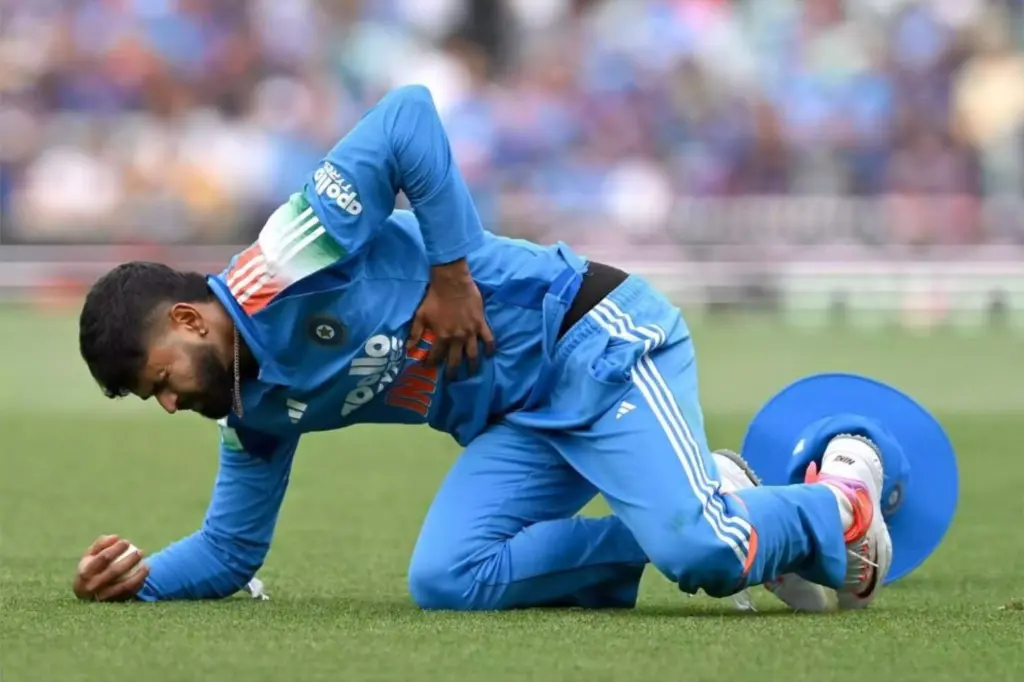
Shreyas Iyer injury: India’s ODI vice-captain Shreyas Iyer is out of the ICU and in stable condition in Sydney after suffering a ruptured spleen and injury to the lower left rib cage during the third ODI against Australia.
The BCCI stated that a repeat scan on October 28 revealed “significant improvement,” following the prompt identification of a splenic laceration and the control of internal bleeding.
Also Read | What is a hip labral tear? Symptoms, causes, and treatment
What Shreyas Iyer’s injury means
A ruptured (lacerated) spleen is a serious abdominal trauma most often caused by a blunt impact to the left side of the chest or upper abdomen, consistent with Iyer’s diving attempt to catch Alex Carey. The spleen is highly vascular; when torn, it can bleed heavily into the abdominal cavity.
Patients may initially appear stable and then deteriorate as blood loss progresses, mirroring Iyer’s course of walking off with assistance before his vital signs dipped and he was rushed to the hospital.
Immediate risks and complications of a spleen injury:
- Internal haemorrhage and shock: Uncontrolled bleeding can lead to a dangerous drop in blood pressure. Even after bleeding is arrested, re-bleeding can occur in the first 24–72 hours, which is why close observation and serial scans are standard.
- Need for intervention: Depending on the severity of the tear, treatment ranges from careful monitoring to minimally invasive arterial embolisation; rarely, emergency surgery or splenectomy (removal of the spleen) is required.
- Infection risk (if the spleen is removed): The spleen helps fight certain bacteria. Post-splenectomy patients need vaccinations and long-term infection precautions.
- Rib/Chest complications: Rib trauma can cause pneumothorax (air leak collapsing the lung) or hemothorax (blood in the chest), and severe pain can limit deep breathing, raising the risk of atelectasis and pneumonia.
According to the BCCI, Iyer’s bleeding was “immediately arrested,” and he remains under observation with the medical team in Sydney, coordinating care with specialists in India. Teammates, including T20 captain Suryakumar Yadav, said they were relieved to hear Iyer was conversing normally and showing steady progress.
How long can Shreyas Iyer take to recover?
Recovery time depends on the grade of splenic injury and the presence of any chest complications. If non-operative management continues to hold and follow-up scans remain stable, athletes can gradually resume activity over weeks to months under medical supervision.
For now, the focus remains on ensuring no recurrent bleeding, protecting lung function after the rib injury, and monitoring for any delayed complications.