
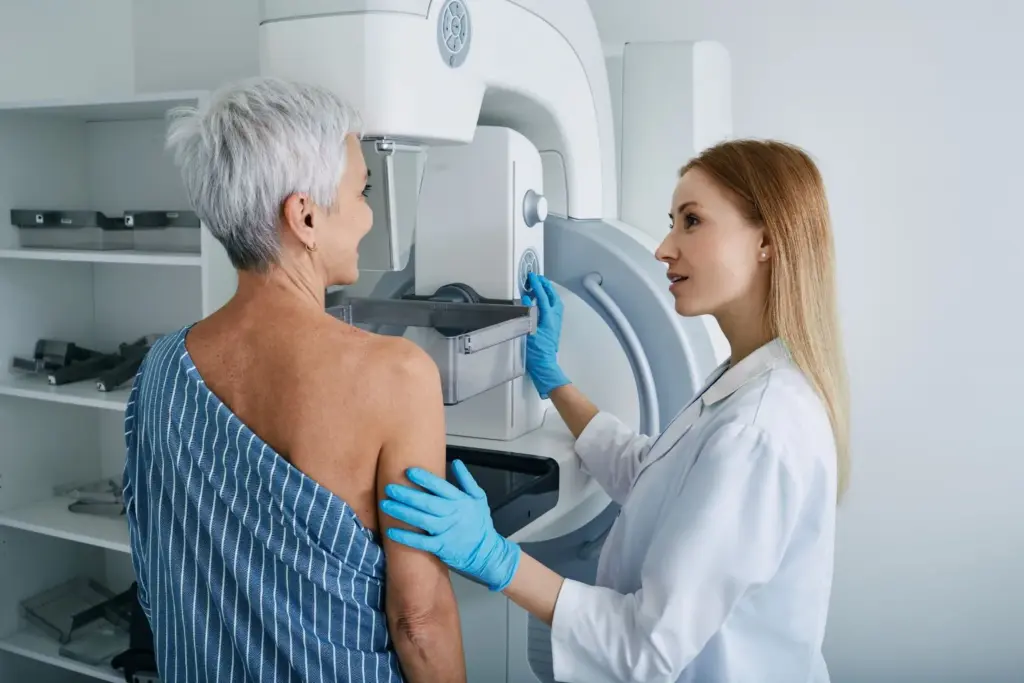
AI and breast cancer: A large Swedish trial has found that using artificial intelligence alongside a radiologist during routine mammography screening can detect more breast cancers without increasing false alarms.
The study, published in The Lancet, is described as the first completed randomised controlled trial to test AI-supported breast cancer screening in a real-world programme. It enrolled more than 100,000 women who underwent standard screening across Sweden in 2021 and 2022.
Also Read | Simple blood test may predict breast cancer treatment response
Participants were randomly assigned to one of two approaches. In the AI arm, a single radiologist reviewed the scans with help from an AI system. In the control arm, scans were read using the standard European model, where two radiologists independently assessed each mammogram.
The AI-supported pathway identified 9% more cancers than the standard approach. Researchers also reported fewer “interval cancers” in the AI group over the next two years, diagnoses made between scheduled screenings, with a 12% lower rate compared with the control group. Interval cancers can be especially concerning because they may grow or spread before the next routine scan.
Performance gains appeared consistent across age groups and breast density levels, both of which can affect screening accuracy. The false-positive rate was similar in both groups, suggesting the extra detections did not come at the cost of substantially more women being called back unnecessarily.
Researchers said AI could help relieve pressure on radiology services, particularly in settings facing staff shortages, but stressed that implementation should be cautious and closely monitored. Some experts also noted that AI can flag changes that are not cancer, meaning specialist oversight remains essential. Others urged a longer follow-up to confirm whether differences in interval cancers persist over time.
Earlier interim results from the same trial suggested AI support could significantly reduce the time radiologists spend reading scans. The AI model used in the trial, Transpara, was trained on more than 200,000 prior mammography examinations from multiple countries.
Globally, an estimated 2.3 million women were diagnosed with breast cancer and around 670,000 died from the disease in 2022, according to the World Health Organization.