
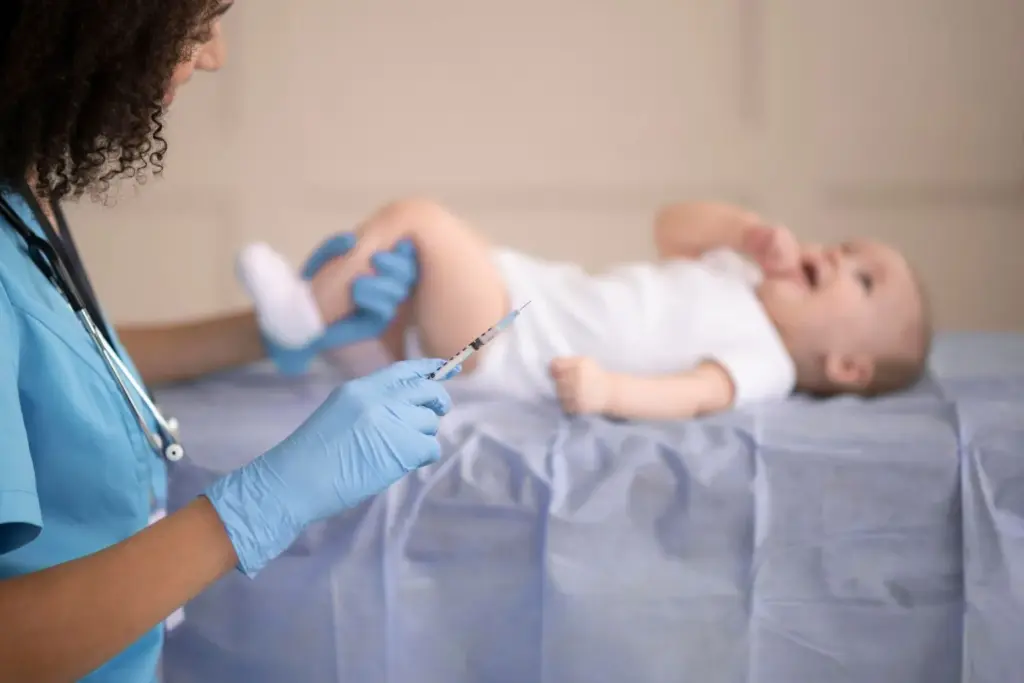
Hepatitis B shot at birth: A federal vaccine advisory committee voted to reverse the long-standing US recommendation that all newborns receive a hepatitis B shot at birth, a policy in place since 1991.
The panel voted 8–3 to recommend the birth dose mainly for babies whose mothers test positive for hepatitis B or whose status is unknown. For other infants, the committee shifted the decision to shared clinical decision-making between parents and clinicians, suggesting that if families wait, the series should begin at around 2 months of age.
Also Read | Over 75% of world population not getting enough omega-3, study finds
The vote immediately drew backlash from major medical and public health voices. Critics warned that removing a universal birth-dose recommendation could erode a decades-long public health win and create confusion in maternity wards and pediatric care. Several medical societies and state health officials signalled they would continue to support a birth dose, and the insurance trade group AHIP said members are still expected to cover the newborn dose even with the advisory change.
The committee’s current members were appointed by Health Secretary Robert F. Kennedy Jr. after he dismissed the prior panel earlier this year, a restructuring that has intensified concerns about politicisation of vaccine policy.
President Donald Trump praised the vote, while the CDC’s acting director Jim O’Neill is expected to decide whether the agency will formally adopt the recommendation.
Hepatitis B is a serious viral infection that affects the liver. In many people, it clears within six months, but in some cases, especially when infection happens in infancy or early childhood, it can become chronic. Among adults, hepatitis B is most commonly spread through sexual contact or blood exposure, including sharing needles. However, the virus can also be passed from an infected mother to her baby around the time of birth.
To prevent early-life infection, a federal advisory committee recommended in 1991 that babies receive a first hepatitis B dose at birth. Health experts have long emphasised that this early protection is key to stopping the virus before it establishes a lasting infection. Since that policy began, hepatitis B cases in children have dropped sharply.