
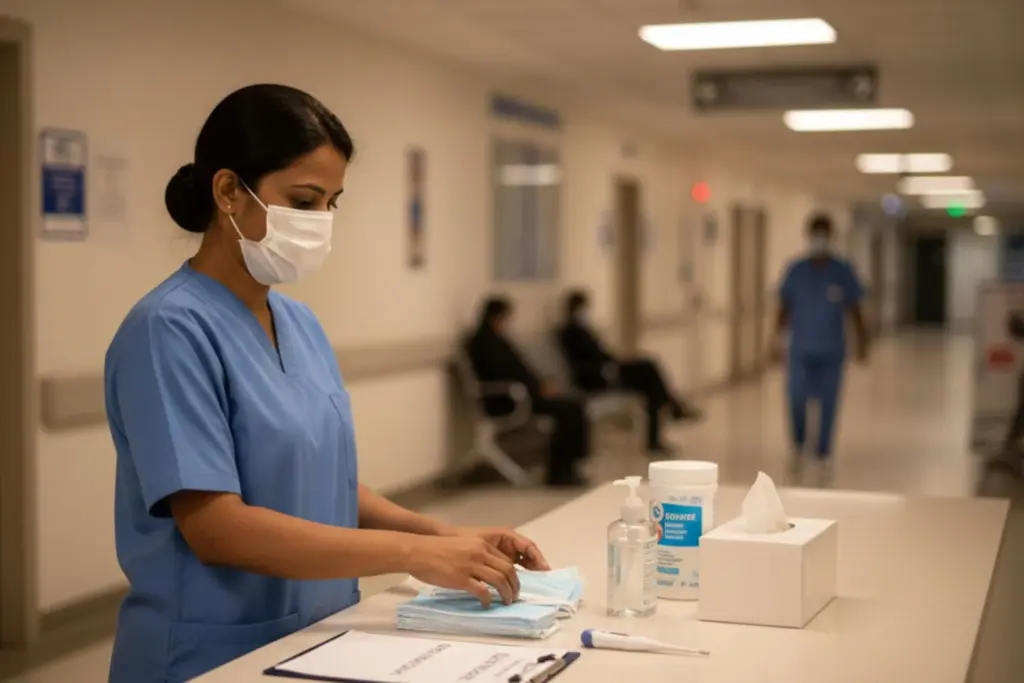
Flu preparedness: Health Minister J P Nadda called for hospitals and health facilities to be ready with additional capacity as officials anticipate rising influenza cases in the coming weeks.
Nadda spoke at the opening of a two-day planning session focused on coordinating government departments to handle expected flu outbreaks. The National Centre for Disease Control organised the gathering with WHO India, running through Monday and Tuesday.
Also Read | Delhi men inhale more polluted air than women during commutes, study finds
Speaking by video link, the minister said the workshop gives officials from different agencies a chance to review preparations and spot weaknesses before flu season hits hardest. He stressed the need for backup plans and extra resources to handle patient surges, noting that federal and state health systems must work in lockstep through the Integrated Disease Surveillance Programme.
The session drew roughly 110 officials representing multiple government branches. Attendees came from environmental, climate, veterinary and agricultural agencies alongside health department staff from the central government, states and union territories.
Representatives from the Indian Council of Medical Research, the National Institute of Virology and eleven state governments attended in person. Others participated remotely, sharing strategies and lessons from past outbreaks.
The health ministry tracks seasonal flu patterns continuously through its surveillance network, monitoring case counts and trends across all states and territories in real time.
Flu remains a persistent public health problem in India and worldwide. Periodic outbreaks hit vulnerable groups hardest. Young children, elderly residents, pregnant women and people managing chronic conditions face the greatest risks of serious illness and death.
Workshop discussions highlighted that effective flu response requires coordination beyond health departments alone. Officials need integrated systems covering disease tracking, early warning mechanisms, laboratory testing capabilities, hospital readiness and public communication.
Participants agreed on creating a standardised checklist that states and territories can use to assess their preparedness, identify shortcomings and set deadlines for fixes. The talks reinforced several priorities: sharing information quickly between agencies, clarifying who handles specific responsibilities, and ensuring departments act together rather than independently when outbreaks occur.
Health officials left the session with concrete action items and timelines for strengthening India’s influenza response capacity before cases climb in the months ahead.