
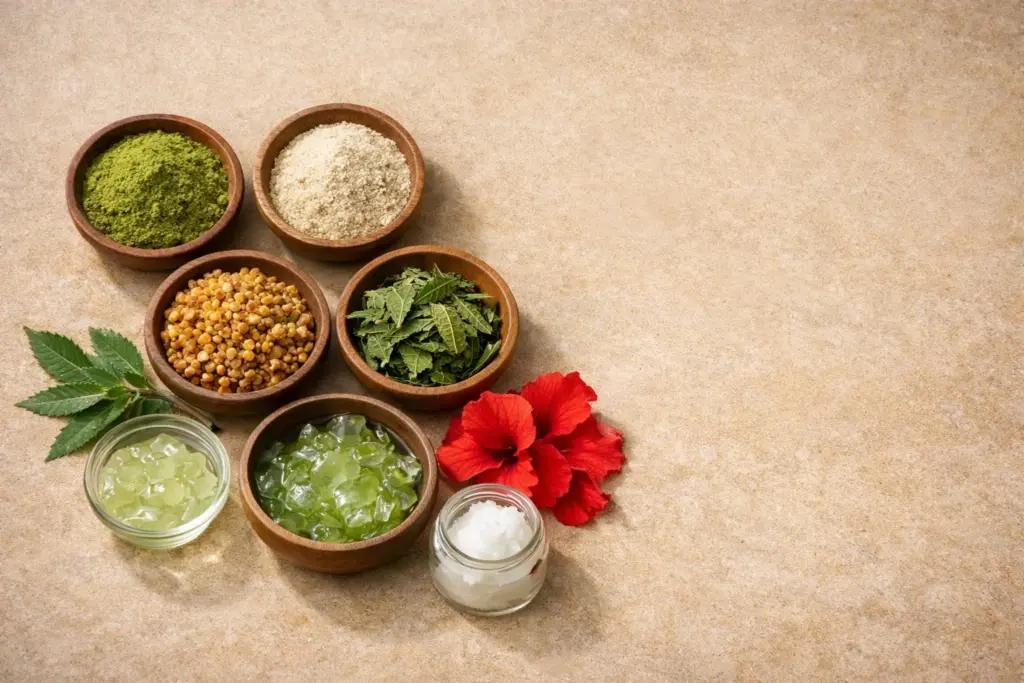
Ayurvedic remedies for hair fall: Hair fall is something most of us deal with at some point. Sometimes it’s stress. Sometimes it’s hormonal shifts, poor sleep, crash dieting, heat styling, hard water, or harsh shampoos. Whatever the reason, watching hair thin out can feel frustrating, and it often affects confidence, too.
Ayurveda takes a gentler approach. Instead of quick fixes, it focuses on nourishing the scalp, strengthening the roots, and supporting healthier growth over time using herbs and natural ingredients that have been used for generations.
Also Read | How to use turmeric daily: 5 simple recipes for better health
Bhringraj (the classic “hair herb”):
Bhringraj is widely known in Ayurveda for supporting hair strength and scalp health. It’s often used as an oil because it helps condition the scalp while giving the roots a steady boost.
How to use: Warm a small amount of bhringraj oil (lukewarm, not hot). Massage it into the scalp for 5–10 minutes. Leave it on for at least an hour, or overnight if it suits you, then wash with a mild shampoo. Use it 2–3 times a week.
Why it’s loved for hair:
- Helps reduce hair fall over time
- Supports healthier, stronger growth
- Nourishes the scalp and eases dryness
- Can feel cooling and soothing, especially during stress
Amla (Indian gooseberry):
Amla is a powerhouse ingredient for hair care in Ayurveda. It supports the roots and is often used to improve scalp health and natural shine. Many people like it because it feels strengthening without being harsh.
How to use: You can use amla oil for scalp massage, or include amla in your diet regularly (as fresh amla, juice, or powder in small amounts, depending on what suits you).
Why amla works well:
- Naturally rich in vitamin C
- Helps support strong roots
- Improves natural shine and smoothness
- May help reduce hair thinning linked to weakness
Fenugreek (methi):
Methi seeds are known for their protein content and soothing quality. They’re often used as a hair mask to soften hair, reduce dryness, and support the scalp.
How to use: Soak 2 tablespoons of methi seeds overnight. In the morning, grind into a smooth paste and apply to the scalp. Leave it for 20–30 minutes, then rinse and wash with a gentle shampoo.
Why methi is helpful:
- Makes hair feel softer and more manageable
- Helps reduce dryness and roughness
- Supports scalp comfort and shine
- Can help reduce breakage that looks like “hair fall”
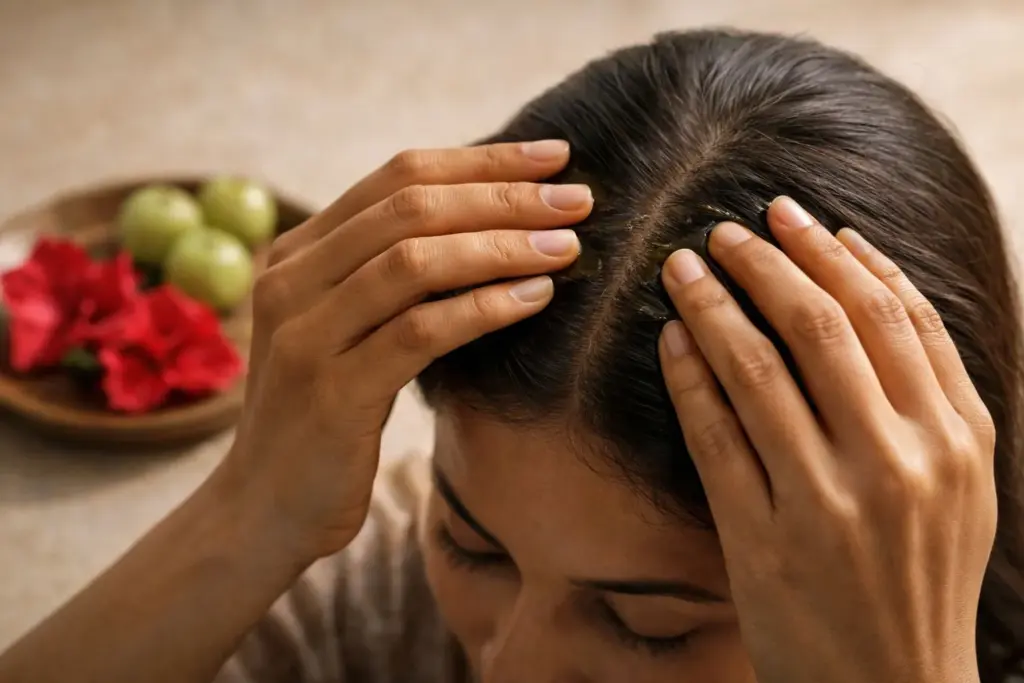
Neem:
Neem is often used in Ayurveda to keep the scalp clean and balanced. When the scalp feels calmer and less irritated, hair fall linked to itching, oil build-up, or clogged follicles may reduce over time.
How to use:
- Neem rinse: Boil neem leaves in water, let it cool completely, and use it as a final rinse after washing your hair.
- Neem mask: Mix neem powder with water (or rose water) into a paste and apply it to the scalp for 10–15 minutes before washing.
Why neem is valued for scalp care:
- Helps maintain scalp cleanliness
- Supports relief from itchiness and irritation
- May help clear the build-up around follicles
- Creates a healthier environment for hair roots
Aloe vera:
Aloe vera is known for its cooling, soothing feel, which makes it especially useful for dry, flaky, or sensitive scalps.
How to use: Cut a fresh aloe leaf, scoop out the gel, and apply it directly to the scalp. Massage gently and leave it for 20–30 minutes, then rinse and wash with a mild shampoo.
Why aloe vera helps:
- Hydrates and calms the scalp
- Helps reduce flakiness and tightness
- Leaves hair feeling smoother
- Supports overall scalp comfort (which is important for growth)
Coconut oil:
Coconut oil is a staple in many Indian households, and for good reason. It helps seal in moisture and reduce dryness, which can lower breakage and roughness.
How to use: Warm it slightly (lukewarm). Massage into the scalp and lengths, leave for at least an hour or overnight, then wash with a gentle shampoo.
Why coconut oil works well:
- Nourishes hair from root to tip
- Helps protect against dryness and frizz
- Makes hair feel softer and more manageable
- Keeps the scalp comfortably moisturised
Hibiscus
Hibiscus flowers and leaves have a long-standing place in traditional hair care for supporting softness, shine, and reduced breakage.
How to use:
Grind hibiscus petals or leaves into a paste (with a little water) and apply as a mask to the scalp and hair. Leave for 20–30 minutes, then rinse thoroughly.
Why hibiscus is popular:
- Supports stronger hair and less breakage
- Softens hair naturally
- Adds shine and smoothness
- Helps hair feel thicker over time with regular care
Also Read | Is Chyawanprash healthy? What to know before eating it daily
Ayurveda often comes back to one core idea: hair health isn’t only about what you apply, it’s also about what’s happening inside the body. When sleep improves, stress reduces, and digestion is steadier, hair usually responds by becoming stronger and fuller over time.