
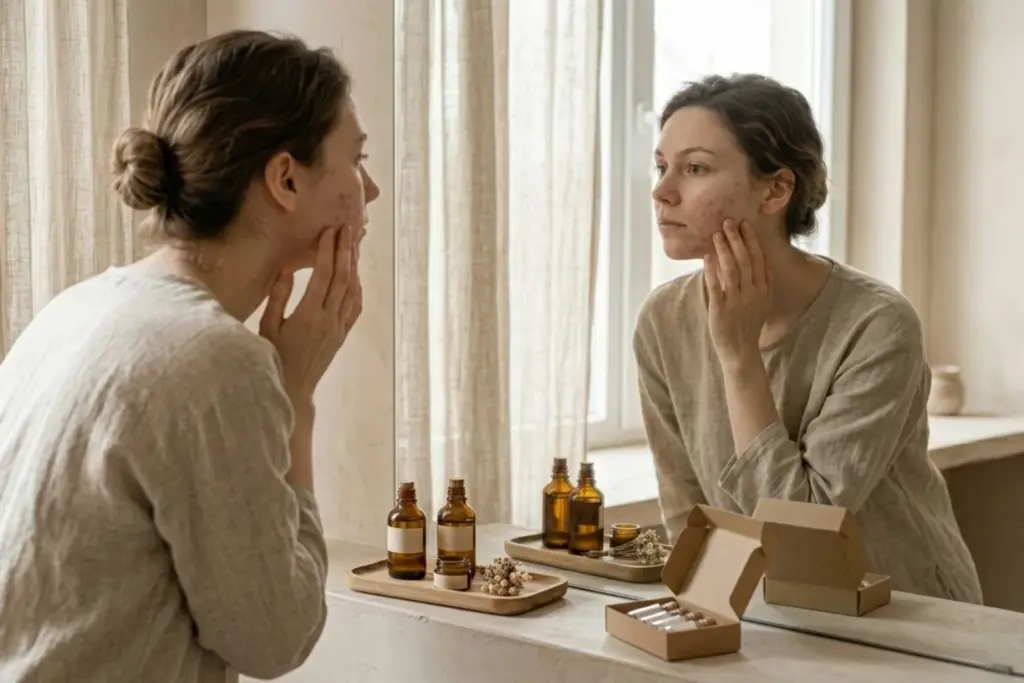
Can homoeopathy treat skin problems: Skin issues can be difficult to live with. Whether it is acne that keeps returning, itching that disrupts the day, or patches that refuse to settle, the frustration often goes beyond appearance. When common treatments feel too harsh, or results seem slow, many people start looking for gentler options and often come across homoeopathy.
It is usually spoken about as a treatment that works from within and focuses on the root cause. But the truth is a little more nuanced. Homoeopathy may be used by some people as supportive care for certain skin concerns, but it is important to understand where it may help and where conventional medical treatment remains necessary.
Also Read | Kadha vs. haldi doodh: Which drink boosts your immunity?
What is homoeopathy?
Homoeopathy is a form of alternative medicine based on highly diluted remedies. Practitioners usually do not look only at the skin condition itself. They also tend to ask about broader aspects of health and lifestyle, such as sleep, mood, stress, food preferences, and family history.
The idea is to understand the person as a whole rather than treating only the visible skin problem. That wider approach is one reason some people feel drawn to it, especially when flare-ups seem linked to stress or general health changes.
Skin conditions people commonly try homoeopathy for:
Acne:
Many people explore homoeopathy for acne, especially when breakouts seem to worsen with stress, oily food, hormonal changes, or repeated flare-ups. In mild cases, it may be used with the aim of helping reduce inflammation, redness, or the frequency of pimples over time.
That said, acne is not always simple. If it is severe, painful, scarring, or deeply inflamed, dermatology treatment is usually far more important. In those situations, delaying medical care can make the condition harder to control later.
Eczema:
Eczema often causes dry, itchy, irritated skin that comes and goes in cycles. Because stress can make it worse for some people, many look toward more supportive, whole-body approaches, including homoeopathy.
Some people use it alongside moisturising care and trigger control, hoping it may help reduce repeated flare-ups. But eczema still requires proper skin care, and in more severe cases, medical treatment is often needed to calm inflammation and protect the skin barrier.
Psoriasis
Psoriasis is a long-term condition that causes thick, dry, scaly patches on the skin. It can also be influenced by stress in some people, which is why some choose supportive therapies such as homoeopathy.
It may be tried for relief from itching, dryness, or flare patterns, but psoriasis is a chronic medical condition. It usually needs proper dermatological management, especially when symptoms are widespread, painful, or affecting quality of life.
Allergic rashes and hives:
Some people turn to homoeopathy when they get repeated rashes or hives triggered by weather changes, certain foods, chemicals, or emotional stress. In mild and recurring cases, it may be used as a supportive option.
Still, rashes can have many causes, and not all are harmless. If the rash is severe, spreading quickly, or linked with swelling or breathing difficulty, it should never be handled casually.
Fungal and recurring skin infections:
Homoeopathy is sometimes used by people who deal with recurring fungal issues and want something supportive for overall health and recurrence patterns. But active fungal infections need proper treatment.
Conditions such as ringworm usually require antifungal creams or tablets. Using homoeopathy alone in place of appropriate medical treatment is not a good idea in such cases.
Pigmentation:
Some people also try homoeopathy for mild pigmentation, especially when they feel it may be linked to stress or hormonal shifts. Results, however, are often slow and uncertain.
Pigmentation is one of those concerns where expectations need to stay realistic. Sun protection, proper skin care, and medical guidance still matter a great deal.
Where homoeopathy is usually not enough:
It is important not to treat all skin problems the same way. Some conditions need proper medical evaluation without delay.
Homoeopathy alone is generally not appropriate for:
- severe skin infections
- rapidly spreading rashes
- deep wounds
- burns
- suspicious moles
- skin cancer concerns
- painful boils with fever
- sudden swelling of the lips or face
- severe psoriasis with cracking or bleeding
These are not situations for trial-and-error treatment.
What kind of results should people realistically expect?
One of the biggest mistakes people make is expecting quick changes. Homoeopathy is often approached as a slow and supportive method rather than a fast-acting solution.
In some cases, people may use it with the hope of:
- reducing the frequency of flare-ups
- easing itching
- supporting overall balance
- addressing stress-linked triggers
But it is not a miracle cure, and results are not guaranteed.
When does combining approaches make sense?
In some situations, a combined approach may be more practical. For example, someone with mild but recurring skin trouble may choose medical treatment when needed and also explore supportive care for stress, triggers, or long-term management.
What matters most is not choosing one system blindly over another. It involves understanding the condition properly and ensuring that important medical treatment is not delayed.
Also Read | Is homoeopathy better than allopathy? What to choose, when
Can homoeopathy help with skin problems? In some mild, recurrent, or long-term skin conditions, it may provide supportive value for certain individuals. But it should not replace essential dermatology care when the condition is serious, infectious, rapidly worsening, or medically significant.
Skin often reflects more than what is happening on the surface. Before choosing any treatment, it is worth understanding the real cause, speaking to a qualified professional, and staying cautious about dramatic promises.
Can homoeopathy treat skin problems?
Homoeopathy may help some people with mild, recurring, or long-term skin issues, especially when symptoms seem linked to stress or general health patterns. But it may not be enough for all skin conditions.
Which skin problems do people commonly use homoeopathy for?
People often try homeopathy for acne, eczema, psoriasis, allergic rashes, hives, pigmentation, and recurring skin flare-ups.
Can homoeopathy help with acne?
Some people use homeopathy for mild or recurring acne, especially when breakouts worsen with stress, oily food, or hormone changes. Severe acne usually needs proper dermatology treatment.
Is homoeopathy useful for eczema?
Homoeopathy is sometimes used as supportive care for eczema, especially in people with repeated flare-ups. However, eczema often still needs proper skin care and, in many cases, medical treatment.
Can homoeopathy help with skin allergies or hives?
Some people try homoeopathy for recurring allergic rashes or hives, especially when they suspect triggers like weather, food, or stress. Severe allergic reactions need immediate medical attention.