
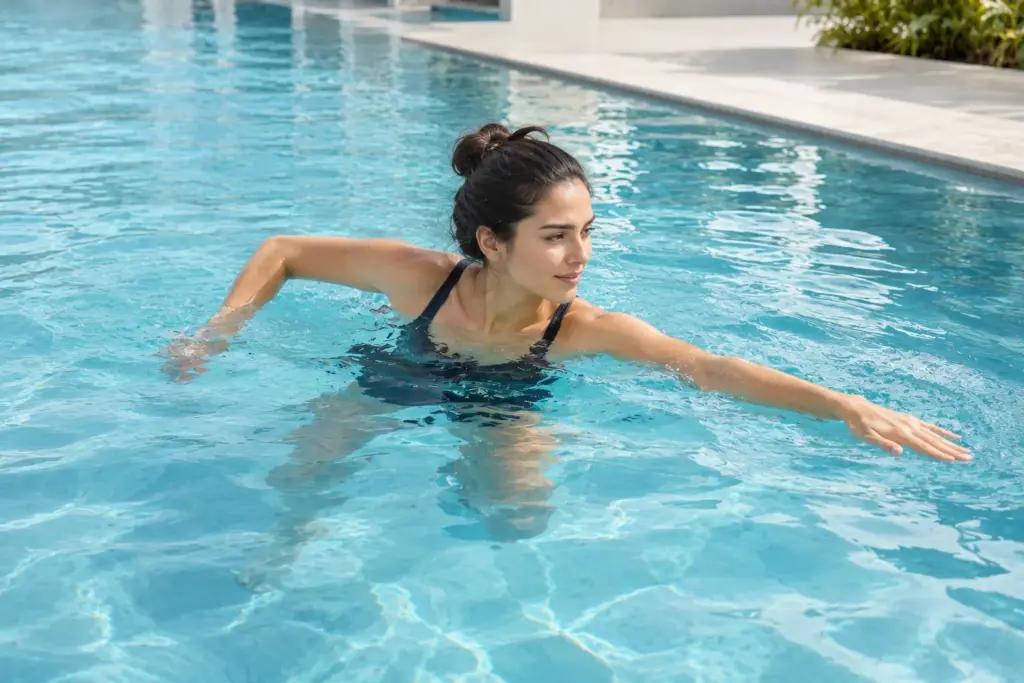
Swimming workout: Swimming can look easy from outside the pool. Then you try a few laps and realize your arms, legs, and lungs are all working at once. That is exactly what makes swimming such a useful workout. It uses the whole body, gets your heart rate up, and puts much less impact on the joints than activities such as running or jumping. If you are new to swimming, you do not need to start with long sessions. A few short laps with proper rest can be enough.
First, get comfortable in the water
Fitness comes later. Comfort comes first. If you have not been in a pool for a while, spend some time getting used to the water. Walk through the shallow end, hold the side and practise kicking, or try floating with support. You should feel reasonably relaxed before trying to turn swimming into a workout. Being tense in the water makes breathing and movement much harder. If you cannot swim confidently, learn with a qualified instructor rather than trying to practice alone.
Also Read | Cycling vs. running: Which exercise is better to reduce belly fat?
Which swimming stroke is best for beginners?
You do not have to learn every stroke. Freestyle is commonly used for fitness because it is quick and works the shoulders, arms, core, and legs. The difficulty for many beginners is getting the breathing right. Breaststroke often feels easier because the pace can be slower and you have more time to breathe. It can be a comfortable place to start if your goal is simply to keep moving for longer. Backstroke is another option, particularly if you are comfortable floating on your back.
Pick the stroke you can perform without constantly stopping. Technique matters more than speed at this stage.
Warm up in the pool
There is no need for a complicated warm-up beside the pool. Start with gentle shoulder and arm movements, then spend the first few minutes swimming at an easy pace. Give your body time to adjust before trying faster laps. The same applies at the end of the session. Finish with a few easy lengths rather than stopping immediately after your hardest lap.
Try this simple beginner swimming workout
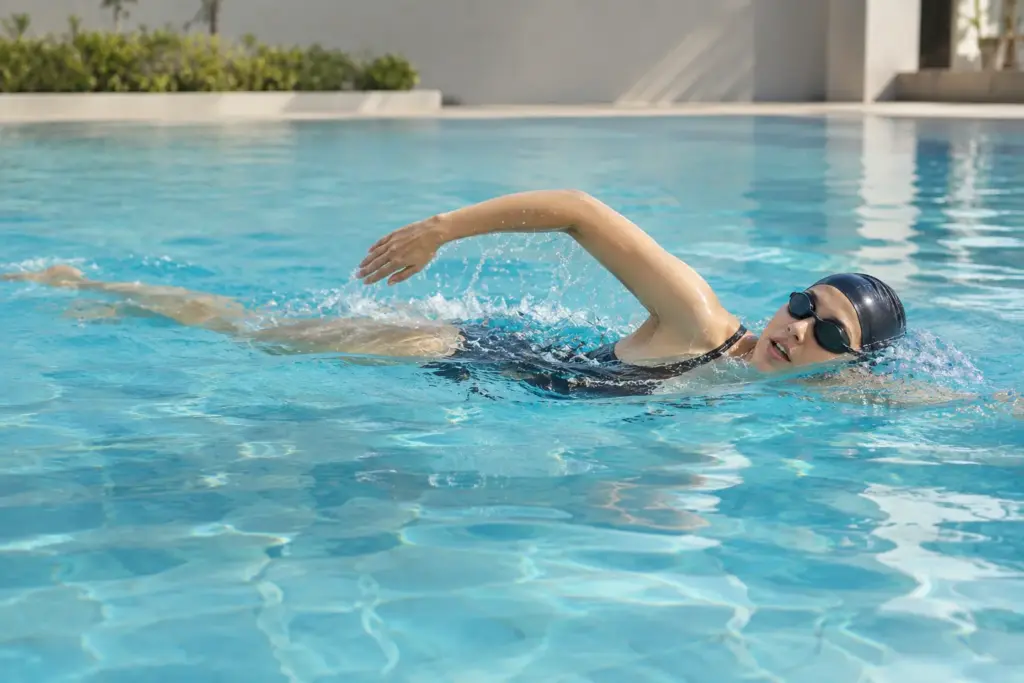
A first workout can be surprisingly short.
- Swim easily for about 5 minutes.
- Swim 25 meters at a comfortable pace.
- Rest for around 30 to 60 seconds.
- Repeat for 6 to 8 rounds.
- Finish with another 5 minutes of easy swimming.
If 25 metres feels difficult, stop sooner. If it feels comfortable after a few sessions, add another lap or shorten the rest slightly. Do not increase everything at the same time.
Breathing is usually the hardest part
Many beginners have enough strength to swim but still feel exhausted after one length. Often, breathing is the reason. Try not to hold your breath underwater. Breathe out while your face is in the water, then take your next breath when your mouth clears the surface. With freestyle, this usually means turning your head to the side. With breaststroke, the timing is different because your head comes forward with the stroke. It may feel awkward at first. That is normal. Breathing tends to become easier once the movement becomes familiar.
Also Read | Simple bodyweight exercises to build strength without equipment
Is swimming good for fitness?
Yes, but what it does for you depends on how you swim. A gentle session may be useful for movement and recovery. Faster laps with shorter rest periods can become a demanding cardiovascular workout. Longer sessions can help build endurance.
Water also creates resistance in every direction, so your muscles have to work even when you are not lifting weights. At the same time, swimming should not be treated as a shortcut for weight loss. Body weight is influenced by activity, diet, sleep, and several other factors.
How often should a beginner swim?
Two or three sessions a week can be a sensible starting point for many people. Your first aim should not be to swim faster. Try to become more comfortable, improve your breathing, and finish a little more distance without feeling completely exhausted.
Once that happens, the workout starts building itself. A few extra laps, slightly less rest, and better technique can make swimming much harder without needing to spend an hour in the pool.
FAQS
Is swimming a good workout for beginners?
Yes. It works the whole body while being gentle on the joints
How long should a beginner swim?
Start with short sessions of around 20–30 minutes, including rest breaks.
Which swimming stroke is best for beginners?
Freestyle and breaststroke are good options. Choose the stroke you can perform comfortably.
How often should beginners swim?
Aim for 2–3 sessions per week to build comfort, technique, and endurance.
Why do I get tired quickly while swimming?
Poor breathing technique is a common reason. Focus on steady breathing and relaxed movements rather than speed.