
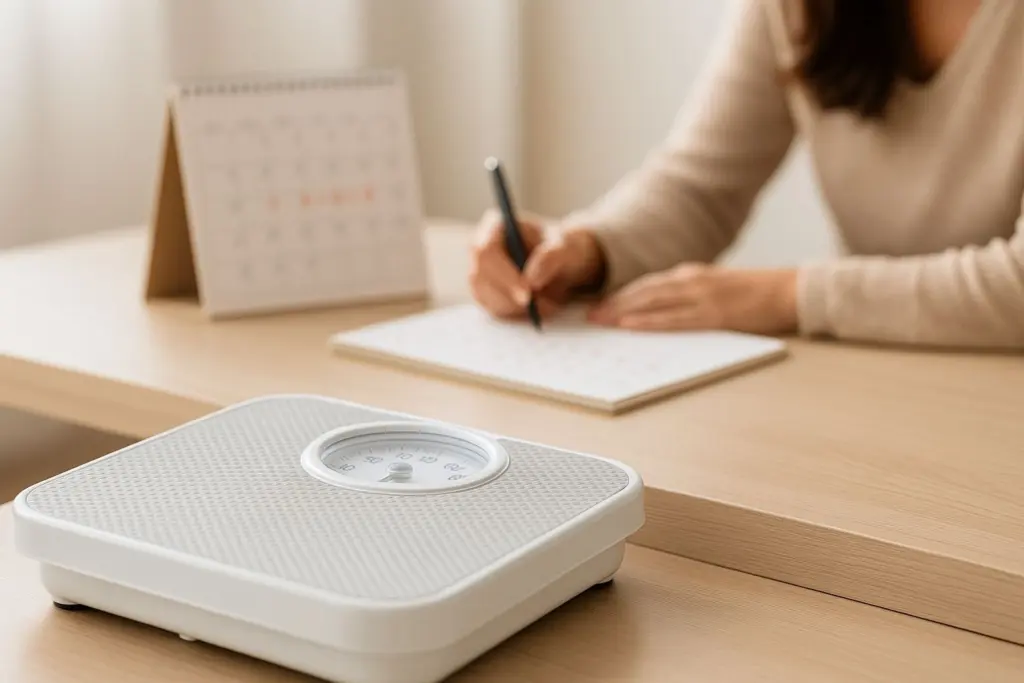
Periods and Weight: Periods are a normal part of life for people who menstruate, and for many, they arrive on a fairly steady monthly schedule. But sometimes the timing shifts, your period may come early, show up late, or disappear for a month. One question that comes up often is: Can weight gain or weight loss change your menstrual cycle? Yes, it can.
That’s because body weight and hormones are closely connected. When your weight changes suddenly, your body may read it as stress, and your cycle can be one of the first things to react.
Also Read | Why does my period smell?
How are weight and periods linked?
Your menstrual cycle is guided mainly by estrogen and progesterone. These hormones don’t work in isolation; they’re influenced by sleep, stress, diet, exercise, and body fat.
Body fat isn’t just “stored energy.” It also plays a role in hormone balance because it helps regulate estrogen levels. If the body has too little fat, estrogen may drop, and ovulation can slow down or stop. If there’s too much fat, estrogen levels can rise and disrupt the normal cycle rhythm.
That’s why quick weight loss, sudden weight gain, being underweight, or having excess weight can all increase the chances of irregular periods or missed cycles.
How can weight changes affect your menstrual cycle?
When weight goes up, especially over a short period, your hormone balance can shift, resulting in a rise in estrogen levels. Estrogen is essential for normal periods, but too much of it can disturb the cycle. Higher estrogen can cause the uterine lining to build up more than usual, leading to a heavier flow.

Being underweight or losing weight too quickly can also affect your periods. When the body doesn’t have enough fat and energy reserves, estrogen levels can drop, and the brain may reduce the hormones that trigger ovulation. As a result, periods can become lighter, irregular, or stop altogether.
Signs your weight may be impacting your periods:
- Your periods suddenly become much heavier or much lighter
- Your cycle length shifts a lot (for example, 28 days to 40+ days)
- You miss periods for three months or more (and pregnancy isn’t the reason)
- You develop new symptoms like acne, unusual hair growth, or persistent fatigue
When to see a doctor
- No periods for 3 months (and you’re not pregnant)
- Bleeding so heavy that you soak a pad/tampon in under 2 hours
- Severe period pain that feels unusual for you
- Sudden, unexplained weight gain or rapid weight loss
- Symptoms like facial hair growth, severe acne, or ongoing fatigue
Also Read | Is it normal to have cramps a week before your period?
Weight gain or loss can absolutely affect your menstrual cycle, because body fat influences hormones like estrogen. A healthy, regular period often reflects overall balance in the body. If your cycle feels “off” after major weight changes, it may be your body’s way of asking for steadier routines.