
Yoga and strength: When most people think of yoga, they picture stretching, breathing, and slowing down. Strength training is not usually the first thing that comes to mind. But yoga can absolutely help you build strength, and it can do it in a way that feels controlled, supportive, and far less intimidating than traditional workouts.
You also do not need expensive equipment or advanced poses to begin. A resistance band, a yoga block, and even a plain wall can make a big difference. These simple props can help you feel more stable, improve body awareness, and strengthen muscles in a way that feels safe and manageable. For beginners, for people coming back after injury, or for anyone who wants to feel steadier in their body, this can be a very practical place to start.
Also Read | Power yoga vs. traditional yoga: Which is better for beginners?
Why yoga props are useful for strength work
Props are often misunderstood. People sometimes think using them means making yoga easier or “cheating” a pose. In reality, props are tools. They help the body find better alignment, create more control, and make it easier to engage the right muscles instead of pushing through strain.
When you use props in strength-focused yoga, they can:
- add gentle resistance
- improve muscle activation
- help you hold positions with better form
- support balance and reduce unnecessary stress on joints
That makes them especially useful for beginners, because they create a feeling of support while still challenging the body.
Resistance bands: light, simple and surprisingly effective
Resistance bands are one of the easiest ways to bring more strength into yoga. They are light, affordable, easy to store, and ideal for home practice. Unlike heavy weights, they create tension through movement, which encourages the muscles to stay engaged the whole time.
This makes them useful for building strength in the legs, arms, shoulders, and core while still keeping the movements controlled and low-impact. They can also help improve stability and flexibility at the same time.
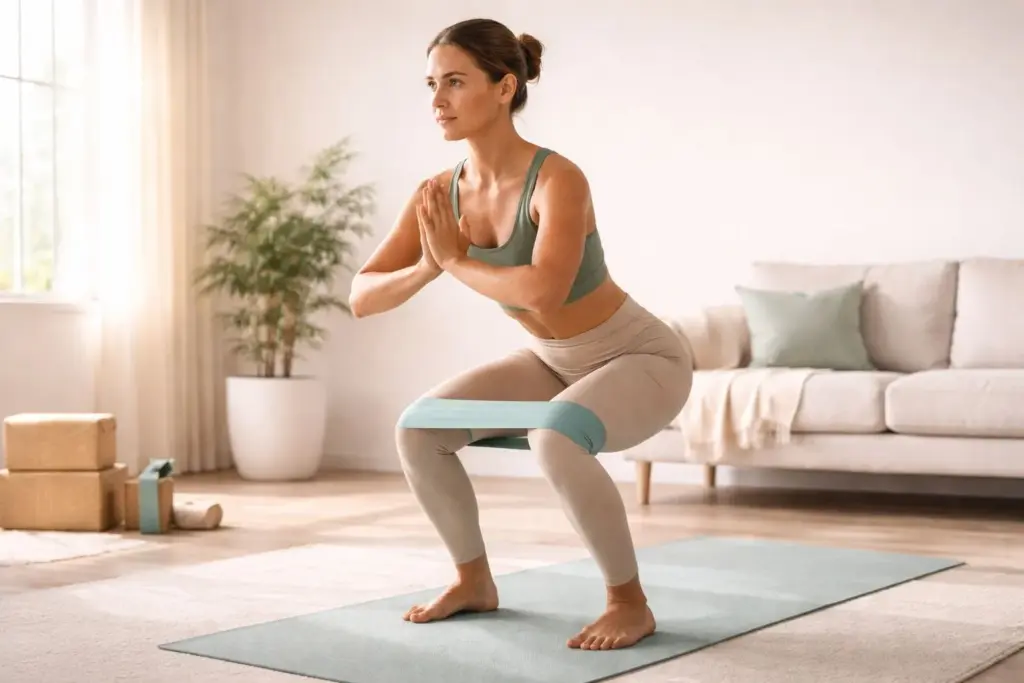
Try this: Band-assisted Chair Pose
Place a resistance band just above your knees. Stand with your feet about hip-width apart, then slowly sit back into Chair Pose. Keep your chest lifted and your weight grounded through the feet. As you hold the pose, gently press your knees outward to keep tension in the band. This helps wake up the hips and thighs and gives the legs more work to do.
Try this: Band-resisted Warrior II
Come into Warrior II with your front knee bent and your arms stretched out to the sides. Loop the band around both wrists and gently pull outward so the arms stay active. Keep the shoulders relaxed and avoid tensing the neck. This small addition makes the pose feel much stronger through the upper body.
Yoga blocks: not just for flexibility
Yoga blocks are often introduced as beginner tools, but they are just as useful for strength as they are for stretching. In many poses, a block can improve alignment, add stability, or make it easier to activate muscles that might otherwise stay passive.
They can also make certain poses feel more intentional. Instead of collapsing into a shape, you begin to work against something. That is often where strength starts to build.
Try this: Block squeeze in Chair Pose
Stand tall and place a yoga block between your thighs. Lower into Chair Pose slowly, keeping the knees bent and the spine long. Gently squeeze the block as you hold the pose. This helps activate the inner thighs and makes the whole posture feel more connected and stable.
Try this: Plank with Block Press
Come into a plank position and place a block between your hands. Press the block slightly inward while keeping the shoulders broad and the core active. You are not trying to crush the block, just create enough inward pressure to engage the arms, chest, and core more deeply. It is a small adjustment, but it changes the pose quite a lot.
The wall: simple, underrated and incredibly useful
The wall is one of the most overlooked props in yoga, yet it can be one of the most helpful. It gives immediate feedback, supports posture, and creates a sense of safety while you build strength and confidence.
For beginners, the wall can make certain poses feel more accessible. It can also help you understand where your body is in space, which improves balance and alignment.
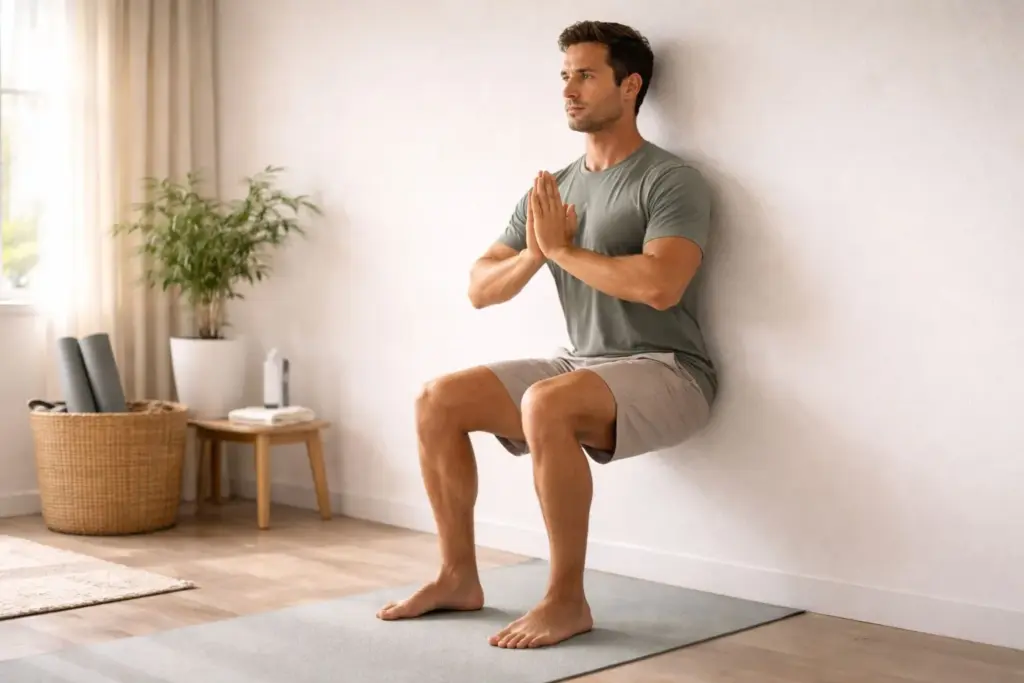
Try this: Wall Chair Pose
Stand with your back against the wall. Step your feet slightly forward and slowly slide down until your knees are bent and your thighs are close to parallel with the floor. Keep your back supported and hold the position for 20 to 30 seconds. This is a simple but effective way to strengthen the thighs and build lower-body endurance.
Try this: Wall Plank
Stand facing a wall and place your hands on it at shoulder height. Walk your feet back until your body forms a straight line from head to heels. Press firmly into the wall and hold. This is a beginner-friendly way to build arm, shoulder, and core strength without the pressure of a floor plank.
Yoga-based strength is not about forcing the body or chasing intensity for the sake of it. It is more about control, steadiness, awareness, and learning how to support yourself well in each movement.
Also Read | Common yoga mistakes beginners make, and how to fix them
That is what makes props so useful. They help turn simple poses into smarter ones. They allow the body to work without feeling overwhelmed. And for many beginners, that makes strength practice feel more sustainable.
You do not need a complicated routine to start building strength. Sometimes a band, a block, and a bit of wall space are more than enough.
FAQs: Can Yoga Help With Strength Building
Can yoga really build strength, or is it only stretching?
Yes, yoga can build strength through holds, controlled movement, and bodyweight resistance, especially when props are used thoughtfully.
Are yoga props only for beginners?
No. Props are tools for alignment, control, and muscle activation. They can make poses safer, more effective, and sometimes more challenging.
Why use resistance bands in yoga?
Bands add gentle resistance, helping you strengthen muscles through movement while keeping the workout low-impact and joint-friendly.
Which body parts do resistance bands help strengthen?
Bands can help strengthen the legs, hips, glutes, arms, shoulders, and core depending on the pose and placement.
How do yoga blocks help with strength?
Blocks can improve form and stability, and they can also be used to create “press” or “squeeze” resistance to activate deeper muscles.