
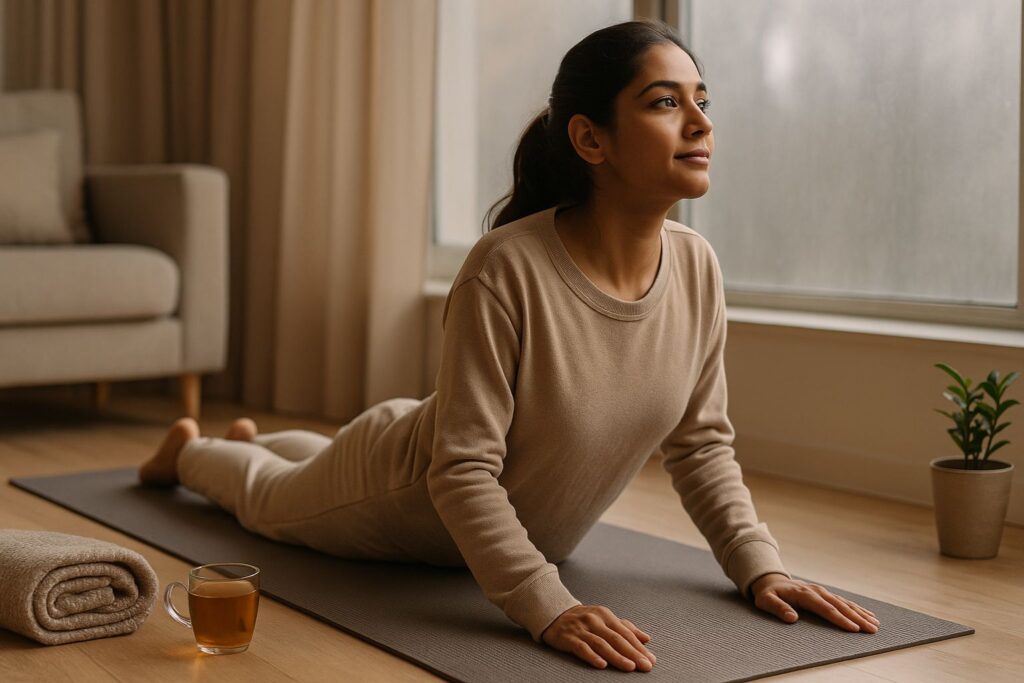
Yoga routines for winter blues: For many people, winter brings a quiet dip in mood. You may feel unusually tired, less driven, or slightly low without any major reason. This is where yoga can be a real winter ally. Beyond flexibility, it helps you move stagnant energy, improve circulation, relax the nervous system, and create a sense of inner warmth and calm. Even a short daily practice can feel like switching on a gentle light inside you.
Why do winter blues happen?
Winter often changes both our biology and routine.
- Less sunlight can affect serotonin (the “feel-good” chemical) and may reduce vitamin D levels. Both are linked to mood and energy.
- Cold weather can make the body feel stiff, slow, and heavier than usual.
- Lower movement and more indoor time can quietly increase fatigue and mental fog.
Yoga poses and morning sun tips to help with winter blues:
Catch the morning sun:
In winter, when you practice yoga can be as important as what you practice. Pairing your routine with natural light helps your body feel more awake and steady through the day. If possible, aim for the early morning window, roughly 7 to 9 AM, when sunlight is softer and easier to tolerate.
This gentle exposure can support your energy, lift your mood, and help reset your sleep-wake rhythm, which often gets thrown off in colder months. If stepping outside feels too chilly, try rolling out your mat near a bright window, balcony, or any spot where sunlight naturally falls.
Start with Surya Namaskar:
A simple way to kick off a winter-friendly yoga routine is Surya Namaskar (Sun Salutations). It’s a full-body flow that builds warmth quickly, improves circulation, and shakes off that “cold-weather stiffness.”
Why it works well in winter:
- Gently energises the nervous system
- Loosens tight muscles and joints
- Improves focus and mood
- Creates internal heat and strength without needing long sessions
Even a few rounds can make your body feel lighter and your mind a little brighter.
Backbends:
Backbends can be a great antidote to the winter slump. With more time spent hunched over desks, phones, and couches, the body naturally closes in. Gentle backbending helps reverse that posture and creates a feeling of openness through the chest and upper body, which many people find uplifting during low-energy days.
Try these winter-friendly backbends:
Bhujangasana (Cobra Pose):
- Lie on your stomach and place your palms under your shoulders.
- Inhale and lift your chest slowly, keeping your elbows close to your sides.
- Relax your shoulders and keep your neck comfortable.
- Breathe steadily for a few seconds before releasing.
Setu Bandhasana (Bridge Pose):
- Lie on your back with knees bent and feet hip-width apart.
- Press your feet into the mat and lift your hips.
- If comfortable, interlace your fingers under your back.
- Hold with calm breathing, then lower slowly.
These poses warm the body, improve circulation, and can help bring a bit more alertness and clarity.
Grounding poses:
While backbends energise you, grounding poses bring stability, especially helpful if winter makes you feel anxious, restless, or mentally scattered. These postures are slow, steady, and calming.
Try these grounding options:
Balasana (Child’s Pose):
- Kneel and sit back on your heels.
- Fold forward and rest your forehead on the mat.
- Keep your arms extended or relaxed beside your body.
- Breathe slowly and soften the shoulders and jaw.
Malasana (Garland Pose / Deep Squat):
- Stand with feet slightly wider than hips.
- Lower into a deep squat while keeping your spine tall.
- Bring palms together at the chest and gently press elbows against knees.
- Take a few slow breaths.
Breathwork for inner warmth and calm:
Your breath is a simple, powerful tool in winter. Slow, mindful breathing can warm the body, relax tension, and settle the nervous system. It’s a quiet way to feel more balanced, even on darker, heavier days.
Best winter pranayama practices
Bhastrika (Bellows Breath): This is a powerful, warming breath that can help shake off sluggishness.
- Sit tall with your spine straight.
- Take strong, quick breaths through the nose.
- Inhale and exhale forcefully for about 10–15 seconds, then pause.
- Repeat for a few rounds if it feels comfortable.
- If you feel dizzy or breathless, slow down or stop.
Anulom Vilom (Alternate Nostril Breathing): This is calming and balancing; great when winter feels mentally heavy.
- Close one nostril and inhale through the other.
- Switch and exhale.
- Continue slowly, keeping the breath smooth and relaxed.
- Even a few minutes can quiet the mind and steady your mood.
- End with relaxation
After your poses and breathwork, give your body space to absorb the benefits. Lie down for 5–10 minutes in silence or with soft music. Let your breathing return to normal, and your muscles fully soften.
Yoga isn’t only about flexibility. In winter, it can be a gentle way to wake up your inner warmth, energy, and clarity when everything outside feels slow and cold.