

Yoga for hormonal balance: Hormonal changes do not always announce themselves clearly. Sometimes they show up as poor sleep. Sometimes it is constant tiredness, mood changes, irregular periods, cravings, or simply feeling unlike yourself.
There is no single yoga pose that can magically correct a hormonal imbalance. Still, yoga can be helpful because hormones are influenced by things such as stress, sleep, movement, and daily routine. When these areas improve, the body often functions better overall.
If you want to add yoga to your wellness routine, these five poses are simple enough to practice regularly.
1. Child’s Pose
Child’s Pose is often used as a resting position, but that does not make it unimportant. Sit back towards your heels, stretch your arms forward, and allow your forehead to rest comfortably on the floor or on a cushion. The real value of this pose is that it encourages you to slow down. Your breathing becomes calmer, and tension around the back and shoulders begins to ease. This can be particularly useful on days when stress feels constant.
Stay in the position for one to three minutes.
Also Read | Can you do yoga during periods? What to practice and what to skip
2. Bridge Pose
Bridge Pose gently works the hips, legs, and lower back. Lie on your back with your knees bent and your feet on the floor. Slowly lift your hips while keeping your shoulders relaxed. For people who sit for long hours, this pose can feel especially good because it opens the front of the body and activates muscles that remain inactive during prolonged sitting.
Hold for around twenty seconds, relax, and repeat.
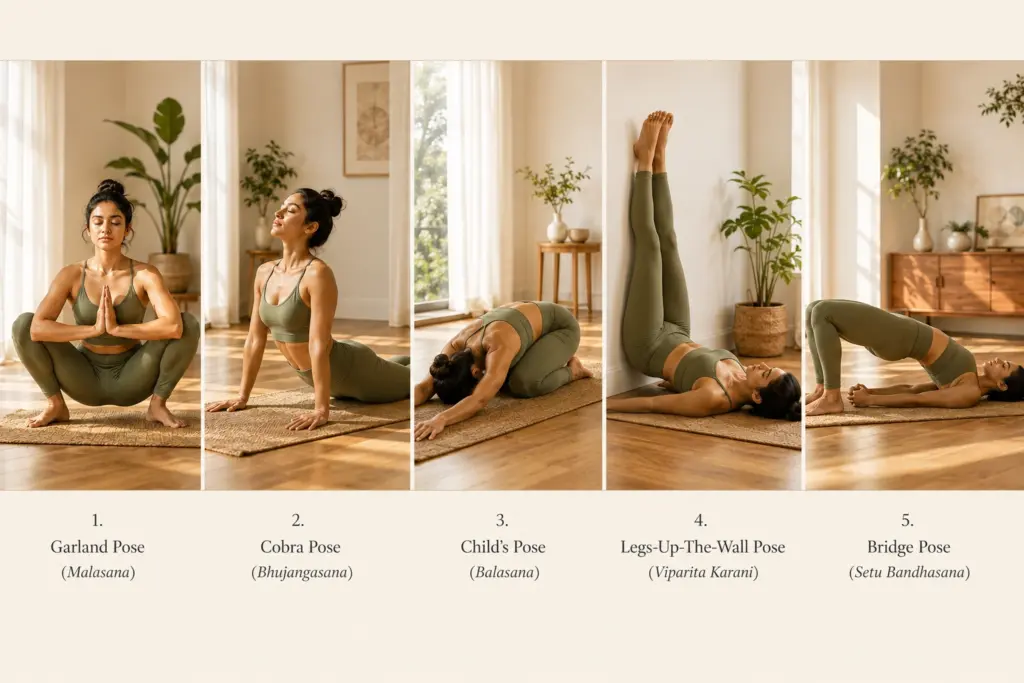
3. Cobra Pose
Cobra Pose gives the spine and chest a gentle stretch. Lie on your stomach with your palms close to your chest. Slowly lift your upper body using only as much movement as feels comfortable. There is no need to push yourself high off the floor. In yoga, a deeper pose is not automatically a better pose.
Cobra can help improve mobility and may reduce some of the stiffness that develops from desk work or long hours on a phone.
4. Legs Up the Wall
This is probably the easiest pose on the list. Lie on your back and rest your legs against a wall. Then do very little. That simplicity is exactly why many people enjoy it. The position can become part of a quiet evening routine and may help the body settle before sleep.
Try it for five to ten minutes without checking your phone.
Also Read | 4 yoga asanas to keep your heart strong, steady, and calm
5. Garland Pose
Garland Pose is a deep squat that works on hip and ankle mobility. Stand with your feet comfortably apart and slowly lower yourself into a squat. Bring your hands together in front of your chest. If your heels lift from the floor, place a folded towel underneath them.
People who spend much of their day sitting may find this pose useful for restoring movement to the hips and lower body.
So, Can Yoga Balance Your Hormones?
It is better to think of yoga as support rather than a cure. Regular yoga can help you move more, manage stress, and create a calmer sleep routine. All of these habits matter for overall hormonal health. What matters most is consistency. Fifteen minutes several times a week is often more realistic than an intense session once in a while. If you are experiencing persistent irregular periods, sudden weight changes, unusual hair loss, extreme fatigue, or fertility concerns, do not rely on yoga alone. Speak with a qualified healthcare professional to understand what may be causing the symptoms.
Yoga has a place in hormonal wellness, but it works best as one part of a larger healthy routine
FAQS
Can beginners do these yoga poses?
Yes, with proper modifications.
How long should I hold each pose?
Start with 20–30 seconds.
What are the best yoga poses for improving flexibility?
Poses like Malasana, Bhujangasana, and Balasana can help gently improve mobility and flexibility when practiced consistently.
Can yoga help with stiffness?
Yes, it may ease everyday muscle tension.
How often should I practice yoga?
Aim for 3–5 times a week.