
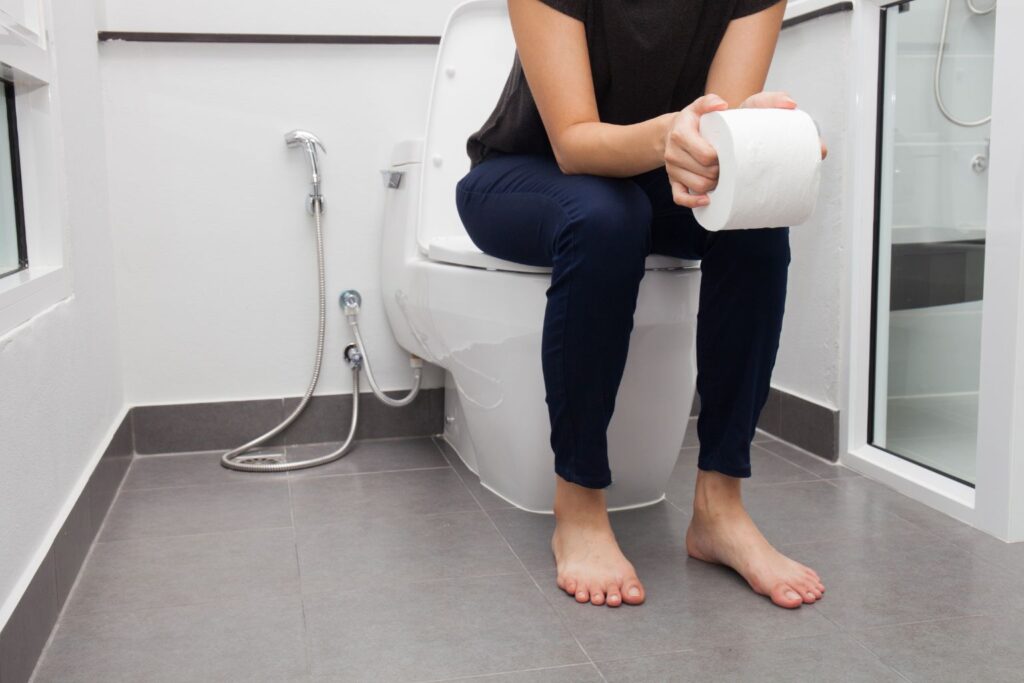
Best position to poop: People don’t usually enjoy talking about it, but let’s be honest, everyone has to poop. It’s one of the most normal things our bodies do. What many people don’t realise, though, is that how you sit on the toilet can make a big difference to how easy or difficult it is to pass stool.
If you often feel constipated, strain a lot, or walk away from the bathroom feeling “not fully done,” your toilet position might be part of the problem. This guide will walk you through the best way to sit so that going to the toilet feels smoother and more natural.
Also Read | How much time on the toilet is too much? Health risks explained
Why does your toilet position matter?
Most of us use the toilet the same way we sit on a chair; back fairly straight, knees bent at a 90-degree angle. That’s what modern Western-style toilets have trained us to do. But this position isn’t actually ideal for your body when you’re trying to poop.
In the sitting position, the puborectalis muscle slightly “kinks” or pinches the rectum. This muscle is important because it helps you stay continent and prevents accidental leaks. However, when it stays tight, it also makes it harder for stool to pass easily.
That’s where squatting comes in. Squatting changes the angle of your hips and straightens out the rectum. This relaxes the puborectalis muscle, allowing stool to pass more easily.
What is the squatting position?
When you’re in a true squatting position, your knees sit above your hips, and your upper body leans slightly forward. This posture helps straighten the rectum and relaxes the puborectalis muscle, opening a more direct path for the stool to pass, often with less straining and more complete emptying.
Squatting isn’t some new health trend; it’s actually how humans have been relieving themselves for thousands of years. In many parts of the world, especially across Asia, Africa, and the Middle East, squat toilets are still widespread.
What does science say about squatting?
Research has found that squatting can make bowel movements easier and more efficient. People who squat often spend less time on the toilet, strain less, and feel they’ve emptied their bowels more completely than those who sit in the typical chair-like position.
Additionally, when you’re not constantly straining, you may lower your risk of issues like constipation and haemorrhoids, both of which are often linked to pushing too hard during a bowel movement.
What should you do if you don’t have a squat toilet at home?
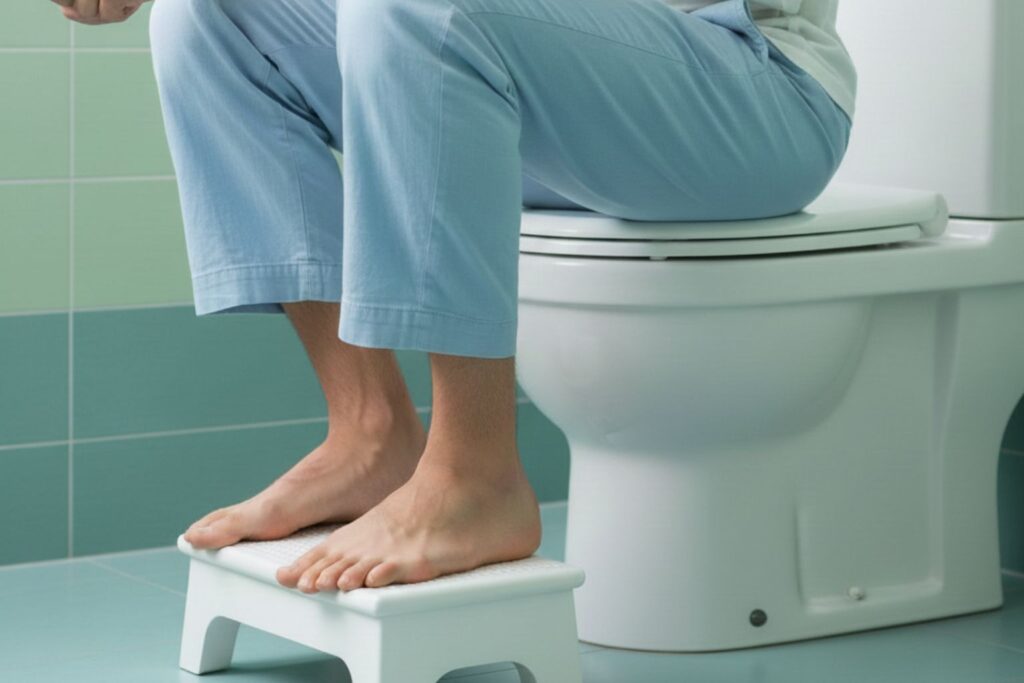
You can mimic the benefits of squatting even on a regular Western toilet just by adjusting your posture. One of the simplest tricks is to use a small footstool. Place it in front of the toilet and rest your feet on it while you sit. This lifts your knees higher than your hips, bringing your body closer to a squatting angle. In this position, your torso can lean slightly forward, your rectum straightens further, and it becomes easier for stool to move out without much effort.
In short, the best position to poop is the one that lets your body relax and lets gravity help you instead of working against you:
- Knees above hip level
- Back gently leaning forward
- Feet supported on a stool
Also Read | From hemorrhoids to cancer: Why rectal bleeding deserves attention
It’s a simple, natural setup, and there’s solid science behind why it helps your bathroom trips feel easier and more complete.