

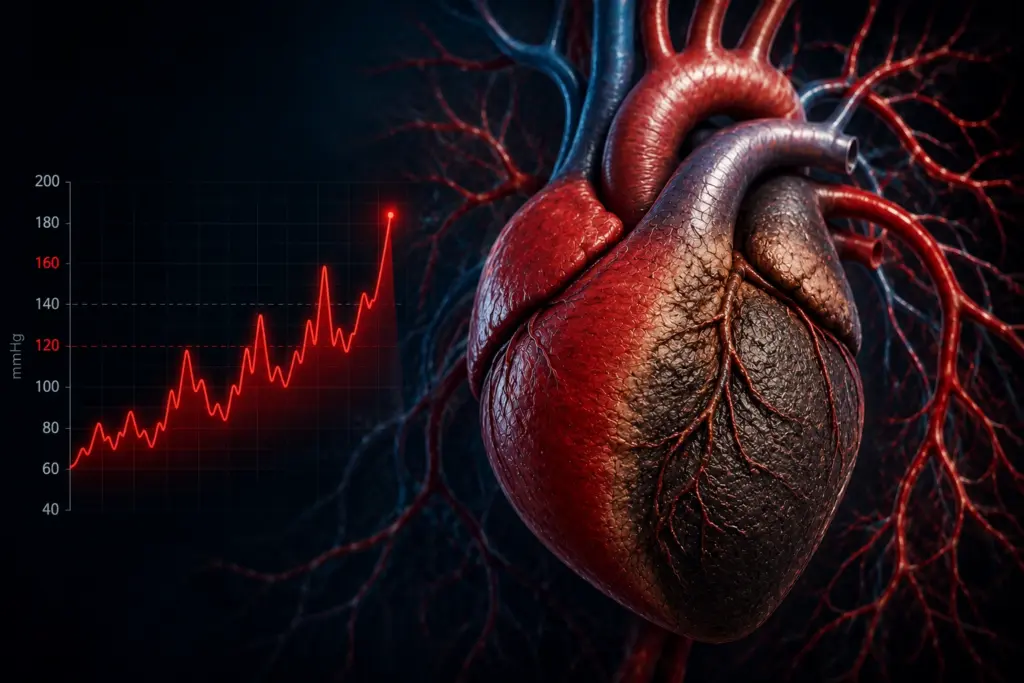
High blood pressure, or hypertension, is often called the “silent killer” for a reason. While you may not feel its effects day-to-day, persistently elevated blood pressure relentlessly damages your heart over time, setting the stage for serious complications like heart failure, arrhythmias, and coronary artery disease. Understanding how this process takes place helps highlight why managing blood pressure is so crucial for long-term heart health.
The Heart’s Response: Thickening and Stiffening
When blood pressure remains high, your heart must work harder to pump blood against increased resistance. In response, the muscular wall of the left ventricle, the heart’s main pumping chamber thickens, a process known as left ventricular hypertrophy (LVH).
Initially, this adaptation helps maintain effective blood flow. However, unlike healthy muscle growth, this thickening is abnormal and leads to stiffer, less efficient heart muscle.
Over time, the thickened heart wall loses its ability to relax and fill properly, resulting in diastolic dysfunction. This means the heart can’t fill with enough blood between beats, raising pressures in the heart and lungs and eventually causing symptoms of heart failure.
As the condition progresses, the heart muscle may weaken and stretch, leading to systolic dysfunction and reduced ability to pump blood out to the body.
Also Read | What happens to your blood pressure when you take a cold shower
Fibrosis: The Heart’s Scarring
Chronic high blood pressure also triggers the development of fibrosis-scar tissue that replaces healthy heart muscle. Fibrosis makes the heart stiffer and less able to contract and relax, further impairing its function and increasing the risk of heart failure and abnormal heart rhythms like atrial fibrillation.
Blood Vessel Damage and Coronary Artery Disease
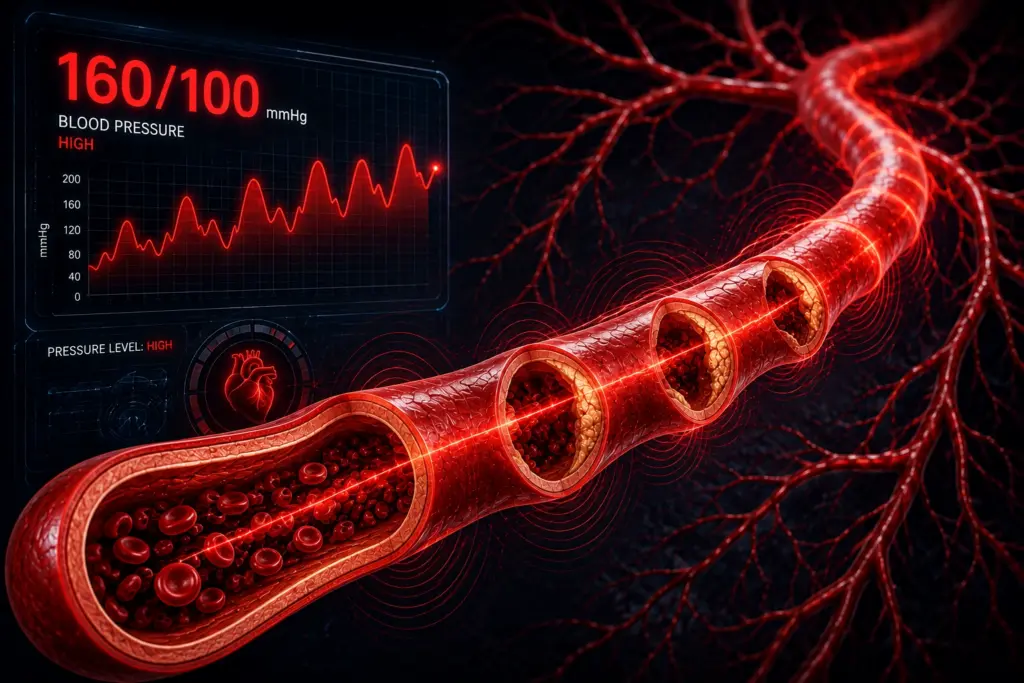
Hypertension doesn’t just affect the heart muscle; it damages the blood vessels as well. High pressure injures the delicate inner lining of arteries, causing them to thicken and stiffen (a process called arteriosclerosis).
This damage accelerates the buildup of fatty plaques (atherosclerosis), especially in the coronary arteries that supply the heart muscle itself. Reduced blood flow through these narrowed arteries can lead to chest pain (angina), heart attacks, and further heart muscle damage.
Metabolic and Cellular Changes
The stress of chronic high blood pressure also disrupts the heart’s energy production and metabolism. Mitochondrial dysfunction reduces the heart’s ability to use fatty acids and glucose for energy, while increased oxidative stress and inflammation promote further injury and scarring.
Hormonal systems like the renin-angiotensin-aldosterone system (RAAS) and excessive stress hormones (catecholamines) drive harmful changes in heart structure and function.
Also Read | Why women experience high blood pressure differently than men
Why Early Control Matters
The changes caused by high blood pressure-thickening, scarring, stiffening, and vessel damage-develop slowly but are often irreversible once advanced. That’s why early detection and consistent blood pressure control are vital. By keeping blood pressure in a healthy range, you can prevent or slow these damaging processes, preserving your heart’s strength and resilience for years to come.
How does high blood pressure damage the heart over time?
High blood pressure forces the heart to pump against greater resistance. Over time, this can cause the heart muscle to thicken, stiffen, weaken, and become less efficient.
Can high blood pressure cause heart failure?
Yes. Long-term hypertension can lead to changes in the heart’s structure and function, including left ventricular hypertrophy and reduced pumping ability, which may eventually contribute to heart failure.
What is left ventricular hypertrophy in hypertension?
Left ventricular hypertrophy, or LVH, is thickening of the muscle wall of the heart’s main pumping chamber. It develops when the heart has to work harder for a prolonged period because of high blood pressure.
Does hypertension increase the risk of heart attack?
Yes. High blood pressure can damage artery walls and accelerate plaque buildup, increasing the risk of coronary artery disease, angina, and heart attack.
Can controlling blood pressure reverse heart damage?
Early and consistent blood pressure control can help slow or prevent further damage, and some changes may improve. However, advanced structural damage may not be fully reversible, which is why early diagnosis and treatment matter.