
Breast self-exam: Let’s be honest: most of us don’t spend a lot of time checking our breasts unless something feels “off.” But regular self-exams can help you spot changes early, and early matters. No, it’s not about becoming a hypochondriac and poking at yourself every other day. It’s about getting familiar with what your normal feels like, so you’ll know when something isn’t.
Start in front of the mirror:
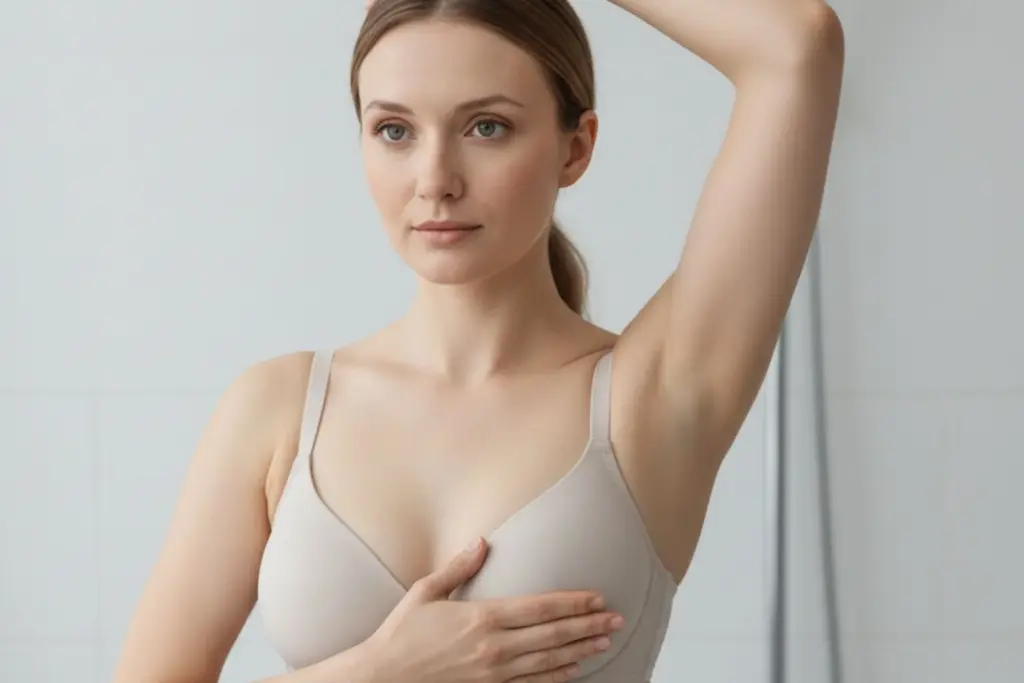
First things first, stand in front of the mirror with your arms relaxed at your sides. Just look. Notice the shape, the size, the skin. Breasts aren’t perfectly symmetrical, so don’t panic if one’s slightly bigger or hangs differently. What you want to pay attention to are visible changes: dimpling, puckering, redness, or the skin taking on that odd “orange peel” texture.
Also Read | Can teens get breast cancer? Signs and risks
Now, lift your arms above your head. This shifts the tissue and can make abnormalities more noticeable. Again, you’re looking for differences, any distortion, swelling, or a nipple pulling inward when it didn’t before.
Feel while standing or sitting:
Next comes the hands-on part. Use the pads of your fingers (not the tips, they’re too pokey) and press gently but firmly, moving in small circles. Some people prefer a clockwise pattern starting at the outer edge; others prefer a top-to-bottom pattern. Honestly, the method doesn’t matter as much as consistency. Cover the entire breast, including the armpit; that area is often forgotten, but breast tissue extends there, too.
You’ll feel firmer areas, softer areas, maybe some lumpy texture, depending on where you are in your cycle. That’s normal. What’s not normal? A distinct lump that feels hard, irregular, or doesn’t shift when you press it.
Don’t forget the lying-down check:
When you lie down, the breast tissue spreads out, making it easier to feel deeper structures. Slip a small pillow or folded towel under your right shoulder, place your right arm behind your head, and use your left hand to check your right breast (then switch). Move in the same circular or vertical motions you used before. Take your time here; sometimes it takes a minute to distinguish between normal density and something suspicious.

Breast cancer red flags you shouldn’t ignore:
Here’s the part people skip over, but it’s the most important: knowing when to call your doctor. See a professional if you notice:
- A hard, fixed lump that wasn’t there before
- Unexplained nipple discharge (especially if it’s bloody)
- Changes in skin texture: dimpling, thickening, or redness that doesn’t fade
- A nipple that suddenly turns inward
- Swelling or lumps in the underarm area
- Persistent pain localised to one spot
A quick note: most lumps aren’t cancer. Cysts, fibroadenomas, hormonal changes; they’re common. But you don’t want to play guessing games with your health. If something feels suspicious, let a doctor decide.
Also Read | Understanding the five stages of breast cancer: Symptoms and treatment
Doing a self-exam once a month, ideally a few days after your period ends, is enough. Think of it less as a “test” and more like a check-in with your body. No one knows your breasts better than you do, and noticing changes early can make all the difference.