

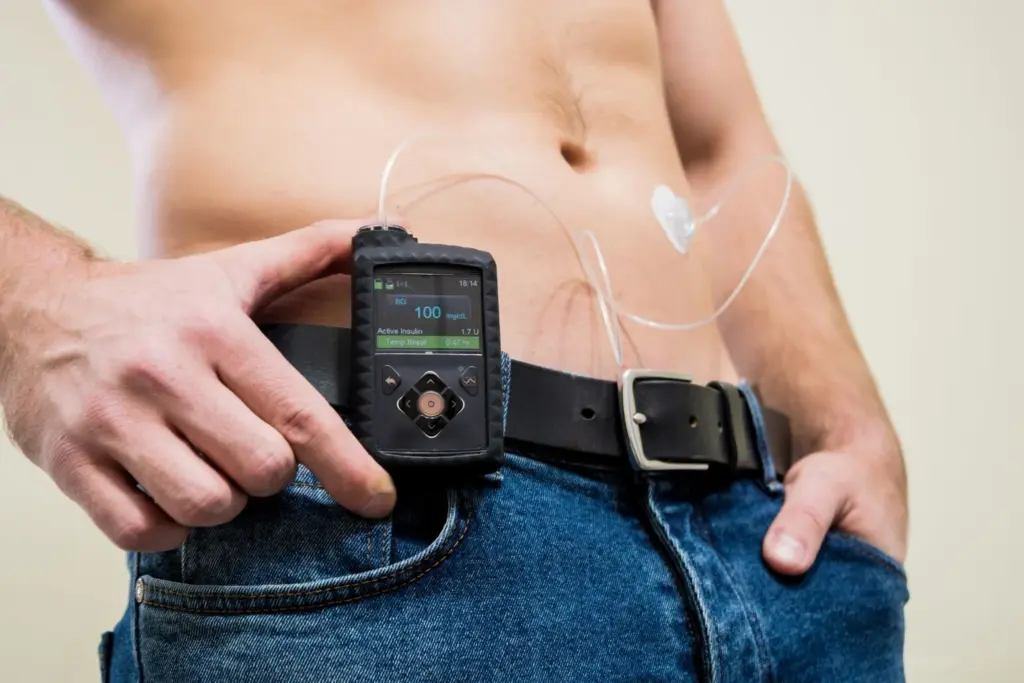
Insulin pumps for diabetes: If you or someone close to you is living with diabetes, you’ve probably heard people talk about insulin pumps. The name sounds technical, and it’s natural to wonder: What is this device? Do I really need it? Think of this as a simple, no-jargon introduction to how insulin pumps work and who they’re meant for.
What is an insulin pump?
An insulin pump is a small, computerised device that delivers insulin throughout the day and night. Instead of taking several insulin injections with a syringe or pen, you wear this device on your body, and it steadily releases insulin in tiny, measured amounts.
- The pump is usually clipped to your belt, tucked into a pocket, or attached to your clothing.
- A thin, flexible tube connects the pump to a tiny cannula (soft needle) placed just under the skin.
- This cannula is commonly inserted into areas such as the abdomen, thigh, or upper arm.
Also Read | What is type 4 diabetes? Signs to watch for and when to see a doctor
The pump can be programmed to give a continuous “background” dose and extra doses around meals, making insulin delivery more precise and flexible.
Who might use an insulin pump?
Insulin pumps are most commonly used by people with type 1 diabetes, who need insulin throughout the day to keep their blood sugar in a safe range. They can also be an option for some people with type 2 diabetes, especially those who:
- Need insulin every day
- Want tighter, more fine-tuned control of their blood glucose
- Prefer wearing a device instead of taking multiple injections
Choosing an insulin pump is a personal decision and should always be made together with a diabetes care team, based on lifestyle, medical needs and comfort level with technology.
How does an insulin pump work?
Your body needs insulin in two main ways:
- Basal insulin: a small, steady trickle of insulin that runs in the background all day and night. It keeps your blood sugar stable between meals and while you sleep.
- Bolus insulin: bigger doses that you take before eating or when your blood sugar is higher than it should be.
- An insulin pump is programmed to deliver basal insulin continuously. When you’re about to eat or your sugar level is high, you press a button on the pump to give yourself a bolus dose.
Unlike people who use injections and often rely on a mix of long-acting and short-acting insulin, pump users usually take only fast-acting insulin. The pump delivers this fast-acting insulin in tiny, precise amounts throughout the day, mimicking how a healthy pancreas would work and helping keep blood sugar more stable.

What does an insulin pump look like?
Insulin pumps come in a few designs, but most are:
- About the size of a smartphone or small pager
- Connected to your body by a thin, flexible tube with a tiny cannula (soft needle) under the skin
- Worn on a belt, slipped into a pocket, or clipped under your clothes
- They run on batteries and are light enough to carry around comfortably.
Some newer models are tubeless. Certain devices sit directly on the skin like a small patch and deliver insulin wirelessly, so there’s no dangling tube, just the small pod plus a separate handheld controller.
Why do people choose insulin pumps?
Many people with diabetes turn to insulin pumps because they offer flexibility and convenience that injections often can’t match. With a pump, you can:
- Eat earlier, later, or even skip a meal if you need to, and adjust your insulin with a few button presses.
- Replace three to four injections a day with changing the infusion site once every two to three days.
- Get more precise dosing to help smooth out frequent highs and lows.
- Temporarily raise or lower insulin during workouts, sick days, travel or stressful times without changing your entire routine.
Many modern pumps can also connect to a continuous glucose monitor (CGM). Together, they can automatically adjust insulin delivery based on your readings, making day-to-day management a bit easier.
An insulin pump isn’t a magic solution, but for many people it can make life with diabetes simpler and more manageable, while supporting better blood sugar control. You may get:
- More freedom in your daily schedule
- Fewer needle pricks
- Greater control over how and when insulin is delivered
However, it’s still just a tool. To get the best results, you still need to:
- Check your blood sugar regularly (or review your CGM data)
- Count carbohydrates as accurately as you can
- Notice how your body reacts to different foods, stress, exercise and illness
Also Read | A guide to GLP-1 side effects: What to expect and how to manage them
If you’re curious about whether a pump might suit you, the next step is to talk to your diabetes doctor or educator. They can help you weigh the pros and cons, choose a suitable device and support you through the process of starting and using it safely.