
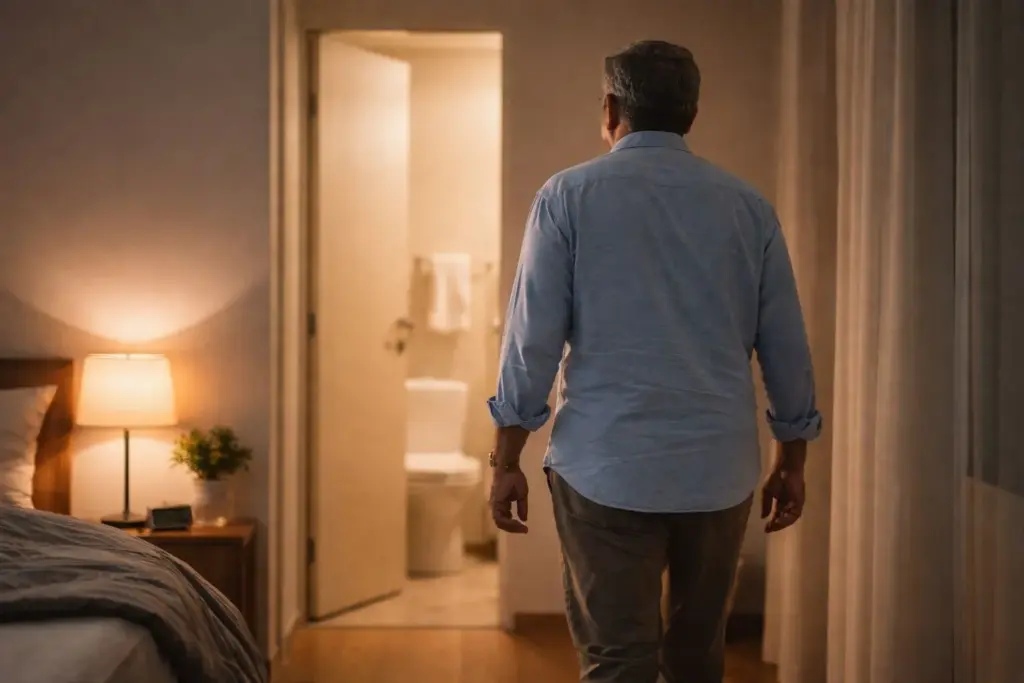
BPH or prostate cancer: As men grow older, prostate-related issues become increasingly common. Two conditions come up again and again: benign prostatic hyperplasia (BPH) and prostate cancer. Both affect the prostate gland, a small gland located just below the bladder that contributes fluid to semen.
Because the prostate sits around the urethra (the tube that carries urine out of the body), problems in this gland often show up as urinary changes. That’s why BPH and prostate cancer can sometimes feel confusingly similar at first.
Also Read | Why erectile dysfunction could be a red flag for your health
What is benign prostatic hyperplasia (BPH)?
BPH is a non-cancerous enlargement of the prostate. It’s extremely common with age; many men notice symptoms after 50. When the prostate grows bigger, it can squeeze the urethra and interfere with the normal flow of urine. The result is often a set of “plumbing” symptoms rather than pain or systemic illness.
Common symptoms of BPH
- Needing to urinate more often, especially at night (nocturia)
- Weak urine stream or slow flow
- Trouble starting urination (straining or waiting)
- Dribbling after finishing
- Feeling like the bladder hasn’t fully emptied
- Sudden urgency that’s difficult to hold
What is prostate cancer?
The prostate is often described as walnut-sized, and it plays an important role in male reproduction by producing part of the fluid that supports sperm.
Prostate cancer develops when abnormal cells in the prostate begin to grow uncontrollably. It’s one of the more common cancers in men, especially as age increases. In the early stages, prostate cancer may cause no symptoms at all. When symptoms do appear, they can overlap with BPH.
Common symptoms of prostate cancer:
- Difficulty starting or stopping urine flow
- Weak or interrupted stream
- Frequent urination, especially at night
- Burning or pain during urination
- Blood in urine or semen
- Pain in the lower back, hips, or thighs
- Unexplained weight loss or ongoing fatigue
BPH vs prostate cancer: Key differences
| Feature | BPH (Benign Prostatic Hyperplasia) | Prostate Cancer |
| Nature | Non-cancerous enlargement of the prostate | Uncontrolled growth of cancerous cells in the prostate |
| Progression | Grows slowly and doesn’t spread | It can spread to other parts of the body if not treated |
| Pain | Usually painless | May cause pain in bones, hips, or back in later stages |
| Blood in urine/semen | Rare | Common |
| Effect on urination | Trouble starting or stopping urine, weak flow, frequent urination | Similar symptoms, but may be accompanied by pain or blood |
| Overall health impact | Mainly causes urinary discomfort | It can affect overall health and be life-threatening |
| Diagnosis | Based on symptoms, urine tests, and ultrasound | Diagnosed through PSA blood test, biopsy, MRI, etc. |
When to see a doctor:
Don’t ignore symptoms like:
- Weak stream or difficulty starting urine
- Urinating frequently, especially at night
- Burning/pain during urination
- Blood in urine or semen
- New pain in lower back/hips (especially persistent)

How doctors check prostate problems:
A doctor may use a mix of these steps:
- Physical exam (DRE): A gentle rectal exam to assess prostate size and feel.
- Urine tests: To rule out infection and other causes.
- PSA blood test: Helps assess risk (not a cancer confirmation by itself).
- Ultrasound or MRI: To look at prostate size and detect suspicious areas.
- Biopsy: If cancer is suspected, a biopsy confirms the diagnosis.
Tips for a healthy prostate:
Some prostate changes are part of ageing, but you can still support prostate health by:
- Eating more fruits, vegetables, whole grains, and healthy fats
- Cutting down on ultra-processed foods and excess alcohol
- Staying active and maintaining a healthy weight
- Managing blood sugar and blood pressure
- Getting age-appropriate check-ups, especially if there’s a family history
Also Read | Can a CT scan raise cancer risk?
BPH and prostate cancer can look similar on the surface, and many men assume urinary issues are “just age.” But since prostate cancer may be silent early on, it’s important not to self-diagnose.