


Thyroid in pregnancy: Pregnancy is a joyful, life-changing phase, but it also puts your body through many adjustments. Some changes are easy to notice, like your growing bump, while others are happening quietly in the background, such as shifts in your hormone levels.
One of the most important hormones in this period comes from a tiny gland in your neck called the thyroid. Even though it’s small and shaped like a butterfly, it has a big influence on your health and your baby’s development.
Also Read | Why thyroid problems affect women more than men
What is the thyroid gland, and why is it important?
The thyroid makes two key hormones, T3 and T4. These control how your body uses energy, keep your metabolism running, influence your heart rate, and help regulate body temperature.
During pregnancy, these hormones play an even bigger role. In the early stages, your baby relies on your thyroid hormones for normal brain and nervous system development. If the thyroid is working too slowly (underactive) or too quickly (overactive), it can create health issues for you and may affect your baby’s growth. That’s why doctors often recommend checking thyroid levels during pregnancy and keeping a close watch if there’s any imbalance, so both mother and baby stay safe and healthy.
How does pregnancy affect thyroid hormones?
During pregnancy, the thyroid doesn’t get a break; it actually becomes busier than usual. In the first trimester, your body starts making extra thyroid hormone. One of the main reasons is the sharp rise in a pregnancy hormone called hCG, which can gently “push” the thyroid to work harder, leading to a temporary bump in thyroid hormone levels.
To keep up with this extra workload, the thyroid needs more iodine, a key mineral it uses to produce hormones. Because you’re now supporting both your own needs and your baby’s development, your iodine requirement naturally increases. If your intake is low, the gland may have difficulty producing enough hormone.
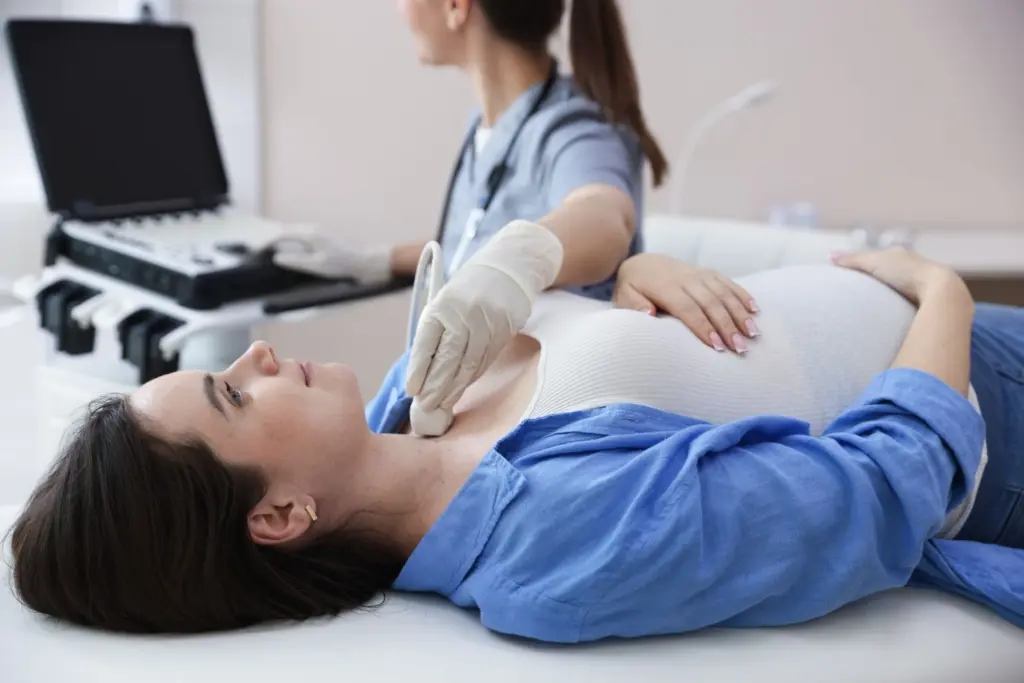
As a result of all this added demand, the thyroid may become slightly larger during pregnancy. This small, usually harmless enlargement is considered a normal physical change and reflects the gland’s effort to keep pace with the body’s higher hormone needs.
How are thyroid problems picked up during pregnancy?
During pregnancy, doctors usually rely on a few simple blood tests to see how well your thyroid is working. These include:
- TSH (Thyroid-Stimulating Hormone): This is the primary marker that shows whether your thyroid is underactive, overactive, or functioning normally.
- Free T4: This test measures the active form of thyroid hormone circulating in your blood.
- Thyroid antibodies: These may be checked if you have a personal or family history of autoimmune thyroid disease, such as Hashimoto’s thyroiditis or Graves’ disease.
These tests might be done:
- Before you get pregnant, especially if you already have thyroid issues or are planning a pregnancy
- In the first trimester, when thyroid balance is essential for the baby’s early development
- Later in pregnancy, if you develop symptoms or if you’re already known to have a thyroid disorder
Symptoms you shouldn’t ignore:
Even if you’ve never been told you have a thyroid problem, it’s good to know what warning signs to look out for. Let your doctor know if you notice:
- Extreme tiredness or unusual weakness that doesn’t improve with rest
- Fast, pounding, or irregular heartbeat
- Unexplained weight gain or sudden weight loss
- Feeling too hot or too cold compared to others around you
- Mood changes, such as irritability, anxiety, low mood and depression
- Swelling or a visible fullness in the front of the neck, which could suggest a goitre (enlarged thyroid)
Also Read | Can you reverse thyroid disorders through diet and lifestyle?
Pregnancy puts almost every part of your body through a transition, and the thyroid is one of the glands that has to adjust. For many women, this shift is completely normal, and the thyroid adapts to the extra demands of pregnancy. For others, however, thyroid levels may slip out of balance and need closer attention and treatment. With timely care and good follow-up, most women can enjoy a healthy pregnancy and give their baby a strong start in life.