

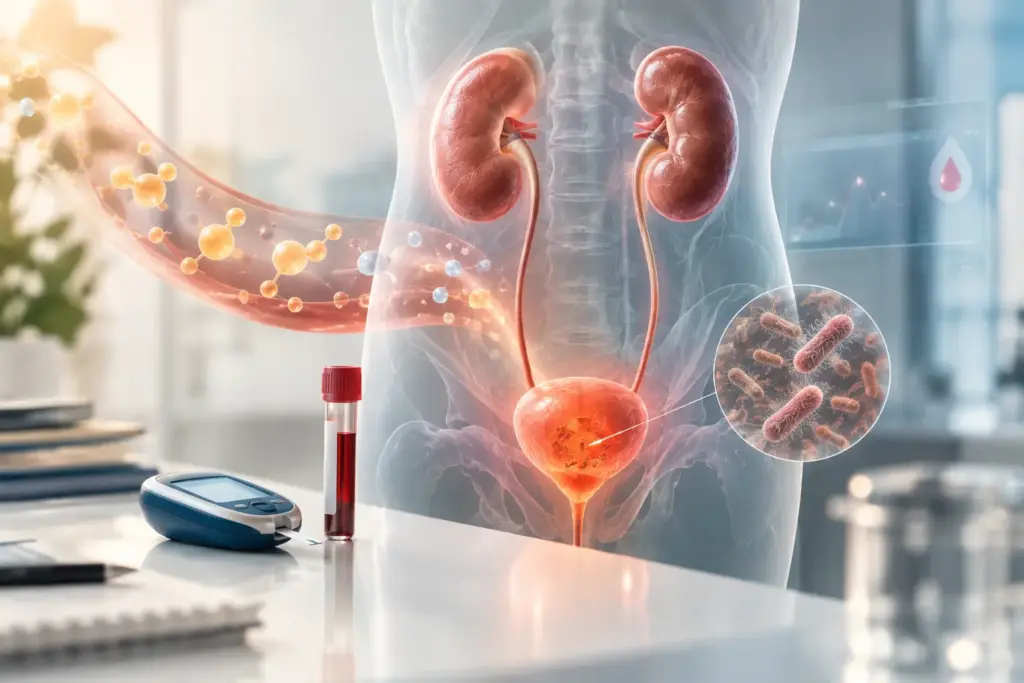
UTIs in diabetics: If you have diabetes and keep getting urinary tract infections (UTIs), it’s not just bad luck. There’s a real connection—and it’s more common than most people realize. For some, it starts with that familiar burning feeling. For others, it’s more subtle—just fatigue or needing to pee again. Either way, UTIs in diabetics tend to show up more often, last longer, and come back even when you think they’re gone for good. Let’s break down why that happens—and what you can do about it.
So… why does diabetes raise the risk?
Short answer: sugar makes everything harder. Here’s what’s going on behind the scenes:
- High blood sugar fuels bacteria: When your blood sugar stays high, some of that sugar spills into your urine. Bacteria love that. So your bladder basically becomes a cozy buffet for infection-causing microbes—especially E. coli.
- Weakened immune response: Diabetes slows down the immune system. Your white blood cells—the ones that fight off infections—don’t work as efficiently when sugar levels are off. That means your body takes longer to respond when bacteria sneak in.
- Nerve damage (aka neuropathy): Over time, high sugar can damage the nerves that control your bladder. If your bladder doesn’t fully empty, even a little bit of leftover urine can turn into a breeding ground for bacteria.
Also Read | Silent UTI: Can you have a urinary tract infection without knowing?
What does that mean in real life?
- UTIs may not feel typical. Some diabetics don’t feel burning or urgency right away. Instead, they feel tired, confused, or just “off.”
- They tend to come back. Even after antibiotics, bacteria might hang around if blood sugar’s not under control.
- Infections can go deeper. A UTI that’s ignored or not fully treated can reach the kidneys fast—and that’s where things get serious.
Symptoms to watch for
Don’t just wait for the burn. In diabetics, UTI symptoms can include:
- Frequent urination
- Cloudy or foul-smelling urine
- Pelvic discomfort or back pain
- Low-grade fever
- Feeling unusually weak or foggy
If you’re feeling “off” and your sugar levels are fluctuating more than usual, don’t brush it off.
Also Read | Why diabetes makes you tired: Causes of fatigue explained
What helps?
- Stay hydrated. Sounds basic, but it works. More fluids = more flushing.
- Control blood sugar. Every spike makes things harder to heal.
- Finish antibiotics fully. Even if symptoms ease up, stopping early can let the infection bounce back stronger.
- Go easy on sugar and refined carbs, especially if you’re mid-infection.
- Talk to your doctor about preventive steps if UTIs keep returning—like low-dose antibiotics or D-mannose supplements (some evidence supports it).
Bottom line
UTIs in people with diabetes aren’t just more common—they’re trickier to catch, harder to treat, and more likely to come back. But the solution isn’t to panic. It’s to pay attention. Track your symptoms. Stay on top of sugar levels. And never ignore a UTI—you know your body better than anyone.
FAQS
Are UTIs more common in people with diabetes?
Yes. High blood sugar can increase the risk of urinary tract infections.
What are common UTI symptoms?
Burning while urinating, frequent urination, urgency, cloudy urine, or lower abdominal discomfort
Can high blood sugar worsen a UTI?
Yes. Poorly controlled blood sugar can make infections harder to fight and recover from
Can UTIs become serious in people with diabetes?
They can. An untreated UTI may spread to the kidneys or cause more serious complications
How can people with diabetes reduce UTI risk?
Stay well hydrated, manage blood sugar, avoid holding urine, and maintain good personal hygiene