

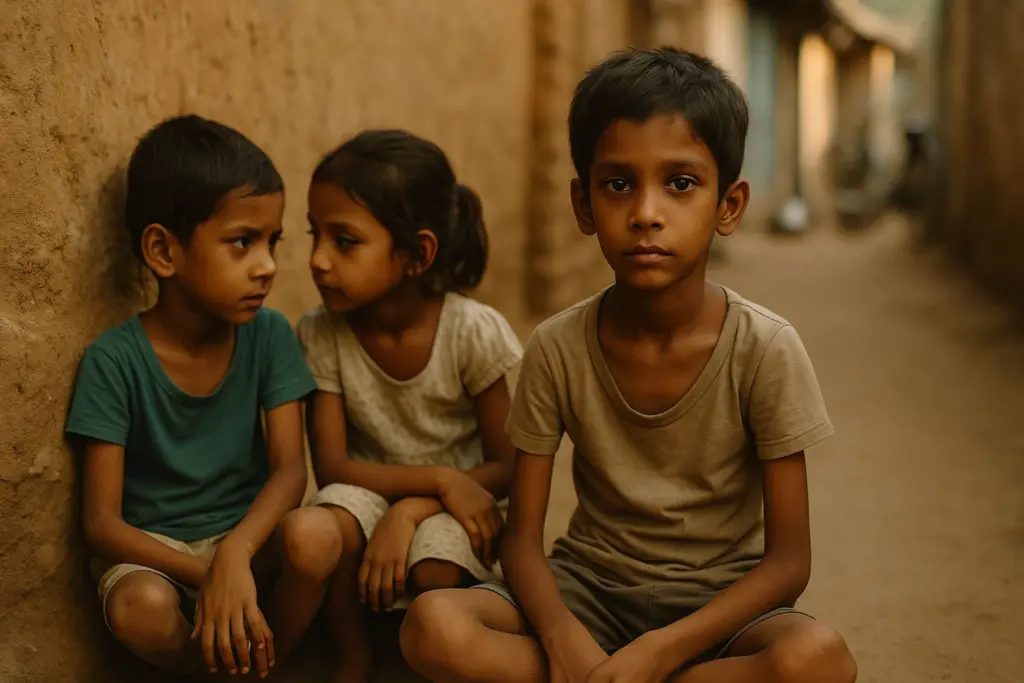
Climate change in India: Children growing up in parts of India most exposed to climate shocks are significantly more likely to be undernourished and to miss out on safe deliveries than those in less vulnerable areas, new research has warned.
A study published in the journal PLOS One has found that children living in districts classified as highly vulnerable to climate change are about 25 per cent more likely to be underweight than children in districts with lower climate risk. The authors say the findings highlight how climate stress is beginning to show up in basic health indicators.
Also Read | Inhalers’ hidden climate cost: Study finds emissions equal to 5 lakh cars
Researchers from the Institute of Economic Growth in Delhi noted that roughly 80 per cent of India’s population now lives in areas prone to extreme weather, including cyclones, floods and heatwaves. Without urgent adaptation, they argue, climate risks could slow or reverse progress towards several Sustainable Development Goals (SDGs), including those related to nutrition, health and inequality.
The SDGs, adopted by UN member states in 2015, lay out a global roadmap to end poverty, protect the planet and ensure well-being for all by 2030. Low and middle-income countries like India, especially those in tropical regions, are expected to bear a disproportionate share of climate impacts due to both geography and limited resources to cope.
For the current analysis, the team combined data from the National Family Health Survey-5 (NFHS-5) with district-level climate vulnerability scores developed by the Central Research Institute for Dryland Agriculture (CRIDA). They then examined how health outcomes differed between districts ranked as highly vulnerable and those considered less exposed.
The gaps were stark. In districts with high climate vulnerability:
- The likelihood of a non-institutional delivery, births taking place outside a health facility, was 38 per cent higher.
- The odds of wasting (low weight for height) were about 6 per cent higher.
- The odds of stunting (low height for age) were about 14 per cent higher.
“Districts that are highly vulnerable to climate change consistently underperform on the health indicators we studied,” the authors wrote, pointing to underweight children, stunting, wasting, non-institutional deliveries and reported problems in accessing healthcare.
The study also reports that people living in climate-vulnerable districts are more likely to face barriers when seeking medical help, suggesting that climate risk may compound existing gaps in infrastructure and services.
The researchers argue that climate vulnerability now needs to be treated as a core determinant of health in policy planning, not just as an environmental or economic concern.