

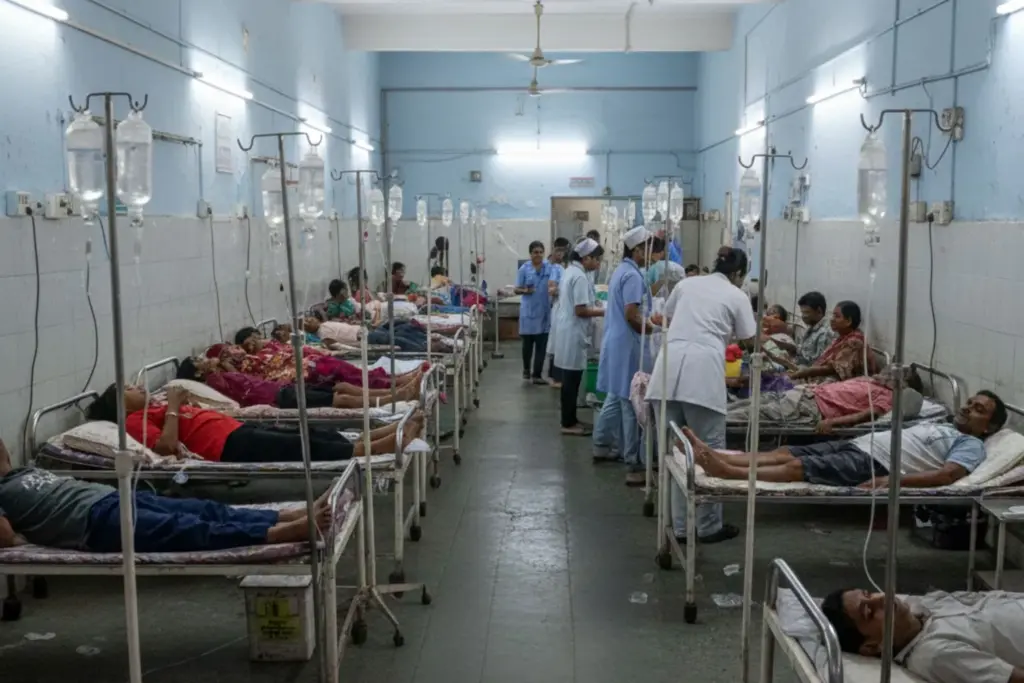
Indore diarrhoea outbreak: Indore’s waterborne diarrhoea outbreak continued to keep hospitals busy on Sunday, with 142 patients still admitted, including 11 in intensive care, even as health teams detected 20 fresh cases during door-to-door screening in Bhagirathpura, the locality at the centre of the crisis.
Officials said medical staff screened 9,416 people from 2,354 households as part of the ongoing survey and follow-up drive in the affected area.
Also Read | High-dose nimesulide painkiller banned in India over health risks
So far, 398 people have been hospitalised since the outbreak began, with 256 discharged after recovery, according to the latest health department update. The administration has confirmed six deaths. The toll has been disputed publicly. Indore’s mayor earlier indicated a higher number, while some residents have claimed more fatalities, though the official count remains six. Authorities said the outbreak is now under control, while surveillance and screening continue.
A specialist team from Kolkata-based ICMR-affiliated National Institute for Research in Bacterial Infections (NIRBI) has reached Indore to support the investigation and provide technical guidance to contain the spread, the Chief Medical and Health Officer said. The outbreak has also triggered a political storm in the state. The Congress held protests in multiple places, demanding a judicial inquiry and action against civic officials, and issued fresh warnings of escalation if rectification measures are not implemented.
In a separate development linked to the protests, an SDM in neighbouring Dewas was suspended after an official order reportedly reproduced parts of a political memorandum verbatim, which the administration flagged as negligence. Meanwhile, public anger has centred on the alleged contamination source, with officials acknowledging that sewage overflow entered water pipelines, leading to severe gastrointestinal illness in the locality.
The episode has renewed scrutiny of Indore’s drinking water infrastructure and maintenance. The city largely depends on Narmada water supplied through pipelines from Jalud in Khargone district, around 80 km away, and civic officials have said the project involves significant monthly expenditure, including high electricity costs.