

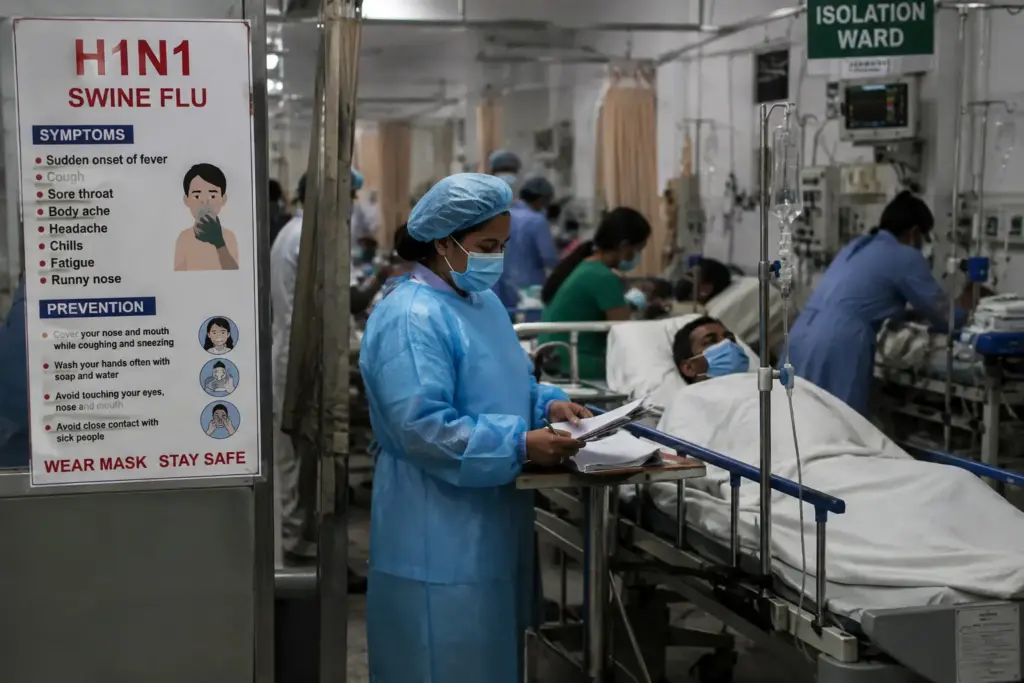
Delhi swine flu: Delhi is seeing a sharp rise in H1N1 infections this year, with 1,777 confirmed cases reported so far in 2026. The increase has prompted health authorities to step up surveillance, although experts have clarified that the surge is not linked to a new strain of the virus.
According to Delhi government data, 114 H1N1 cases were reported on August 20 alone. The city has recorded 2,602 seasonal influenza cases this year, including 2,392 cases of Influenza A and 210 cases of Influenza B.
The increase is significant compared with last year. During the corresponding period in 2025, Delhi had reported 229 H1N1 cases. This year’s figure is nearly eight times higher.
Despite the rise, health authorities have urged people not to panic.
What is H1N1?
H1N1 is a type of Influenza A virus that causes respiratory infection. It spreads mainly through droplets released when an infected person coughs, sneezes or talks. Infection can also spread through close contact with someone who has the virus.
H1N1 became widely known as swine flu during the 2009 pandemic. It is no longer considered a new virus and now circulates as one of the seasonal influenza viruses seen around the world.
What Are The Symptoms of H1N1?
For many people, the illness causes symptoms similar to other types of flu and improves with rest and appropriate care.
Common symptoms include fever, cough, sore throat, headache, body ache, tiredness and a runny or blocked nose.
Children, older adults, pregnant women and people with certain underlying health conditions may face a higher risk of complications.
ICMR Says No New H1N1 Strain Has Emerged
The sharp rise in cases has raised questions about whether a new form of H1N1 is circulating in the country.
Scientists at the Indian Council of Medical Research have said there is no evidence of a new H1N1 strain behind the current increase.
The Influenza A H1N1 pdm09 viruses being detected in India are similar to the A/Missouri/11/2025 H1N1 pdm09 virus strain. They belong to clade 6B.1A.5a2a and subclade D.3.1.1 and have been circulating since 2025.
ICMR scientists have also said that the influenza viruses currently circulating are well matched with the vaccine strains recommended for the Northern Hemisphere.
Influenza viruses naturally change over time. Small genetic changes are common and are known as antigenic drift. Much larger changes, called antigenic shift, occur less often and can result in a substantially different virus.
So far, there is no evidence of such a major change in the H1N1 virus circulating this year.
Should Delhi Be Worried?
The rapid increase in infections needs attention, but current data does not suggest that a new or unusually dangerous form of H1N1 has appeared.
No H1N1 deaths have been reported in Delhi so far this year.
Delhi Health Minister Pankaj Kumar Singh has also said that hospitals have adequate beds, doctors, medicines and essential medical equipment to manage the current situation.
Most seasonal influenza infections are mild and resolve with appropriate care. However, flu can become more serious in vulnerable people and symptoms should not be ignored if they continue to worsen.
Health Authorities Step Up Surveillance
Union Health Minister JP Nadda has reviewed the influenza situation and Delhi’s preparedness with health officials following the rise in cases.
The review looked at testing, hospital preparedness, availability of beds, medicines, diagnostic facilities and the monitoring of influenza like illness and severe acute respiratory infections.
Influenza surveillance is being carried out regularly, while hospitals and health officials have been asked to strengthen screening, reporting and monitoring.
Public health guidance has also focused on recognising symptoms early and ensuring timely medical care for people who may be at greater risk of complications.
When Should You See a Doctor?
A fever, cough and body ache may seem like an ordinary seasonal infection, but symptoms that are persistent or becoming worse should not be ignored.
Medical attention should be sought if a person develops breathing difficulty, chest pain, persistent high fever, severe weakness, confusion, dehydration or low oxygen levels.
People in higher risk groups should be particularly careful and speak to a doctor early if they develop significant flu symptoms.
Antiviral medicines may be recommended in some cases, particularly for people at higher risk or those with severe illness. Antibiotics do not treat H1N1 because influenza is caused by a virus.
Simple Precautions Can Reduce the Risk
Basic precautions remain useful when influenza cases are increasing.
Wearing a mask in crowded or poorly ventilated spaces can reduce exposure. Washing hands regularly, covering the mouth and nose while coughing or sneezing and avoiding close contact with people who are unwell can also help limit transmission.
Anyone with fever and respiratory symptoms should avoid unnecessary outings and close contact with others while they are unwell.
There is no reason for panic, but the jump in Delhi’s H1N1 numbers is a reminder that seasonal influenza should not always be dismissed as a minor illness. Recognising symptoms, taking sensible precautions and seeking medical advice when symptoms worsen can help reduce the risk of complications.