


Kadha vs. haldi doodh: Every winter, the debate resurfaces in kitchens across India. Do you reach for the sharp, steaming cup of kadha that your grandmother swore by, or the warm, golden glass of haldi doodh that feels like a hug from the inside? Both have earned their place in Indian homes over centuries, and both carry real wellness benefits. But they work differently, and knowing which one to drink and when makes all the difference.
What is kadha?
Kadha is an Ayurvedic herbal decoction, made by simmering a combination of spices and herbs in water until the liquid becomes concentrated and potent. Think of it as nature’s multitool for fighting off seasonal illness. The result is a strong, slightly bitter brew that works fast.
Also Read | Ayurvedic remedies for hair fall: Bhringraj, amla, methi, neem and more
The usual cast of ingredients includes tulsi for immunity, ginger to tackle inflammation, black pepper to help your body absorb everything else, cinnamon for its antibacterial warmth, clove to ease a sore throat, and mulethi, liquorice root, to calm a persistent cough. Honey or jaggery typically goes in at the end to soften the bite.
What is haldi doodh?
If kadha is the warrior, haldi doodh is the healer. Also called golden milk in wellness circles, it is made by stirring turmeric into warm milk, often with a pinch of black pepper, cardamom and a drizzle of honey. The result is creamy, mild and deeply soothing.
The star of the show is curcumin, the active compound in turmeric, which carries well-documented anti-inflammatory properties. The black pepper is not just for flavour; it dramatically improves how much curcumin your body actually absorbs.
What is the difference between kadha and haldi doodh?
The two drinks work on different timelines and serve different purposes. Kadha is water-based, warming and energising, best taken in the morning or afternoon when your body needs a fast response to the first signs of a cold, cough or sore throat. It is the drink you reach for when seasonal change has you feeling run-down and you need your immune system to respond quickly.
Haldi doodh, by contrast, is milk-based, calming and better suited to nighttime. It works gradually, reducing inflammation, easing muscle soreness, supporting digestion and setting the stage for deeper sleep. Its strength lies in long-term immune building rather than immediate relief.
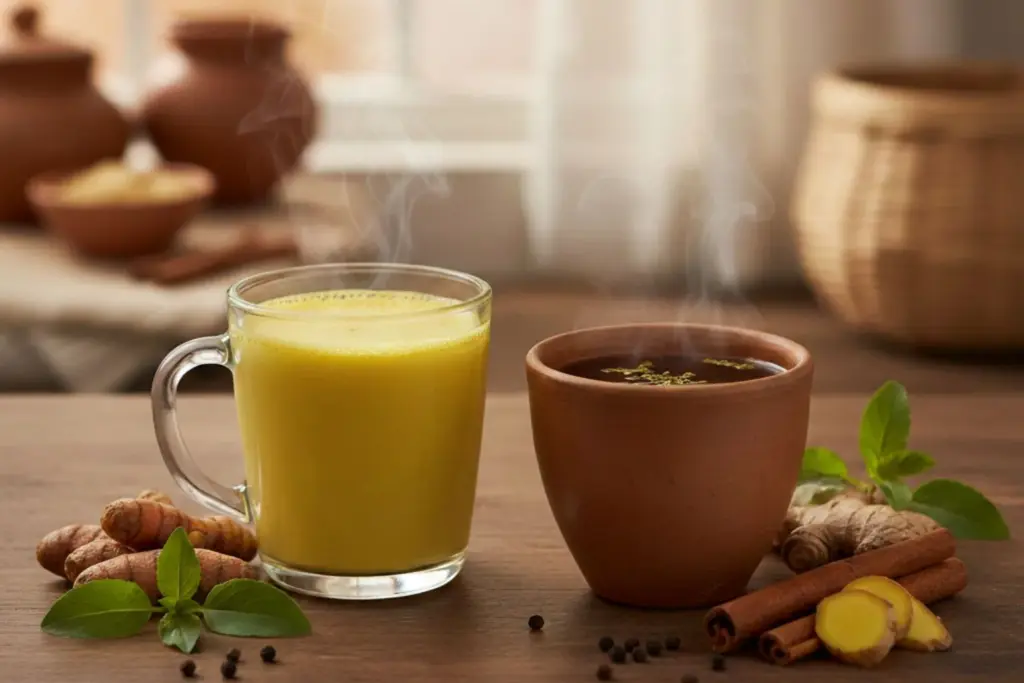
When should you choose kadha and haldi doodh?
Kadha earns its place when your body sends early warning signals, such as a scratchy throat, a blocked nose, or the sluggishness that arrives with a change in weather. It is best consumed before symptoms fully settle in.
That said, it comes with caveats. People with acidity or ulcers should be careful, as a strong brew can irritate the stomach lining. Drinking it on an empty stomach can cause a burning sensation. And more is not always better; made too strong or consumed too frequently, it can do more harm than good.
When should you choose haldi doodh?
Turmeric milk is the right call during recovery rather than in the thick of illness. If you are feeling body aches, low energy or general fatigue, or simply want to strengthen your resistance over time, a nightly glass is a practical and pleasant habit.
Those who are lactose intolerant can swap regular milk for almond or oat milk without losing much of the benefit. One thing to watch: too much turmeric in a single serving can cause bloating or an unsettled stomach, so a measured pinch goes a long way.
Who needs to be cautious?
Natural does not always mean risk-free for everyone. Pregnant or breastfeeding women should avoid strong kadha blends that lean heavily on clove and black pepper. Diabetics are better off skipping the honey or jaggery often added to both drinks. And anyone taking blood thinners should check with their doctor before making high-turmeric drinks a daily habit, as curcumin can interact with certain medications.
Also Read | How to use turmeric daily: 5 simple recipes for better health
Kadha and haldi doodh are not competitors, they are complements. Kadha steps in when your immunity needs a quick, forceful boost. Haldi doodh does its work quietly in the background, rebuilding and restoring over time. Used together and used wisely, they represent exactly what traditional Indian wellness has always understood: that the best remedies are not about fighting illness alone, but about keeping the body strong enough that illness struggles to take hold in the first place.
FAQs: Differences between haldi doodh and kadha
What is kadha?
Kadha is a traditional Ayurvedic herbal decoction made by boiling spices and herbs like tulsi, ginger, black pepper, cinnamon and clove in water. It’s strong, warming, and typically used for quick relief from cold, cough and seasonal infections.
What is haldi doodh?
Haldi doodh, or turmeric milk, is warm milk mixed with turmeric and often black pepper. It’s soothing, anti-inflammatory and commonly consumed at night to support recovery, immunity and better sleep.
How do they work differently?
Kadha works fast and is best for early symptoms like sore throat, congestion or seasonal fatigue. Haldi doodh works gradually, helping reduce inflammation, ease body aches and strengthen immunity over time.
When should I drink kadha?
Choose kadha at the first signs of a cold or when the weather changes leave you feeling run-down. It’s best taken once daily and not on a completely empty stomach.
When is haldi doodh a better option?
Haldi doodh is ideal during recovery, for body aches, low energy or as a nightly wellness ritual. It supports long-term immunity rather than immediate symptom relief.