
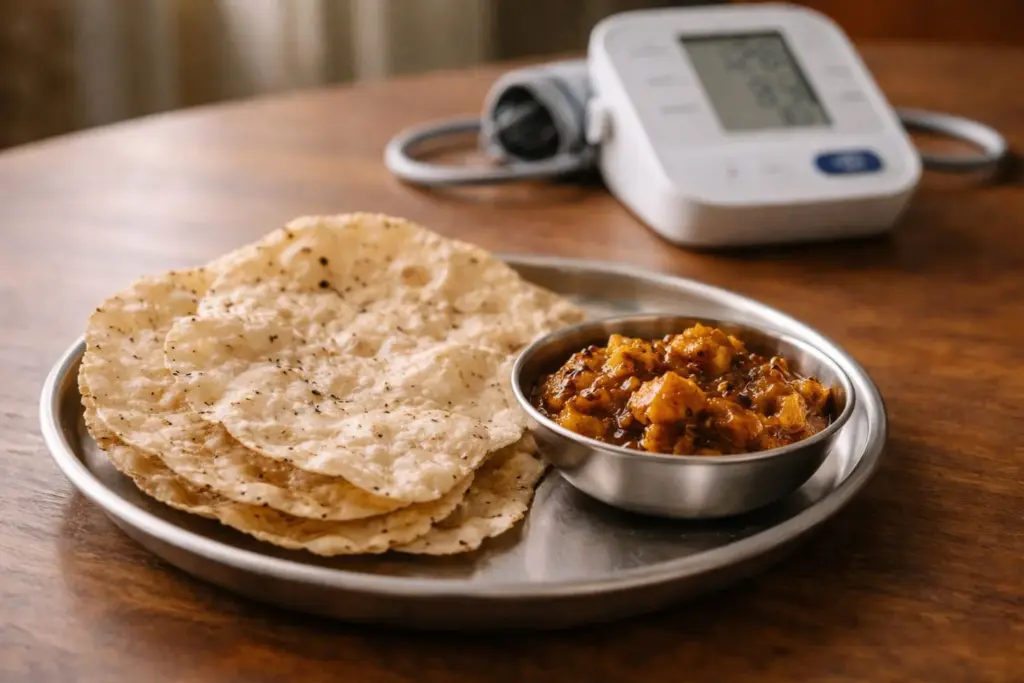
Blood Pressure and Indian Food: For most Indian households, a meal without achar, masala, or papad feels oddly incomplete. These aren’t just condiments; they’re deeply woven into how we eat, gather, and experience food. But if a doctor has recently flagged your blood pressure, chances are sodium came up in that conversation pretty quickly. And that puts some of your most-loved accompaniments under scrutiny.
The encouraging part? You don’t have to wipe them off your plate. You just have to rethink how they’re made and how much of them ends up in your meals.
Also Read | Why hydration matters more than you think for blood pressure
The real problem with sodium:
When you consume too much salt, your body compensates by retaining water. That extra fluid volume pushes against your artery walls, raising blood pressure and quietly stressing your heart over time. Health guidelines generally recommend staying under 2,300 milligrams of sodium per day, roughly equivalent to one level teaspoon of salt. The catch is that Indian pantry staples tend to carry far more hidden sodium than most people account for, especially when eaten daily.
Rethinking masala:
Store-bought spice blends are convenient, but many are formulated with salt, anti-caking agents, and flavour enhancers that quietly chip away at your daily sodium budget. The fix isn’t to stop cooking with spice, it’s to shift how you build flavour.
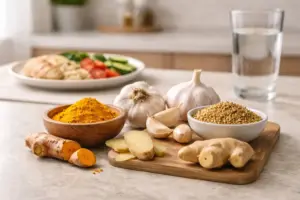
Grinding your own masala at home gives you complete control over what goes in. Whole spices like cumin, coriander, black pepper, cardamom, and dried chillies carry intense flavour on their own without needing sodium as a crutch. A squeeze of lemon or a small piece of tamarind can add the brightness that salt usually provides, tricking your palate into satisfaction without the pressure cost.
Smarter achar:
Traditional pickles are preserved through generous amounts of salt and oil, both of which accumulate quickly over a week of daily meals. A single teaspoon of classic mango or lime achar can deliver several hundred milligrams of sodium before you’ve even started your dal.
A practical workaround is to make small, quick-use batches rather than long-shelf-life jars. Thin slices of cucumber or carrot lightly dressed with lemon juice, a touch of vinegar, and mild spices like mustard seeds and turmeric give you that sour, punchy hit without heavy preservation. The key is portion discipline too, a half-tablespoon eaten for its flavour rather than a full spoonful treated as a side dish makes a meaningful difference over time.
Reinventing papad:
Even roasted papad, often assumed to be the healthier option, tends to be high in sodium because salt is built into the base dough. Fried versions compound this with added oil.
If you enjoy something crunchy alongside your meal, a homemade papad made from millet flour with significantly reduced salt is one option worth exploring. Alternatively, small amounts of toasted seeds, roasted makhana, or a thin baked cracker can satisfy that textural craving without the sodium load.
Also Read | How to combine yoga and walking to manage blood pressure naturally
What a heart-friendly thali can look like:
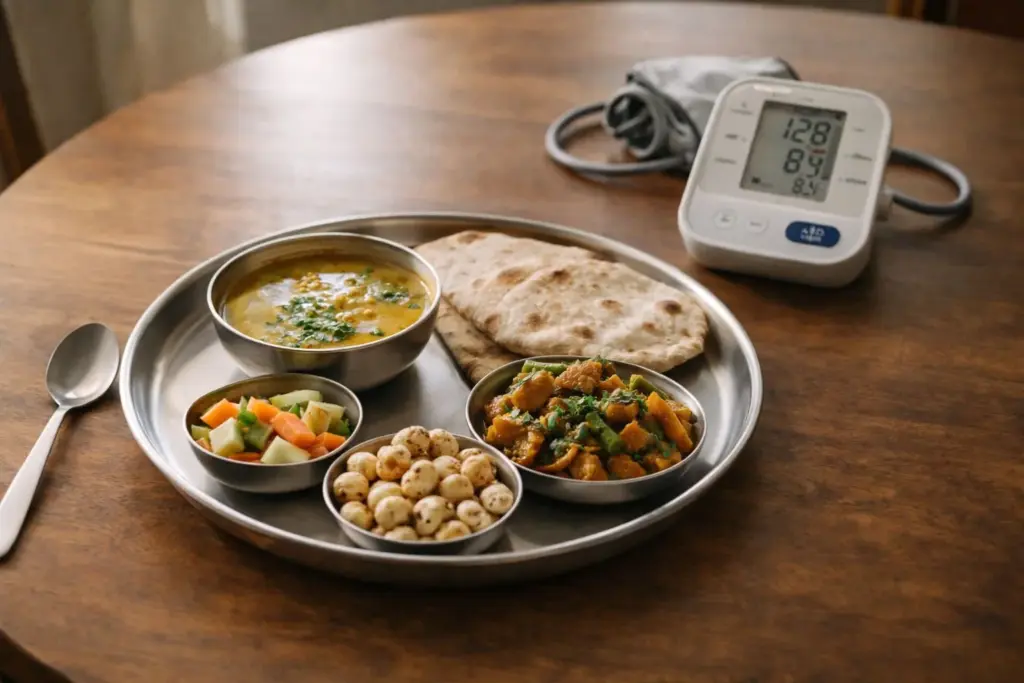
A satisfying, flavorful meal that works for a hypertensive diet isn’t a compromise, it just requires a little more intentionality. Think dal seasoned with turmeric, jeera, and fresh lemon rather than extra salt. Sabzi built on ginger, garlic, and coriander for depth. Whole wheat chapati prepared without salt in the dough. A quick carrot-cucumber lemon pickle standing in for achar. Roasted makhana or a small baked crisp replacing papad. Plain yogurt finished with a dusting of roasted cumin powder for a cooling, flavorful close.
None of this requires giving up the spirit of Indian eating. It requires understanding where sodium hides and finding equally satisfying ways to build flavor without it. Managing hypertension through food is less about subtraction and more about substitution. The goal is a table that still feels abundant, just built a little more thoughtfully than before.
FAQs: Managing Blood Pressure Without Giving Up Indian Flavours
Can I eat achar if I have high blood pressure?
Yes, but in very small portions. Traditional pickles are high in salt and oil, so limiting the quantity to half a tablespoon occasionally, rather than daily, can help manage sodium intake. Opting for fresh, quick lemon-based pickles with minimal salt is a better alternative.
Is roasted papad safe for people with hypertension?
Roasted papad is lower in fat than fried papad, but it still contains significant sodium because salt is added to the dough. It’s best consumed occasionally and in small portions. Roasted makhana or unsalted seed mixes are healthier crunchy substitutes.
What are simple ways to reduce salt in Indian cooking without losing flavour?
Using whole spices, fresh herbs, ginger, garlic, lemon juice, tamarind, and roasted cumin powder can enhance taste without relying on extra salt. Building flavour through spice layering makes meals satisfying and heart-friendly.
Can yogurt and dal be part of a hypertension-friendly diet?
Yes. Plain yogurt, dal, sabzi, whole grains, and fresh vegetables form the foundation of a heart-friendly Indian thali. The key is limiting added salt and high-sodium accompaniments.
How much salt is safe per day for someone with high blood pressure?
Most health guidelines recommend staying below 2,300 mg of sodium per day (about one teaspoon of salt). For people with hypertension, doctors often advise even lower limits, around 1,500 mg daily.