
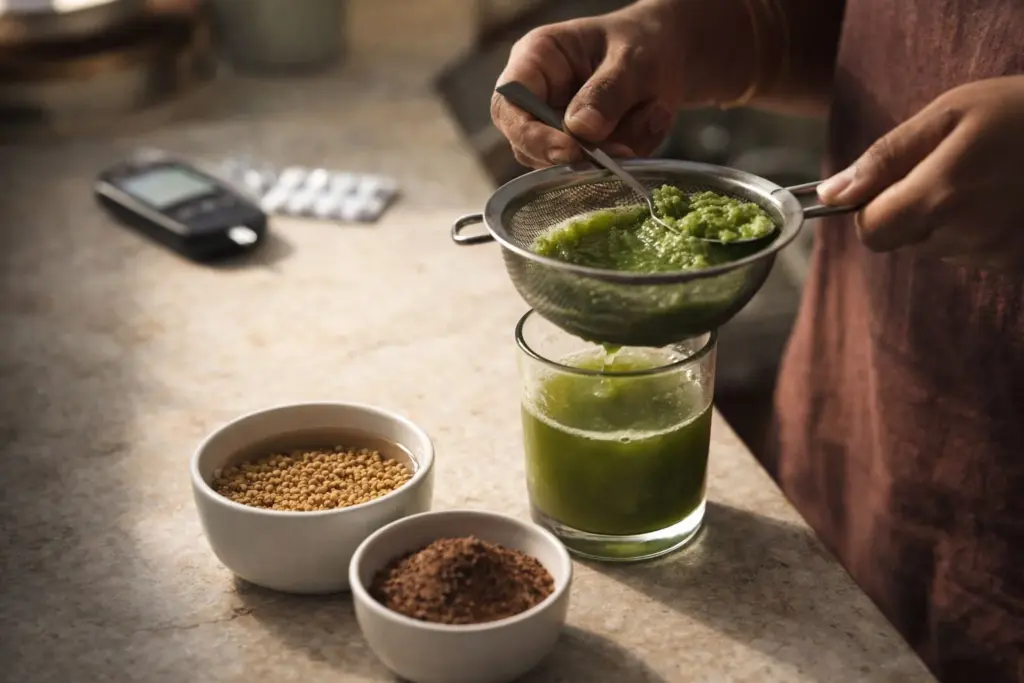
Diabetes medicine: In many Indian homes, diabetes advice often begins with a home remedy. Someone will say, “Start karela juice,” or “Soak methi dana and drink the water,” or “Take jamun seed powder and your sugar will come down.” These tips have been shared for generations, and some of them can support healthier habits. The problem starts when people assume these remedies can replace diabetes medicines.
Diabetes isn’t like acidity or a temporary stomach upset. It’s a long-term metabolic condition that affects the entire body. Home remedies may help as an add-on, but they cannot “cure” diabetes or take the place of doctor-prescribed treatment.
Also Read | 7 Indian foods that help control blood sugar naturally
What is diabetes, in simple terms?
Type 1 diabetes: The body stops making insulin. Insulin is essential to keep blood sugar under control, so people with Type 1 need insulin for life.
Type 2 diabetes: The body still makes insulin, but it doesn’t work properly (insulin resistance). As a result, sugar stays in the bloodstream instead of entering the cells for energy.
Why is uncontrolled sugar risky?
High blood sugar over time quietly damages blood vessels and nerves. That’s why diabetes can affect:
- Eyes (vision problems)
- Kidneys
- Nerves (numbness, burning pain)
- Heart and blood vessels
- Feet (slow healing, infections)
Methi dana (fenugreek seeds): helpful, but limited
Fenugreek is commonly used because it contains soluble fibre, which can slow digestion and reduce how quickly sugar enters the blood.
Possible benefits include:
- Mild improvement in insulin sensitivity
- Slower absorption of carbohydrates
- Reduced appetite in some people
- Small reduction in fasting sugar for some
But the effect is usually modest. If sugar levels are high, especially fasting values above 200, methi water alone will not bring them back to a safe range.
Karela juice: not a substitute for tablets or insulin
Bitter gourd is another popular choice in Indian households. It contains compounds that may have a mild glucose-lowering effect, and some people notice small improvements when it’s combined with a proper diet and medical care.
Potential benefits:
- Contains compounds that may act insulin-like in the body
- May slightly reduce sugar levels in some people
- May support digestive health
But karela juice cannot replace prescribed medicines. Also, taking large amounts because “more is better” can backfire, it may cause low blood sugar in people on diabetes medicines and can trigger stomach discomfort in some.
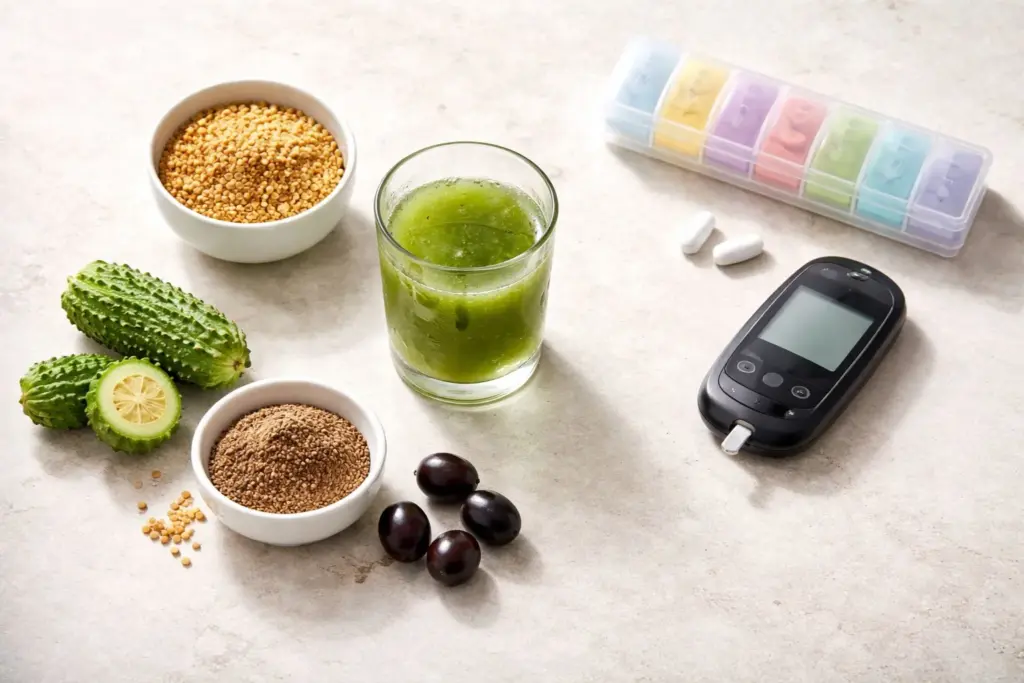
Jamun seed powder: helpful support, not a replacement
Jamun seed powder is often recommended in Indian households for “natural sugar control.” It may help with mild ups and downs in glucose, but it cannot keep blood sugar stable all day on its own, and it cannot undo long-term diabetes-related damage.
Possible benefits people report include:
- Less frequent urination in some cases
- Smoother, mild sugar fluctuations
- General support for metabolic health
Why can’t these home remedies replace diabetes medicine
Diabetes is not a single-symptom problem. It affects how the body handles sugar every hour of the day, and over time, it impacts blood vessels, nerves, and organs. Doctor-prescribed treatment is designed to do more than “bring sugar down.”
Medicines help to:
- Control blood sugar across the day and night
- Improve insulin action or insulin release (depending on the drug)
- Reduce the risk of long-term complications
- Protect organs like the heart, kidneys, eyes, and nerves
Home remedies may support a healthy routine, but they do not offer the same consistent control or organ protection.
What can happen if you rely only on nuskhas:
The biggest danger is that sugar can remain high quietly for months or years. Many people don’t feel “seriously ill” until complications begin.
Long-term high sugar can damage:
- Eyes (vision loss)
- Kidneys (declining kidney function)
- Nerves (tingling, numbness, burning pain)
- Feet (slow-healing wounds, infections)
- Heart (higher risk of heart attacks)
- Brain (higher risk of stroke)
Who should be extra cautious with these remedies
It’s best to avoid or limit home remedies without medical guidance if you have:
- Kidney disease
- Liver problems
- A history of low blood sugar (hypoglycaemia)
- Multiple ongoing medicines
- Pregnancy
- Very high sugar levels (often above 250 mg/dL)
Signs your diabetes may still be uncontrolled
Even if you’re using home remedies, watch for red flags like:
- Constant tiredness
- Frequent urination
- Excess thirst
- Blurred vision
- Slow-healing cuts or wounds
- Tingling or numbness in hands/feet
- Sudden weight loss
- Morning fasting sugar consistently above 130 mg/dL
Also Read | Are brown sugar and jaggery healthy? Differences, benefits, and risks
Methi dana, karela juice, and jamun seed powder can be supportive additions for some people, especially alongside better food choices, daily activity, sleep, and stress control. They may reduce mild sugar spikes and help the body respond to insulin a little better. But they cannot replace diabetes medication, and they cannot reliably prevent long-term organ damage when blood sugar is persistently high.