
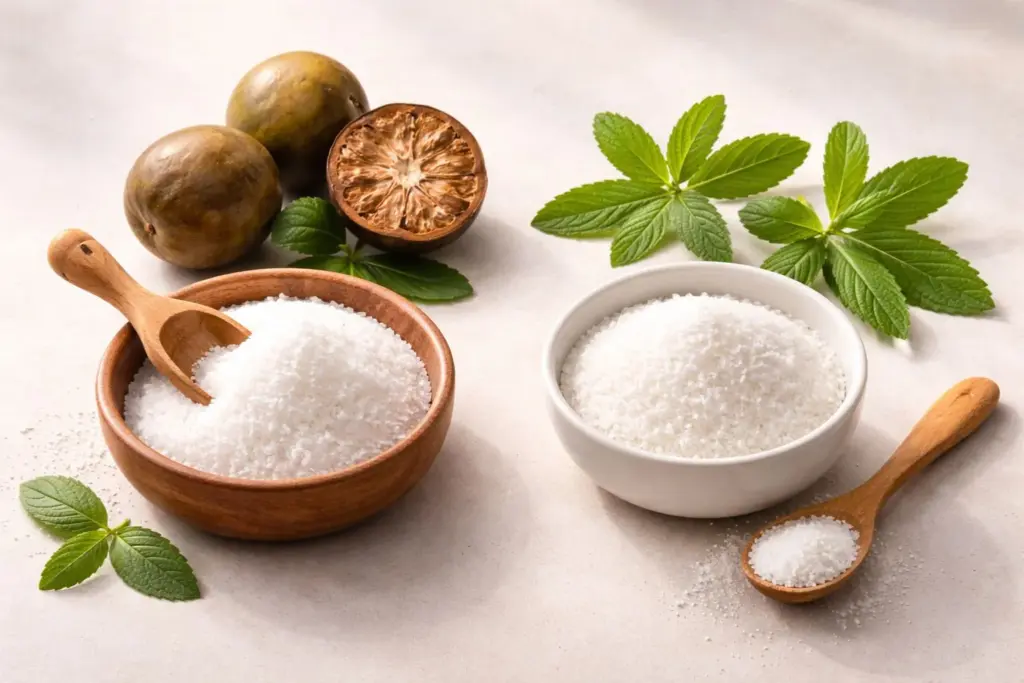
Stevia vs. monk fruit: If you have been trying to cut back on sugar, chances are you have come across monk fruit and stevia more than once. They are both marketed as natural alternatives to sugar and are often recommended for people seeking better blood sugar control. But when it comes to everyday use, many people still wonder which option is actually better.
The short answer is that both can be useful. The better choice often depends less on blood sugar itself and more on taste, cost, and what works best for your routine.
Also Read | Can people with diabetes have sugarcane juice?
Why do people turn to sugar substitutes?
There is a reason sugar substitutes have become so popular. Regular sugar can raise blood glucose quickly, increase insulin demand, and add extra calories to the diet. For people with diabetes, prediabetes, insulin resistance, or weight concerns, this can make daily choices more complicated.
That is where alternatives like monk fruit and stevia come in. They offer sweetness without behaving like table sugar in the body, which is why many people see them as a practical swap.
What is monk fruit?
Monk fruit comes from a small fruit grown in parts of Southeast Asia. It has been used traditionally for a long time, but in recent years it has become much more common in packaged sweeteners.
Its sweetness comes from natural compounds called mogrosides. These compounds are intensely sweet, yet they do not act like regular sugar in the body. Monk fruit sweetener contains no calories and, in its pure form, does not raise blood sugar in the way ordinary sugar does.
This is one of the reasons it is often considered a good option for people trying to manage glucose levels.
What is stevia?
Stevia comes from the leaves of the stevia plant and has a long history of use, especially in South America. The sweet taste comes from compounds known as steviol glycosides.
Like monk fruit, stevia is much sweeter than sugar, contains no calories, and is commonly used by people who want a sugar-free option. It also has little to no direct effect on blood sugar when used in place of regular sugar.
So which one is better for blood sugar?
If the question is purely about blood sugar, there is no dramatic difference between the two. Both monk fruit and stevia are generally considered suitable sugar substitutes for people who want sweetness without the same glucose effect as sugar.
Neither one is likely to cause the kind of blood sugar spike that regular sugar can. That makes both of them useful choices for people trying to reduce sugar intake more thoughtfully.

The real difference often comes down to taste
This is where opinions usually start to separate. Monk fruit is often described as having a smoother, cleaner sweetness. Many people feel it tastes a little closer to sugar and leaves less of an aftertaste.
Stevia, on the other hand, works well for many people but is more likely to leave a slightly bitter or liquorice-like finish, especially in drinks or certain recipes. Some do not mind it at all, while others notice it immediately.
This is important because the best sugar substitute is not just the one that looks good on paper. It is the one you can actually enjoy using regularly.
What about weight management?
Both monk fruit and stevia can be helpful if you are trying to reduce calorie intake from sugar. Since they do not add the same calories as regular sugar, they can make it easier to cut down without giving up sweetness completely.
That said, they are still just tools. Weight management depends on the overall picture, not just on swapping one ingredient for another.
Are there any downsides?
For most people, both are considered safe and are well tolerated. But preferences and responses can vary.
Stevia may cause mild digestive discomfort in some people, though this is not common. For others, the bigger issue is simply the aftertaste.
Monk fruit is generally well tolerated, too, although some products sold as monk fruit sweeteners are blended with other ingredients, so it is always worth checking the label rather than assuming the product is pure.
When should you be more careful?
If you have diabetes and are taking insulin or other glucose-lowering medicines, it is still worth paying attention to how your body responds to dietary changes. Even though these sweeteners do not behave like sugar, the rest of the meal still matters.
You should also be cautious if you notice unusual digestive symptoms or if a product contains added fillers that do not suit you.
Which one should you choose?
If your only concern is blood sugar control, both monk fruit and stevia are solid options. Neither is likely to raise blood sugar the way ordinary sugar does.
If taste matters most, many people tend to prefer monk fruit because it feels milder and more sugar-like. If convenience and cost matter more, stevia is often easier to find and usually more affordable.
So in the end, this is less about which one is scientifically “perfect” and more about which one fits into your life more easily.
Also Read | Can methi dana, karela juice and jamun seeds replace diabetes medicine?
Monk fruit and stevia can both help reduce sugar intake without adding calories or causing the same blood sugar effect as regular sugar. But they are not magic ingredients. Stable blood sugar still depends on the basics: balanced meals, enough fibre, good protein intake, movement, and consistency over time.
A sugar substitute can support healthier habits, but it does not replace them. The best option is the one that helps you make sustainable choices without making food feel like a constant battle.
FAQs: Stevia vs monk fruit
Is monk fruit better than stevia for blood sugar?
Both monk fruit and stevia are generally considered good options for people who want sweetness without the same blood sugar effect as regular sugar. The better choice often depends on taste and personal preference.
Do monk fruit and stevia raise blood sugar?
In general, both monk fruit and stevia have little to no direct effect on blood sugar when used instead of regular sugar.
Are monk fruit and stevia safe for people with diabetes?
They are often used by people with diabetes because they do not act like regular sugar in the body. However, it is still important to look at the full meal and to choose products carefully.
Does monk fruit have calories?
Pure monk fruit sweetener is considered calorie-free.
Does stevia have calories?
Stevia is generally considered a zero-calorie sweetener.