
Herbs for cholesterol: Hearing that your cholesterol is high can be unsettling. It often comes up after a routine blood test, and suddenly, you are being told to watch your food, exercise more, or think about long-term heart health more seriously. That can feel overwhelming at first.
The reassuring part is that lifestyle changes do help, and in some cases, certain herbs may also offer added support. They are not a replacement for medical treatment, but they can be useful as part of a healthier daily routine.
Also Read | Banana vs. dates: Best fruit to eat on empty stomach
What cholesterol actually means
Cholesterol is a waxy, fat-like substance found in the blood. The body needs some of it to function properly, but when levels become unbalanced, it can raise the risk of heart and blood vessel problems.
The two types most people hear about are:
- LDL cholesterol – often called bad cholesterol because high levels can build up in the arteries
- HDL cholesterol – often called good cholesterol because it helps carry excess cholesterol away
In simple terms, the aim is to keep LDL lower, support healthy HDL levels, and maintain an overall balanced lipid profile.
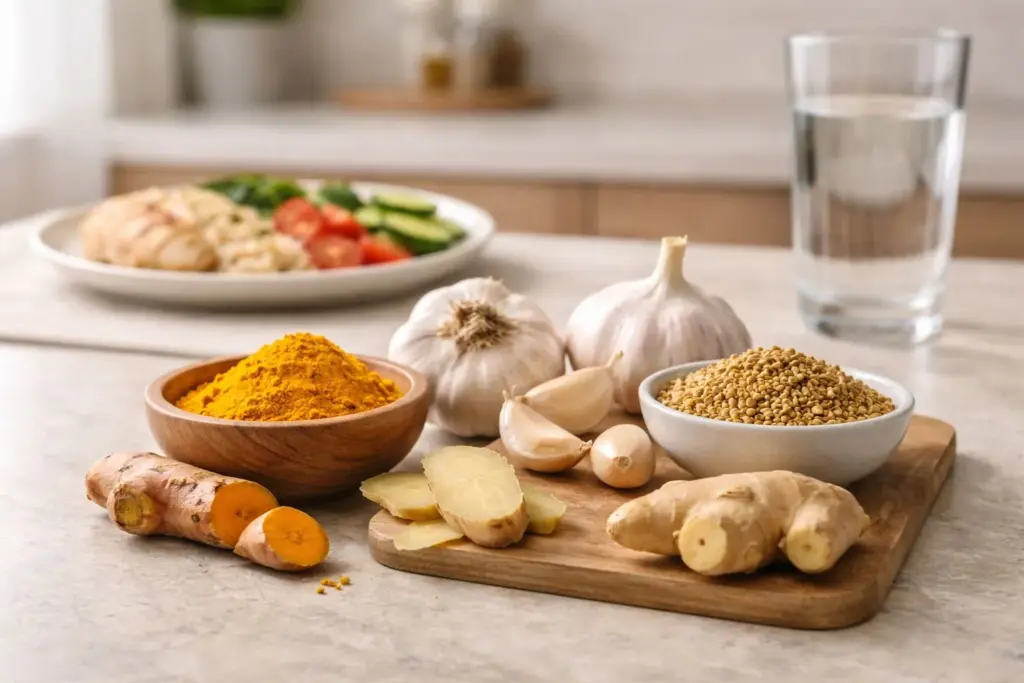
Turmeric:
Turmeric has long been a part of everyday cooking, but it is also widely valued for its anti-inflammatory and antioxidant properties. Its active compound, curcumin, is one of the reasons it gets so much attention in heart-health discussions.
Turmeric may help by:
- supporting lower LDL cholesterol levels
- reducing inflammation in the blood vessels
- improving overall heart-health markers
You can add turmeric to:
- vegetables
- soups and curries
- warm milk or herbal drinks
Garlic:
Garlic has been used in traditional food and wellness practices for generations. It contains natural compounds that are often linked with cardiovascular support, especially when used regularly over time.
Garlic may help:
- reduce total cholesterol
- lower LDL cholesterol
- support healthier blood pressure levels
You can try:
- adding crushed garlic to everyday meals
- using it in soups, lentils, and vegetables
- eating it regularly in cooked food rather than occasionally

Fenugreek:
Fenugreek seeds are common in many Indian kitchens and are known for their fibre content. One reason they are often discussed in relation to cholesterol is that soluble fibre can help reduce how much cholesterol gets absorbed in the digestive tract.
Fenugreek may support cholesterol balance by:
- helping bind cholesterol in the gut
- supporting its removal from the body
- improving digestion at the same time
People often use fenugreek by:
- soaking the seeds overnight and drinking the water in the morning
- chewing a small amount of soaked seeds
- adding fenugreek to food in moderate amounts
Ginger:
Ginger is best known for helping with digestion, but it may also offer support for heart health. Its natural compounds are often linked to anti-inflammatory effects and better circulation.
Ginger may help:
- support lower LDL cholesterol
- reduce triglyceride levels
- improve circulation
You can use ginger in:
- tea
- warm water infusions
- dals, vegetables, and other home-cooked meals
Herbs can be supportive, but they work best alongside daily habits that actually protect heart health. That includes:
- eating more fibre
- cutting back on fried and highly processed foods
- staying physically active
- maintaining a healthy weight
- managing stress better
No herb can undo the effects of consistently unhealthy habits. Real improvement usually comes from combining small, steady steps.
When to be careful
It is important to speak with a doctor before using herbs regularly if:
- you are taking blood thinners
- you are already on cholesterol medicines
- you have liver-related concerns
- you are pregnant or breastfeeding
Also Read | Should you soak almonds and raisins before eating them daily?
High cholesterol can sound frightening, but it is something many people can manage with the right approach. A few simple habits, followed consistently, often matter more than dramatic changes that do not last.
Herbs like turmeric, garlic, fenugreek, and ginger may be helpful additions, especially when they become part of an overall heart-conscious lifestyle. The real goal is not a quick fix. It is building routines that support your heart quietly and consistently over time.
FAQs: 4 Herbs That May Help Lower Cholesterol Naturally
Which herbs may help lower cholesterol naturally?
Turmeric, garlic, fenugreek, and ginger are commonly discussed for their possible role in supporting healthy cholesterol levels when used as part of a balanced lifestyle.
Can herbs replace cholesterol medication?
Herbs should not be seen as a replacement for prescribed medication. They may offer support, but medical treatment should only be changed under a doctor’s guidance.
Is garlic good for high cholesterol?
Garlic may help support lower total cholesterol and LDL levels in some people, especially when used regularly as part of a healthy diet.
Can turmeric help reduce cholesterol?
Turmeric may support heart health through its anti-inflammatory and antioxidant properties, and some research suggests it may help with LDL cholesterol levels.
How does fenugreek help with cholesterol?
Fenugreek contains soluble fibre, which may help reduce cholesterol absorption in the gut and support healthier lipid levels.