
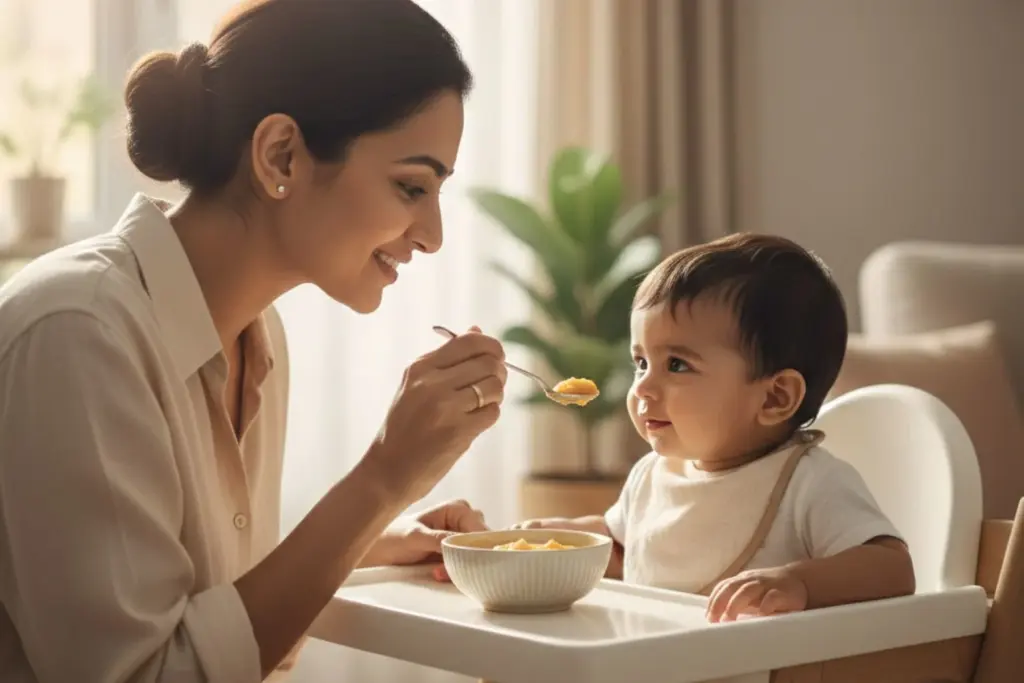
Solids for babies: Starting solids is one of those milestones that feels equal parts exciting and nerve-wracking. One day, your baby is only on milk, and suddenly, you’re offering a spoon and watching them discover taste, texture, and “food faces.” In India, weaning (also called complementary feeding) usually begins around six months.
What weaning actually means
Weaning doesn’t mean stopping breastmilk or formula. It simply means adding solids slowly, while milk remains the main source of nutrition at first. Around six months, babies begin to need extra nutrients, especially iron, protein, and energy, which milk alone may not fully cover. The aim is to help your baby learn to eat, swallow, and enjoy variety, one small step at a time.
Also Read | Can methi dana, karela juice and jamun seeds replace diabetes medicine?
Signs your baby may be ready
Most babies are ready when they can:
- Sit with support and hold the head steady
- Show interest when others are eating
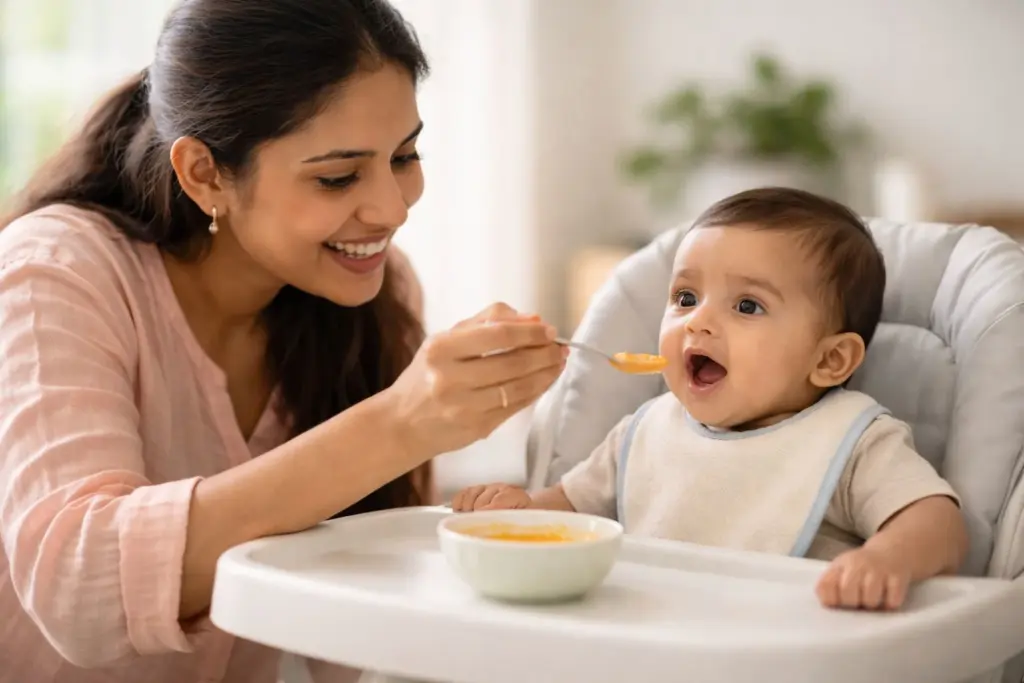
- Open the mouth or lean forward for a spoon
A simple 12-week weaning roadmap (Indian-friendly)
Weeks 1–2: Start slow, single foods
Keep textures thin and smooth. Introduce one food at a time, and wait 2–3 days before adding a new one. Good starters:
- Rice water or dal water (strained, thin)
- Mashed banana (soft and naturally sweet)
- Steamed apple purée
Weeks 3–4: Thicker texture + more variety
Once your baby accepts basic tastes, make foods slightly thicker and more filling. Add:
- Soft khichdi-style rice porridge (rice + moong dal + a little ghee)
- Mashed carrot or pumpkin
- Suji (semolina) porridge (cooked well, smooth)
Weeks 5–6: Focus on iron + protein
This is where nutrient density matters more. Keep food soft, but allow a little texture. Options:
- Dal + rice mash (soft dal khichdi)
- Idli/dosa softened with warm water or milk
- Mashed egg yolk (if your family eats eggs)
Weeks 7–8: Mix foods (combination meals)
Once single foods are tolerated, start combining for better taste and nutrition. Easy combinations:
- Dal + vegetable khichdi
- Rice + moong dal + spinach mash
- Suji porridge + banana or apple
- Ragi porridge + mashed pear
- Very soft vegetable upma
Weeks 9–10: Introduce finger foods
If your baby wants to hold food and can grasp small pieces, offer soft finger foods. Try:
- Steamed carrot/potato sticks
- Small pieces of ripe banana or papaya
- Soft rice balls
- Tiny soft idli or dhokla pieces
Weeks 11–12: Transition toward family foods
By the end of about three months, many babies can start eating soft versions of family meals. Aim for 3 solid meals a day + milk feeds. Family food ideas:
- Soft vegetable khichdi
- Mashed chapati soaked in dal or milk
- Steamed and mashed vegetables
Sample one-day meal flow
- Morning: Breastmilk/formula
- Mid-morning: Ragi porridge or mashed banana
- Lunch: Dal khichdi with vegetables
- Afternoon: Breastmilk/formula or fruit purée
- Evening: Suji porridge or soft idlis
- Night: Breastmilk/formula before sleep
Also Read | How to use turmeric daily: 5 simple recipes for better health
Weaning isn’t only about “finishing the bowl.” It’s about learning, bonding, and letting your baby explore food safely. Go slow, keep it simple, build variety steadily, and your baby will get there.
FAQs: When and how to start solids for babies?
When should I start solids for my baby?
Most babies are ready around 6 months. Breastmilk or formula remains important while solids begin.
What are the signs my baby is ready for solids?
Look for good head control, the ability to sit with support, interest in food, and opening the mouth when offered a spoon.
What should I start with first?
Begin with single, soft, smooth foods like mashed banana, steamed apple purée, thin dal water/rice water, or simple porridge.
What foods should I avoid in the first year?
Avoid honey, whole nuts, hard/raw foods (choking risk), and high-salt or high-sugar foods. Also, avoid cow’s milk as a main drink before 12 months (curd/paneer in small amounts is usually fine).
What if my baby refuses solids?
Normal. Keep it calm, offer again later, and avoid forcing. Sometimes it takes 10–15 tries for a baby to accept a new taste.