

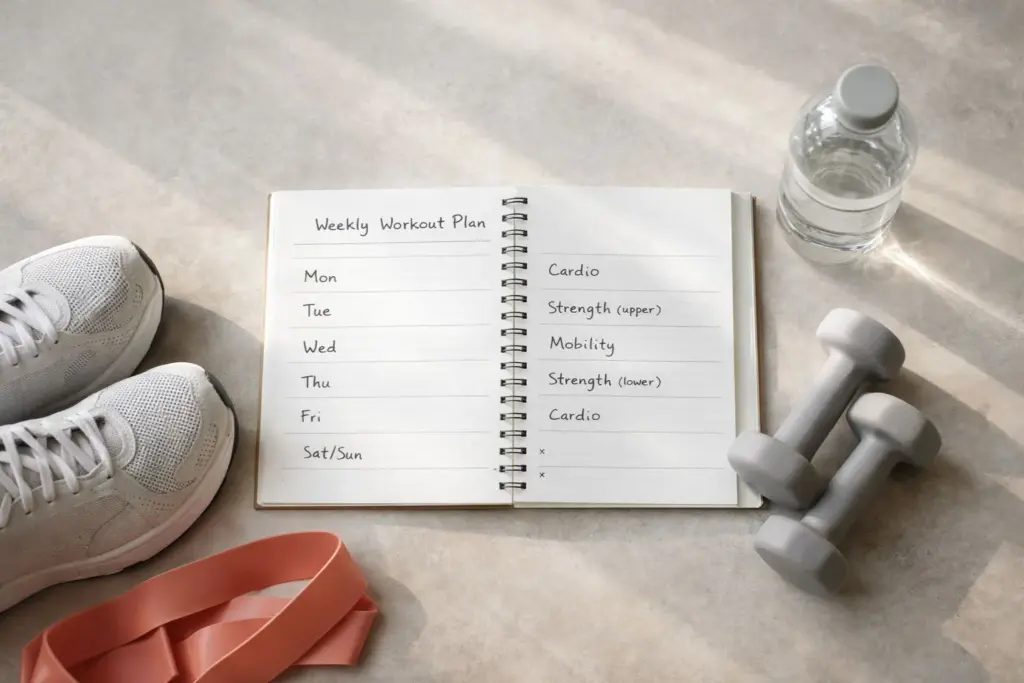
Weekly workout plan: Ever feel unsure about where to begin with exercise? Or maybe you’ve been working out for weeks, but nothing seems to change. You’re not alone. A good weekly plan doesn’t need to be complicated; it just needs structure, variety, and a routine you can actually keep up with.
What does a ‘balanced’ workout plan mean?
A balanced plan doesn’t rely on just one type of exercise, like running every day or only lifting weights. It mixes the main pillars your body needs:
- Cardio for heart health, stamina, and energy
- Strength training to build muscle and support metabolism
- Mobility and flexibility to reduce stiffness and help you move well
When these pieces work together, you’re less likely to overuse one area, pick up niggling injuries, or burn out.
Also Read | How long does it take to build muscle? Timeline and tips
Start with your objective:
Before you map out your week, decide what you’re aiming for. Do you want to lose fat, build strength, improve fitness, or simply feel more consistent?
Your goal shapes the balance:
- For fat loss, you may include a little more cardio and higher-intensity sessions.
- For muscle and strength, you’ll prioritise resistance training and progressive overload.
- For mobility and stress relief, you’ll schedule more recovery-style movement such as stretching or yoga.
Be realistic about your week:
The best plan is the one you’ll do. If you can manage three days, start there. If you can manage five, great; just don’t forget recovery. Even 15–30 minutes on busy days is enough to build consistency.
A simple weekly structure (adjust to your schedule)
Here’s an easy template you can move around:
- Day 1: Cardio (brisk walk, cycling, jogging, dance workout)
- Day 2: Strength (upper body)
- Day 3: Mobility/flexibility (yoga, stretching, foam rolling)
- Day 4: Strength (lower body)
- Day 5: Cardio (intervals or a longer steady session)
- Day 6: Active recovery (easy walk, light swim, gentle yoga)
- Day 7: Rest

You don’t have to follow this perfectly. The aim is to hit 2 strength sessions, 2 cardio sessions, and at least 1 mobility day most weeks.
Keep it enjoyable and adaptable:
If you hate running, don’t force it. Try swimming, skipping, dance workouts, rowing, or incline walking. If you don’t have weights, use bodyweight movements or even household items. And if life gets messy for a week, don’t scrap the plan, just return to it.
Also Read | How to beat winter laziness: Gentle fitness habits for cold days
You don’t need hours in the gym to get fitter. A balanced weekly plan is simple: move regularly, train strength, include cardio, and keep your body mobile. Consistency beats perfection every time. Even small sessions add up; what matters is that you keep going.
FAQs: How to build a balanced weekly workout plan
1) What is a balanced workout plan?
A plan that includes cardio + strength training + mobility/flexibility, so you build fitness without overworking one area.
2) How many days a week should I work out?
Start with 3 days if you’re busy. 4–5 days is great for most people. Consistency matters more than doing daily workouts.
3) What’s the best weekly mix for beginners?
A simple start is 2 strength days + 1–2 cardio days + 1 mobility day, with at least 1 rest day.
5) How long should each workout be?
Even 20–30 minutes works. Aim for 30–60 minutes when possible, but short sessions still count.
6) How do I plan rest days?
Include at least 1 full rest day weekly. Add active recovery (easy walking, gentle stretching) if you train 5–6 days.