
Core strength at home: If you want to feel stronger, steadier, and more confident in the way you move, start with your core. A strong core isn’t about chasing “abs.” It’s about building support from the inside, so your back feels safer, your posture improves, and everyday movements feel easier.
And you don’t need a gym to begin. No equipment. No pressure. Just simple exercises done with good form.
Also Read | Do these 5 easy ab exercises to strengthen your core at home
What is your core?
Your core is not only the front “six-pack” area. It’s a full support system that wraps around your midsection and helps your body stay stable.
It includes:
- Front abdominal muscles
- Side muscles (obliques)
- Lower back muscles
- Muscles around the hips and pelvis
These muscles help you:
- Sit and stand upright without strain
- Balance better
- Move your arms and legs safely
- Protect your spine during bending, lifting, and walking
Think of your core as your body’s centre of control.
Why beginners should strengthen their core:
Even if you don’t care about fitness goals, core strength improves daily life in very real ways:
- Less back discomfort: A stronger core reduces pressure on the spine
- Better posture: You naturally stand taller when your trunk is stable
- Improved balance: Helps prevent falls and awkward slips
- Easier movement: Carrying groceries, climbing stairs, getting up from a chair, everything feels smoother
Tips to strengthen the core:
A few basics make a big difference:
- Go slow. Controlled movement builds the right muscles
- Breathe normally. Exhale during effort, inhale as you return
- Use a mat or towel for comfort
- Modify without guilt. Smaller movements still count
- Avoid sharp pain. Mild muscle effort is okay; pain means adjust
Beginner core exercises:
Try these 3–4 days a week. Start with 1 set, then build to 2–3 sets as you feel stronger.
Pelvic Tilts:
- This is perfect for learning core control and supporting your lower back.
- How to do it: Lie on your back with knees bent and feet flat. Tighten your stomach gently and press your lower back into the floor. Hold for 3–5 seconds, then release.
- Do: 10–12 repetitions
Dead Bug:
- A great core exercise that builds stability without stressing the spine.
- How to do it: Lie on your back with arms up and knees bent at 90 degrees. Slowly lower your right arm and left leg toward the floor, then return to the centre and switch sides. Keep your lower back steady, not arching.
- Do: 6–10 reps per side
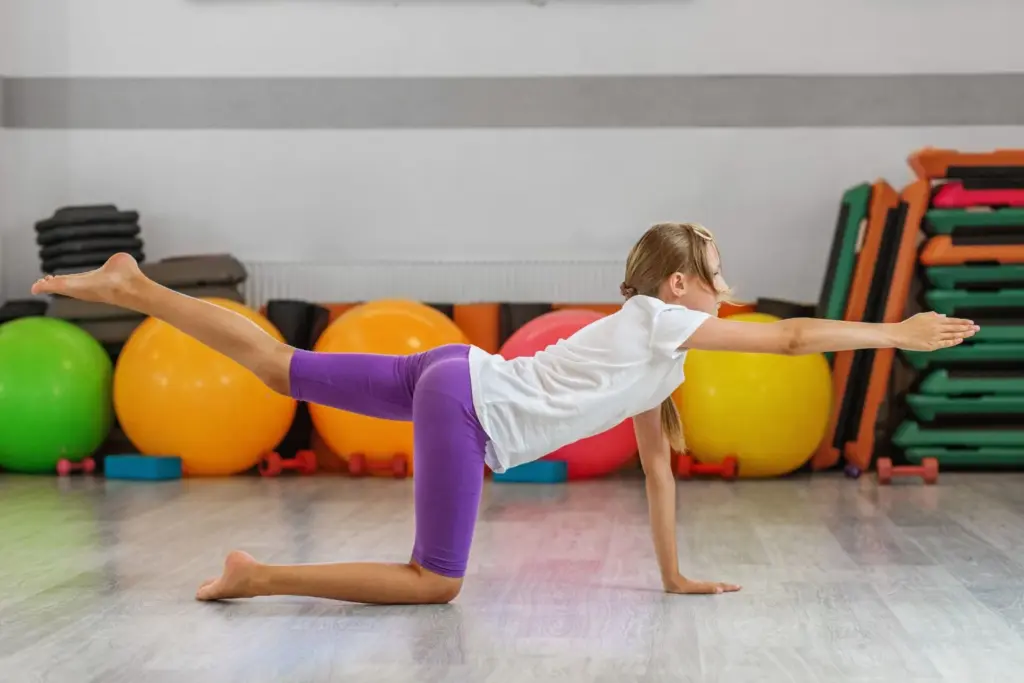
Bird Dog:
- This builds balance and deep core strength at the same time.
- How to do it: On hands and knees, extend one arm forward and the opposite leg back. Hold for a few seconds, then switch sides. Keep your hips level and your spine long.
- Do: 6–10 reps per side
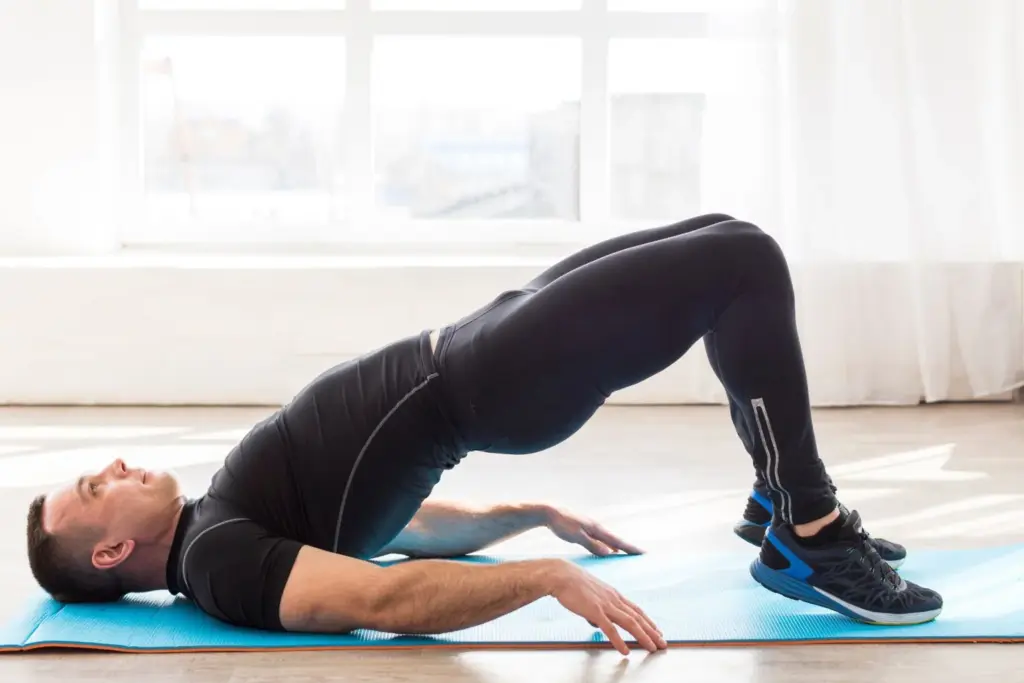
Glute Bridge:
- This strengthens the hips and lower core, especially helpful if you sit a lot.
- How to do it: Lie on your back with knees bent. Press through your heels and lift your hips. Squeeze your glutes at the top, then lower slowly.
- Do: 10–12 repetitions
When will you see results?
Core strength builds gradually, but you may start feeling the benefits within 2 to 4 weeks if you’re consistent.
You might notice:
- Better posture
- Less back strain
- More control while walking, bending, or standing up
The first improvement is usually how your body feels, not how it looks.
Also Read | How long does it take to build muscle? Timeline and tips
You don’t need to do more. You need to do it well. Start with small, clean movements and repeat them consistently. Drink enough water, rest when needed, and don’t compare your starting point to anyone else’s.
A strong core is built quietly, one good rep at a time.
FAQs: How to Strengthen the Core At Home
Do beginners need equipment to train the core?
No. Most beginner core exercises can be done at home with just a mat or towel for comfort.
Will core exercises help reduce back pain?
They can. A stronger core supports the spine and may reduce strain, especially when combined with good posture and safe movement habits.
How soon will I see results from core exercises?
Many people start feeling improvements in 2–4 weeks, such as better posture, balance, and movement control.
Can I do core exercises every day?
You can, but beginners usually do better with rest days so muscles can recover. Daily gentle core work is fine if it’s low intensity.
Do I need a six-pack to have a strong core?
No. Core strength is about stability and control, not visible abs. Many people have strong cores without a defined six-pack.